Conagra Brands Embarks on Ambitious Supply Chain Overhaul to Boost Efficiency and Resilience

Conagra Brands, a prominent figure in the food manufacturing sector, is spearheading a comprehensive strategic initiative aimed at fortifying its supply chain, enhancing operational efficiency, and optimizing its product portfolio. This multi-faceted endeavor, publicly detailed by company executives, centers on three core objectives: maintaining consistently high service levels, meticulously reassessing its vast product mix, and significantly reducing its days of inventory. The ambitious undertaking signals a critical pivot for the company, reflecting a broader industry trend towards greater agility and resilience in the face of persistent global supply chain volatilities.
The decision to embark on such a significant operational revamp is not sudden but rather the culmination of strategic foresight and lessons learned from recent market disruptions. Over the past several years, the food industry, much like other sectors, has grappled with an unprecedented confluence of challenges, ranging from geopolitical tensions and trade disputes to unforeseen natural disasters and shifts in consumer demand patterns. For Conagra, these challenges manifested in specific operational hurdles that underscored the urgent need for a more robust and adaptable supply chain.
A Chronology of Challenges and Strategic Responses
The groundwork for Conagra’s current strategic shift was laid in the preceding fiscal year, which concluded on May 31. During this period, the company encountered several notable supply challenges that severely tested its operational capabilities. These included a significant disruption in chicken production, which impacted its frozen meal offerings, a widespread shortage of frozen vegetables affecting a broad segment of its portfolio, and the imposition of tariffs on tinplate steel, a critical raw material for its extensive range of canned food containers. Each of these events, individually impactful, collectively painted a clear picture of the vulnerabilities inherent in the existing supply chain infrastructure.
In response to these escalating pressures and with an eye toward futureproofing its operations, Conagra unveiled plans last year, around late 2025, to substantially increase its investments in supply chain resiliency. This commitment translated into approximately $450 million in capital expenditures for the fiscal year that ended May 31, 2026. This substantial financial outlay was a clear signal of the company’s dedication to overhauling its foundational logistics and manufacturing processes. Matthew Neisius, Conagra’s Senior Director of Investor Relations, has since confirmed the company’s ongoing commitment to this strategic direction, stating that capital expenditures are now prioritized to hover between 4% and 5% of net sales, underscoring a sustained focus on strengthening the supply chain.
Further cementing its commitment to technological advancement and operational streamlining, Conagra introduced "Project Catalyst" in December 2025. This initiative is designed to reengineer and automate core business processes across the company, leveraging cutting-edge technology and artificial intelligence. Project Catalyst represents a foundational element of Conagra’s broader simplification strategy, aiming to strip away unnecessary complexity and enhance the efficiency of work execution within its extensive network of manufacturing facilities.
Pillars of Transformation: Service, Product Mix, and Inventory
Conagra’s current strategic directive is built upon three interconnected pillars, each designed to address specific aspects of supply chain performance and market responsiveness.
1. Maintaining High Service Levels:
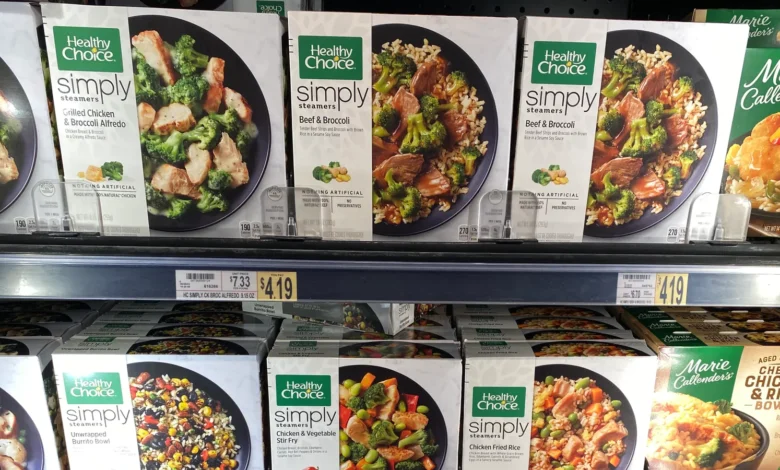
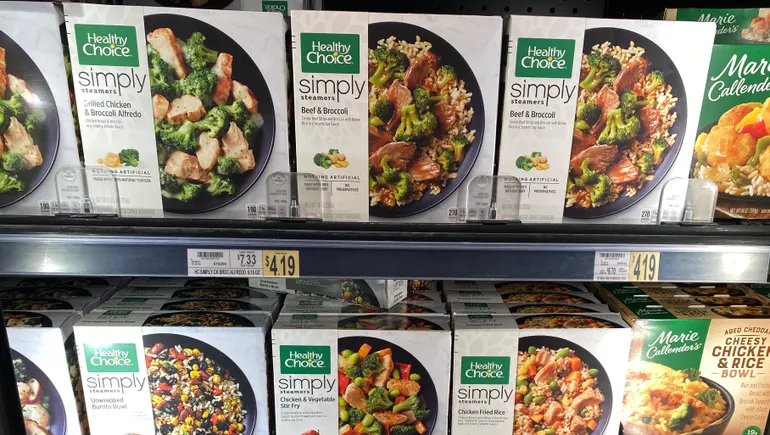
In the highly competitive food manufacturing landscape, consistent product availability and timely delivery are paramount to customer satisfaction and retailer relationships. High service levels translate directly into products being on shelves when consumers expect them, minimizing stockouts, and ensuring the freshness and quality that consumers demand. Past disruptions, such as the chicken production stalls and vegetable shortages, directly impacted Conagra’s ability to meet these expectations. The renewed focus on service levels involves enhancing forecasting accuracy through advanced analytics, strengthening supplier relationships to build in redundancy, and optimizing distribution networks for greater speed and reliability. By investing in technology that provides real-time visibility across the supply chain, Conagra aims to preemptively identify potential disruptions and mitigate their impact, thereby ensuring that its diverse portfolio, from Healthy Choice meals to Orville Redenbacher’s popcorn, remains consistently available to consumers.
2. Reassessing Product Mix and SKU Rationalization:
Perhaps one of the most significant and potentially impactful components of Conagra’s strategy is the reevaluation of its product mix, specifically targeting its extensive portfolio of 5,500 Stock Keeping Units (SKUs). Companies, particularly in the consumer packaged goods (CPG) sector, often accumulate a vast number of SKUs over time in an effort to cater to diverse consumer preferences, enter new market segments, and maintain competitive presence. However, an overly complex SKU portfolio can become a "complexity monster," as described by industry experts.
While offering variety can initially seem beneficial, managing thousands of unique products introduces significant operational inefficiencies. Each SKU requires its own raw materials, production lines, packaging, warehousing space, and logistical pathways. This complexity can lead to higher inventory holding costs, increased forecasting errors, shorter production runs (which are less efficient), and a greater risk of obsolescence for slower-moving items. The "earn their keep" philosophy, articulated by an executive (presumably Brase, given the context), implies a rigorous evaluation process where each SKU must demonstrate its value proposition to the enterprise, whether through strong sales, high margins, strategic market positioning, or brand equity.
This SKU rationalization process will likely involve analyzing sales data, profitability metrics, market trends, and consumer demand elasticity for each product. Products that underperform, contribute minimally to the bottom line, or create undue operational complexity without significant offsetting benefits, may be discontinued or consolidated. While potentially unpopular with a small segment of consumers who favor niche products, the overall aim is to streamline production, reduce costs, improve inventory turns, and free up resources to innovate and invest in high-performing, growth-driving SKUs. This strategic pruning allows Conagra to focus its efforts and resources on products that deliver the most value, both to the company and its consumers.
3. Reducing Days of Inventory:
The third critical pillar is the reduction of days of inventory. Holding excessive inventory ties up significant working capital, incurs storage costs, increases the risk of product spoilage or obsolescence, and demands considerable warehouse space. Conversely, holding too little inventory can lead to stockouts, lost sales, and damage to brand reputation. The ideal is a delicate balance – holding "just enough" inventory to meet demand without incurring unnecessary costs.

Conagra’s focus on reducing inventory days suggests an emphasis on improving demand forecasting accuracy, optimizing production schedules, and enhancing logistics efficiency. Leveraging technologies like AI, as outlined in Project Catalyst, can enable more precise prediction of consumer demand, allowing manufacturing to align more closely with market needs. This shift from a "just-in-case" inventory strategy, often necessitated by unreliable supply chains, to a more lean and agile "just-in-time" or "just-enough" approach, is expected to unlock substantial cost savings and improve cash flow. A 10-15% reduction in inventory days across a company of Conagra’s scale could free up hundreds of millions of dollars in working capital, which can then be reinvested into innovation, marketing, or further supply chain enhancements.
The Role of Technology and AI: Project Catalyst in Action
Project Catalyst is central to achieving these ambitious objectives. By reengineering and automating core business processes, Conagra aims to integrate technology seamlessly into its manufacturing and supply chain operations. This could involve several key applications:
- Advanced Demand Forecasting: AI algorithms can analyze vast datasets, including historical sales, promotional activities, seasonal trends, weather patterns, and even social media sentiment, to generate highly accurate demand forecasts. This precision reduces overstocking and understocking, directly supporting inventory reduction and service level maintenance.
- Predictive Maintenance: AI-powered systems can monitor the performance of manufacturing equipment in real-time, predicting potential failures before they occur. This allows for proactive maintenance, minimizing unplanned downtime and ensuring consistent production output, crucial for service levels.
- Optimized Production Planning: AI can create highly efficient production schedules, optimizing batch sizes, sequencing products to minimize changeover times, and balancing capacity across different facilities. This enhances overall manufacturing efficiency and reduces operational costs.
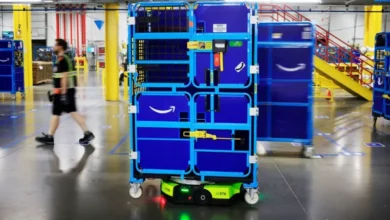
- Warehouse Automation and Robotics: Automation in warehouses, from automated guided vehicles (AGVs) for material handling to robotic picking systems, can significantly speed up throughput, reduce labor costs, and improve inventory accuracy.
- End-to-End Visibility: Digital platforms integrated with AI can provide a comprehensive, real-time view of the entire supply chain, from raw material sourcing to final product delivery. This transparency allows for rapid identification of bottlenecks, risk assessment, and informed decision-making.
The implementation of Project Catalyst is expected to foster a data-driven culture within Conagra, where decisions are based on insights derived from sophisticated analytics rather than intuition alone. This operational simplification, as emphasized by the executive (Brase), is not just about technology but about transforming how work gets done, making processes more efficient and less prone to human error.
Broader Industry Context and Implications
Conagra’s strategic overhaul is not an isolated event but rather indicative of a sweeping transformation occurring across the consumer packaged goods industry. Major players are recognizing that legacy supply chains, often designed for a more stable, lower-volume era, are no longer fit for purpose in today’s volatile market.
General Mills, for instance, recently announced its own plans to overhaul an aging supply chain, acknowledging that its current infrastructure was built for a different time. This suggests a need for modernization in manufacturing plants, logistics networks, and technological capabilities to support higher volumes, greater product diversity (even with SKU rationalization, overall market demands can increase), and faster market responsiveness. Their multi-billion dollar cost-cutting effort likely includes significant investments in supply chain efficiencies.

Similarly, Procter & Gamble (P&G), a global leader in CPG, has fully rolled out its "Supply Chain 3.0" initiative. This multi-year effort focuses on building underlying platforms and capabilities designed to enhance agility, resilience, and digital integration across its vast global operations. P&G’s strategy emphasizes data-driven decision-making, advanced automation, and a highly responsive network that can quickly adapt to market changes and disruptions. The term "3.0" implies a leap forward from earlier iterations, signifying a fully digital, interconnected, and intelligent supply chain ecosystem.
These parallel developments underscore a shared understanding among CPG giants: investing in supply chain excellence is no longer merely a cost-saving measure but a fundamental competitive imperative. Companies that can consistently deliver products, adapt to demand shifts, and manage costs effectively will gain a significant advantage in the marketplace.
Future Outlook and Potential Impact
For Conagra Brands, the successful execution of this ambitious supply chain overhaul promises several significant benefits. Internally, it is expected to lead to improved operational efficiency, substantial cost savings through reduced inventory holding and optimized production, and enhanced profitability. A more resilient supply chain will also better insulate the company from future market shocks, ensuring business continuity and stability.
Externally, consumers are likely to experience more consistent product availability and potentially a more focused product offering as a result of SKU rationalization. While some niche products might disappear, the remaining portfolio will be stronger, better supported, and more consistently supplied. Retail partners will benefit from improved service levels, leading to stronger relationships and more reliable product flow to shelves.
However, the journey will not be without its challenges. Implementing large-scale technological transformations like Project Catalyst requires significant capital investment, skilled talent, and a robust change management strategy to ensure employee adoption and seamless integration across disparate systems. SKU rationalization, while strategically sound, must be managed carefully to avoid alienating loyal consumers or leaving gaps in the market that competitors could exploit. The dynamic nature of global supply chains, influenced by geopolitical events, climate change, and evolving consumer preferences, will also require continuous adaptation and vigilance.
Ultimately, Conagra Brands’ bold move to simplify operations, reduce inventory, and elevate service levels through strategic investment and technological integration positions it at the forefront of modern food manufacturing. By addressing the complexities that have historically plagued its supply chain, Conagra aims to not only navigate the challenges of today but also establish a sustainable, efficient, and highly responsive operational model for decades to come, setting a new benchmark for resilience and excellence in the competitive food industry.