Amazon Announces Wage Increases and Expanded Employee Benefits Amid Rising Economic Pressures

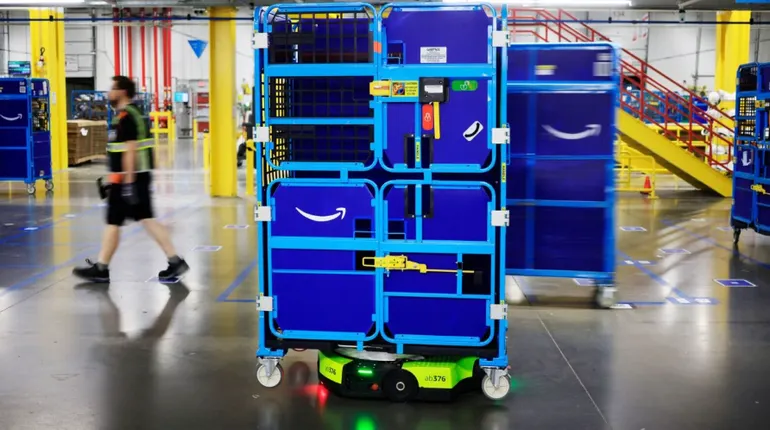
Amazon has announced a significant boost to its compensation structure, raising its minimum starting wage to elevate the average starting pay for frontline workers to approximately $24 per hour. This move comes as major retail and logistics employers face mounting scrutiny regarding compensation practices in an inflationary environment. Alongside the wage adjustments, the e-commerce giant is rolling out a suite of enhanced financial and retail benefits designed to alleviate cost-of-living pressures for its hundreds of thousands of hourly employees across the United States.
The newly unveiled financial wellness package includes innovative banking services intended to roll out later this year, with broader availability scheduled for 2027. These upcoming services are tailored to support workers regardless of their financial background, notably requiring no prior credit history to open checking and savings accounts. Additionally, the initiative grants eligible employees access to preferential auto and home loans, augmenting Amazon’s existing Brightside Financial Care program, a free service that connects workers with dedicated financial coaches and assistants.
In tandem with these financial offerings, Amazon is introducing new grocery-related perks that can be stacked with pre-existing Amazon Prime member discounts. Because eligible hourly employees already receive complimentary Amazon Prime memberships, the new grocery benefits aim to provide substantial relief at the checkout counter, directly targeting one of the most volatile household expenditure categories in the current economy.
Background Context and Economic Pressures
The timing of Amazon’s announcement is closely tied to broader macroeconomic shifts affecting American households. Over the past several years, the U.S. labor and retail markets have navigated unprecedented disruptions, ranging from pandemic-era labor shortages to historic spikes in inflation. While overall retail spending has proven remarkably resilient, defying repeated predictions of a sharp contraction, underlying vulnerabilities have begun to surface among lower- and middle-income consumers.
Earlier this year, economic markers indicated that inflation had once again begun to outpace wage growth, reversing some of the incremental gains workers experienced during the post-pandemic labor market recovery. Everyday essentials, particularly groceries and motor fuel, have seen sustained price increases, eroding the purchasing power of hourly earners. Economists and retail analysts note that even modest fluctuations in the cost of basic necessities can disproportionately impact households that allocate a larger share of their income to food and transportation.
Industry analysts and financial experts have increasingly warned of a potential tipping point in consumer spending. Heather Long, Chief Economist at Navy Federal Credit Union, highlighted these concerns following the release of recent monthly retail sales data.
"A consumer spending slowdown is likely later this year and into early 2027 as middle-income and lower-income households feel the pinch from higher gas and grocery prices," Long stated in emailed comments. "Real incomes are flat or declining for many, and they will have to cut back on something."
Chronology of Workforce and Benefit Enhancements
Amazon’s latest compensation updates represent the continuation of a multi-year strategy to attract and retain talent in a competitive labor market. In recent years, the company has faced intense unionization efforts at several of its fulfillment centers, alongside legislative and public relations pressure regarding warehouse safety, production quotas, and pay scales.
The trajectory of Amazon’s wage adjustments reflects these ongoing pressures:
- Prior Years: Amazon established a base minimum wage of $15 per hour nationally in 2018, a move that frequently set a benchmark for other large retail and logistics employers to follow.
- Interim Adjustments: Successive incremental raises pushed average starting wages higher, driven by acute labor shortages during the economic recovery following the global health crisis.
- Recent Announcements: The company confirmed that its latest baseline adjustments will push average starting compensation to approximately $24 per hour, factoring in local market variations, shift differentials, and integrated benefits.
- Future Rollout (2025–2027): The newly announced financial services and banking infrastructure will be phased in over the coming months, culminating in full availability across the operational network by 2027.
Supporting Data and Labor Market Dynamics
To understand the weight of Amazon’s announcement, it is necessary to examine the broader landscape of American hourly labor. As one of the largest private employers in the United States—surpassing one million domestic workers across its fulfillment, transportation, and corporate networks—Amazon’s human resources decisions frequently exert a gravitational pull on the entire warehousing and retail sector.
When a dominant market player adjusts its baseline pay, competing logistics firms, grocery chains, and big-box retailers are often forced to reevaluate their own compensation structures to prevent massive workforce attrition. This wage competition has been a primary driver of overall wage growth among non-supervisory service and logistics workers since 2020. However, the benefits of these wage gains have been repeatedly tested by macroeconomic volatility.
According to data compiled by the U.S. Bureau of Labor Statistics, real average hourly earnings have experienced periods of stagnation when adjusted for the Consumer Price Index (CPI). While headline inflation has cooled significantly from its multi-decade peaks reached in 2022, cumulative price increases for staples such as cereals, dairy, meat, and utilities remain permanently embedded in consumer budgets. Consequently, employers are increasingly pressured to look beyond base hourly rates, incorporating holistic benefits—such as tuition assistance, mental health resources, and now, accessible banking and grocery discounts—to remain attractive employers.
Analysis of Implications for Retail and Fintech Sectors
The integration of financial services into employee benefits packages represents a growing trend among major corporations seeking to address worker well-being comprehensively. By partnering with financial institutions to offer no-credit-check checking accounts and simplified pathways to home and auto loans, Amazon is stepping into a space traditionally occupied by credit unions and consumer banks.
For workers who may be unbanked or underbanked—a demographic that historically faces high fees from alternative financial services like check-cashing outfits and payday lenders—access to employer-sponsored, barrier-free banking can yield significant annual savings. Financial wellness advocates have generally praised such initiatives, provided that employee data privacy is strictly maintained and that the financial products offered carry transparent, consumer-friendly terms without hidden fees.
Simultaneously, the expansion of grocery-specific discounts tied to Prime memberships underscores Amazon’s long-term strategy to deepen consumer loyalty while providing tangible cost relief to its own workforce. By combining delivery infrastructure, digital retail ecosystems, and physical grocery networks (including Whole Foods Market and Amazon Fresh), the company can absorb some of the friction associated with food inflation more effectively than standalone traditional grocery chains.
Broader Industry Response and Outlook
While labor advocacy groups and trade unions often argue that incremental wage hikes and supplemental benefits do not fully address broader workplace concerns—such as algorithmic management, production pacing, and collective bargaining rights—financial analysts generally view the move as a necessary competitive adaptation.
As the retail sector prepares for potential headwinds in late 2026 and early 2027, companies with robust balance sheets are better positioned to insulate their workforces from economic shocks. Smaller regional retailers and independent operators, by contrast, may face heightened challenges in matching these enhanced compensation packages, potentially accelerating industry consolidation.
Ultimately, Amazon’s rollout of $24 average starting wages and expanded financial and retail perks highlights the evolving contract between large corporate employers and the frontline workforce. As economic uncertainties persist, the ability to deliver comprehensive, practical support beyond the basic paycheck will likely remain a critical differentiator in the battle for talent across the American economy.