Companies are utilizing International Emergency Economic Powers Act tariff refunds to bolster operations and support employees and customers

Following the Supreme Court’s landmark ruling in February 2026 that invalidated certain tariffs imposed under the International Emergency Economic Powers Act (IEEPA), a massive influx of capital has begun flowing back into the corporate sector. With U.S. Customs and Border Protection (CBP) having already disbursed nearly $135 billion in refunds as of September 11, 2026, the business community is grappling with a strategic dilemma: whether to retain these windfalls as liquid assets or distribute the value to stakeholders. While a significant majority of firms have opted to retain the funds to strengthen balance sheets, a nontrivial portion of companies is choosing to deploy this capital toward price reductions, employee bonuses, and strategic supply chain investments.
The Legal Genesis: A Constitutional Conflict
The current situation originated in early 2026 when the Supreme Court determined that the executive branch had exceeded its authority by utilizing the IEEPA to levy specific trade tariffs. The decision effectively ended a multi-year legal battle between the federal government and importers who argued that the executive branch could not use emergency economic powers to bypass the legislative process for trade policy.
Once the ruling was finalized, the federal government was required to provide restitution to businesses that had paid these levies during the period the tariffs were in effect. CBP moved rapidly to establish a dedicated portal for claims, launching the system in the spring of 2026. This administrative framework set the stage for the massive redistribution of funds that is currently reshaping retail and supply chain strategies.
Strategic Deployment of Capital
According to an August 2026 survey conducted by the Federal Reserve Bank of Atlanta, the corporate approach to these refunds is diverse. While standard economic models suggest that companies would prioritize the preservation of cash to improve shareholder value or debt ratios, the data indicates that corporate behavior is more nuanced.
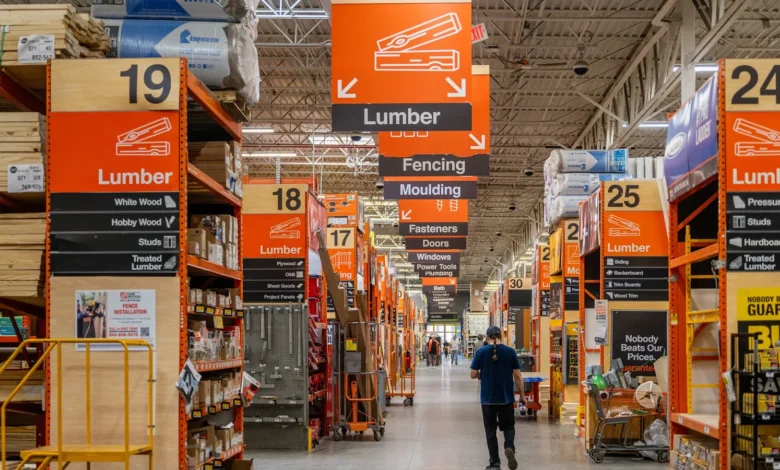
For many retailers, the influx of cash has served as a critical buffer against persistent inflationary pressures. The Home Depot and Lowe’s, for instance, have publicly noted that they are using the recouped funds to offset the rising costs of logistics and global procurement. By absorbing these supply chain expenses with tariff refunds, these retailers have been better positioned to maintain stable pricing for consumers despite the broader economic headwinds that have plagued the sector for much of the decade.
Other companies have taken a more direct route to consumer engagement. Retailers like Walmart and BJ’s Wholesale Club have explicitly linked their refund strategies to price-cutting initiatives. By leveraging the cash to lower the cost of goods, these companies aim to capture market share and foster consumer loyalty during a period of economic uncertainty. Burlington, the off-price retail giant, has similarly utilized these funds to "deliver sharper values," essentially passing the benefit of the government’s mistake directly to the shopper.
The Role of Human Capital and Internal Operations
The impact of these refunds has extended beyond the consumer to the corporate workforce. Williams-Sonoma has emerged as a notable example of a company choosing to distribute a portion of its refund to employees. The decision, which includes bonuses for staff members who worked extensively on the complex documentation required to file for IEEPA refunds, highlights a growing trend of "trickle-down" corporate social responsibility.

The administrative burden of these refunds was substantial. The Atlanta Fed survey revealed that nearly 70% of businesses relied on internal teams to navigate the intricacies of the CBP refund portal. This required the mobilization of legal, tax, and supply chain departments, often diverting staff from their primary operational roles for months. The subsequent decision to share the fruits of that labor with employees is viewed by many analysts as a mechanism for retaining talent and acknowledging the high-stress environment of post-ruling compliance.
The Market for Refund Rights
Not every company chose to navigate the long and arduous process of claiming a refund from the federal government. For firms facing immediate cash flow shortages or those lacking the internal infrastructure to manage the claims process, the market for "refund rights" provided an alternative.
Companies such as American Eagle Outfitters and The Children’s Place opted to sell their rights to potential tariff refunds to third-party financial institutions. By offloading these claims, these retailers were able to bolster their liquidity immediately rather than waiting for the multi-stage disbursement process managed by the CBP. This secondary market for government claims underscores the desperation for cash in the retail sector, where supply chain volatility has made working capital management more difficult than in previous years.
A Look Ahead: Processing and Economic Implications
The financial impact of the IEEPA refund process is far from over. As of mid-September 2026, the CBP is preparing for the next phase of the program: the processing of "finally liquidated" entries. This expansion, scheduled for October, is expected to release an even larger volume of capital into the economy.

The economic implications of this redistribution are complex. On one hand, the injection of billions of dollars into corporate accounts provides a significant stimulus to the retail and manufacturing sectors. On the other hand, the variation in how these funds are spent—ranging from share buybacks and debt repayment to price cuts and employee compensation—creates an uneven impact on the broader economy.
While Nintendo’s initial stance that "customers are not entitled to tariff refund benefits" reflects a traditional corporate perspective, the company’s pivot to a "customer appreciation sale" demonstrates the pressure firms face to justify how they utilize these unexpected windfalls. The optics of keeping billions in cash while consumers struggle with the cost of living have forced many executives to reconsider their public narrative regarding the refunds.
Chronology of the IEEPA Refund Process
- February 2026: The Supreme Court invalidates the IEEPA tariffs, declaring them an overreach of executive authority.
- April 2026: CBP launches a specialized digital portal to manage the influx of refund requests from affected importers.
- May–July 2026: Retailers and manufacturers initiate the mass filing process; secondary markets for refund rights gain traction among cash-strapped firms.
- August 2026: The Atlanta Fed conducts a comprehensive survey of corporate usage of the refunds, identifying a "nontrivial" shift toward employee and consumer benefits.
- September 11, 2026: CBP confirms total payouts have reached $135 billion, signaling that the majority of initial claims have been satisfied.
- October 2026 (Forthcoming): CBP to begin processing finally liquidated entries, further expanding the refund scope.
Concluding Analysis
The IEEPA refund event represents one of the largest administrative redistributions of capital in recent U.S. history. While the primary objective of the refund process was the restitution of companies for unconstitutional levies, the ripple effects have influenced corporate culture, retail pricing, and employee compensation.
The data suggests that while the "rational" corporate choice—retaining cash to strengthen the balance sheet—remains the dominant strategy, the influence of social expectations and competitive pressure is significant. As the CBP continues to finalize payments throughout the remainder of the year, the market will likely see continued adjustments in pricing strategies and labor investments. Whether this influx of capital leads to long-term structural changes in supply chain management or merely provides a short-term cushion remains to be seen. However, the precedent set by companies choosing to share these gains with employees and customers may provide a new framework for how businesses communicate their values during future periods of sudden financial windfalls. The story of the IEEPA refunds is, ultimately, a study in how large-scale economic corrections propagate through the layers of the American economy, from the halls of the Supreme Court down to the store shelves in Austin, Texas.