TJX Companies leverages strategic inventory hold-and-flow supply chain model to navigate volatile market conditions

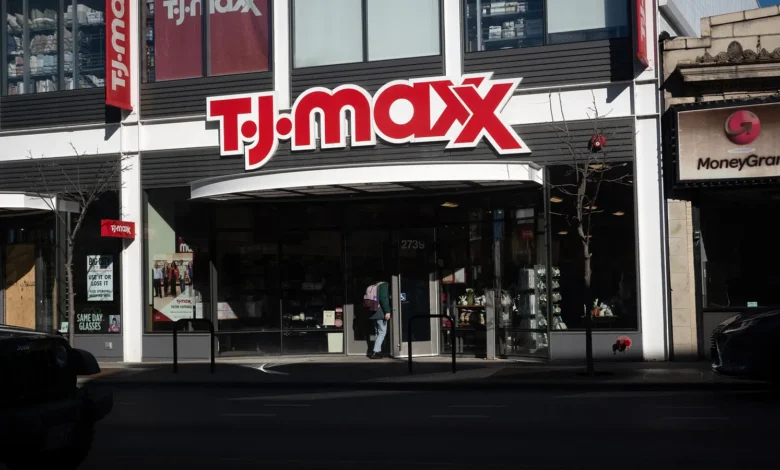
During the most recent second-quarter earnings call, executives at The TJX Companies, the parent organization of retail giants T.J. Maxx, Marshalls, and HomeGoods, provided a detailed look into the operational architecture that allows the firm to maintain its competitive edge. By utilizing a sophisticated supply chain strategy that prioritizes the ability to hold inventory rather than deploying it directly to storefronts, the off-price retail leader has successfully insulated itself from the unpredictable disruptions caused by fluctuating consumer demand and extreme weather events.
This strategic pivot highlights a broader shift in logistics management within the retail sector. As global supply chains face increasing pressure from climate instability—such as El Niño patterns—and shifting macroeconomic trends, the ability to buffer inventory has transitioned from a logistical preference to a core competitive advantage.
Understanding the Hold-and-Flow Methodology
At the heart of the TJX supply chain strategy is the "hold-and-flow," or staged, inventory model. Unlike traditional retail models that emphasize speed and immediate replenishment, this system is designed for precision and responsiveness. According to industry experts, including Dheera Anand, a partner at Bain & Company, this methodology allows retailers to act as a dam rather than a conduit.
In a traditional "flow-through" or "cross-dock" system, merchandise arrives at a distribution center from a supplier and is typically processed and shipped to store locations within 24 to 48 hours. While this reduces overhead costs associated with storage, it leaves little room for error if demand forecasts are incorrect or if external environmental factors—such as an unseasonably warm winter or a sudden economic downturn—dampen consumer interest in specific product categories.
Conversely, the hold-and-flow model mandates that a portion of the inventory remains in the distribution center, resting on racks until real-time sell-through data justifies its release. This allows TJX to monitor regional sales trends, adjust for weather-related shifts in foot traffic, and ensure that high-value or seasonal merchandise reaches the markets where it is most likely to be purchased at full price, rather than ending up as unwanted stock in stores where it might require deep discounting.
Chronology of Operational Evolution
The adoption of such a nuanced logistics strategy did not happen overnight. Over the past decade, the retail landscape has undergone a series of shocks that necessitated this evolution:
- 2014–2016: The rise of e-commerce forced traditional retailers to reconsider their physical footprints. During this period, TJX began investing heavily in its distribution network, recognizing that the ability to move goods dynamically would be essential to compete with digital-first players.
- 2020–2021: The global pandemic created unprecedented supply chain bottlenecks. Retailers with inflexible "just-in-time" supply chains struggled as goods were trapped in ports or misallocated to stores that were under government-mandated closures. TJX’s existing distribution infrastructure allowed for greater agility during this period of extreme volatility.
- 2023–2025: Increased climate awareness and the impact of phenomena like El Niño forced retailers to reconsider the predictability of seasonal demand. TJX solidified its hold-and-flow practices, integrating sophisticated predictive analytics to manage the flow of goods based on localized meteorological data.
- September 2026: In the latest earnings report, CEO Ernie Herrman confirmed that the company’s capacity to store and selectively release inventory remains a cornerstone of its strategy to mitigate the effects of weather volatility on retail performance.
Supporting Data and Industry Context
The divergence between hold-and-flow and flow-through systems represents a fundamental strategic choice for retailers. Data suggests that companies utilizing a hybrid model—which balances the two—often see higher margins on seasonal inventory.
For complex, high-fashion items, the hold-and-flow model is particularly effective. Because these items have higher variability in consumer preference, holding them allows retailers to "drip-feed" products into the market. This avoids the "bullwhip effect," where small fluctuations in demand at the retail level cause progressively larger fluctuations in demand at the wholesale and manufacturing levels.
Industry research indicates that while flow-through models are highly efficient for low-complexity, predictable items—such as basic apparel or staple home goods—they are prone to high inventory write-downs when applied to high-variety goods. By segmenting their assortment, retailers like TJX ensure that the supply chain is optimized for the specific nature of the product being moved.

Official Perspectives and Market Implications
The commentary provided by TJX leadership underscores a proactive approach to risk management. CEO Ernie Herrman noted that the ability to hold inventory is not merely a cost-saving measure but a tactical maneuver to ensure the "right product, at the right time, in the right place." By decoupling the receipt of goods from the distribution to storefronts, the company gains a critical window of time to analyze data that was previously unavailable in real-time.
From an analytical standpoint, this strategy has significant implications for the wider retail industry. Analysts suggest that as other major retailers face tightening margins and increasing pressure from inventory gluts, many are looking toward the TJX model as a benchmark. The capital investment required for large-scale distribution centers is substantial, yet the long-term benefit of reduced markdowns and better-optimized inventory levels provides a clear return on investment.
Broader Impact: The Future of Retail Logistics
The move toward more flexible supply chains is also being driven by the rise of data analytics and artificial intelligence. Predictive modeling now allows companies to anticipate regional demand spikes or weather-induced purchasing shifts with a high degree of accuracy. When these insights are paired with a hold-and-flow distribution model, retailers can transform their supply chain from a reactive cost center into a proactive revenue driver.
However, the strategy is not without its challenges. Maintaining significant inventory in distribution centers requires advanced facility management, high labor costs, and sophisticated warehouse management systems (WMS). For smaller retailers, or those with less robust capital backing, the hold-and-flow model may remain out of reach. This creates a widening gap in the retail sector, where well-capitalized firms leverage logistics as a defensive moat against market instability.
Furthermore, as global sustainability initiatives gain traction, the efficiency of these supply chains will come under increased scrutiny. Reducing the need to transport goods back and forth between stores due to poor allocation is an inherently sustainable practice, as it lowers carbon emissions associated with redundant logistics. By getting the allocation right the first time, TJX is not only optimizing its bottom line but also aligning its operational practices with modern expectations for corporate responsibility.

Conclusion
The evolution of TJX Companies’ supply chain strategy serves as a masterclass in modern retail logistics. By embracing the hold-and-flow model, the retailer has managed to turn the chaos of global supply chain volatility into a manageable, data-driven process. As the company looks toward the future, its continued investment in distribution capacity and predictive analytics will likely remain the primary driver of its success, providing a blueprint for other retailers seeking to navigate an increasingly complex and unpredictable global market.
Ultimately, the lesson of the 2026 earnings report is clear: in the modern retail era, success is defined not just by what a company sells, but by how effectively it manages the flow of that inventory. Through careful staging, informed by real-time data, TJX has positioned itself to remain resilient in the face of whatever environmental or economic challenges the future may hold.