CNCF Announces Annual Community Award Winners at KubeCon + CloudNativeCon North America 2026 Recognizing Excellence in Open Source Infrastructure

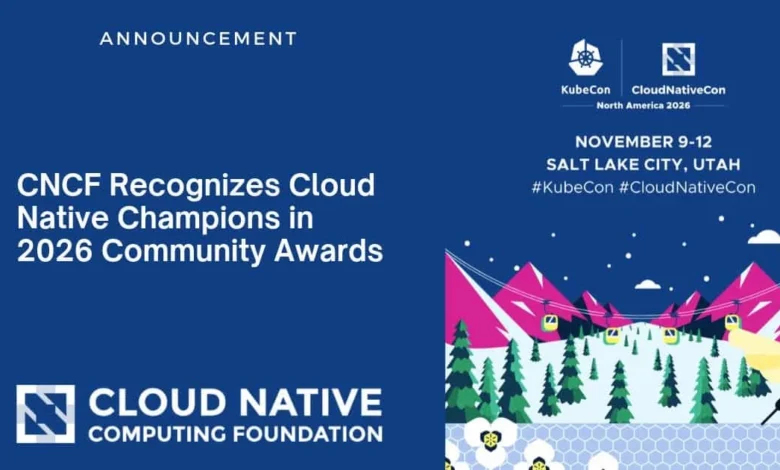
The Cloud Native Computing Foundation (CNCF), the primary governing body for the world’s most critical open source infrastructure projects, officially unveiled the recipients of its prestigious 2026 Community Awards on November 12, 2026. Held during the opening stages of KubeCon + CloudNativeCon North America in Salt Lake City, the ceremony served as a centerpiece for the global cloud native community, highlighting the individuals whose technical contributions and behind-the-scenes stewardship sustain the global digital economy.
Since its inception in 2016, the CNCF has evolved from a small collective focused on the incubation of Kubernetes into a sprawling ecosystem managing over 170 projects, including industry standards like Prometheus, Envoy, and containerd. The annual awards are designed to pierce through the corporate veneer of the technology sector to acknowledge the individual maintainers, documentarians, and community organizers who ensure these platforms remain secure, reliable, and accessible.
A Decade of Evolution: The Chronology of Recognition
The trajectory of the CNCF Community Awards mirrors the maturation of the cloud native movement itself. In the early years, the awards focused largely on code contributions to the core Kubernetes repository. However, as the ecosystem expanded into specialized domains—such as service meshes, serverless computing, and observability—the award categories were broadened to reflect the reality that "infrastructure" is now a socio-technical construct.
The 2026 ceremony marked a significant shift in focus, with the CNCF leadership emphasizing the need for sustainability in the face of the massive, resource-intensive demands posed by the current artificial intelligence boom. By honoring those who focus on observability, security governance, and network resource allocation, the Foundation signaled a pivot toward "infrastructure stability" as the primary objective for the coming decade.
Lifetime Achievement: Honoring the Architects of Modern Observability
The most anticipated announcement was the presentation of the Lifetime Achievement Award, which recognizes individuals whose sustained contributions have fundamentally altered the landscape of cloud native technology. This year, the CNCF honored Julius Volz and Rita Zhang, two figures whose work has become synonymous with the stability of production environments.
Julius Volz, a pivotal figure in the creation and proliferation of Prometheus, has been instrumental in defining how modern organizations monitor the health of their distributed systems. His work has transitioned from an experimental monitoring tool to the de facto standard for cloud native observability. Rita Zhang, conversely, has been a driving force in the realm of Kubernetes security and governance, creating frameworks that allow enterprises to maintain strict compliance in highly dynamic, containerized environments.
"The Lifetime Achievement Award honors the people whose sustained work keeps this community strong and moving forward," noted Jonathan Bryce, Executive Director of the CNCF. "Julius and Rita have spent over a decade building the observability and security infrastructure this community depends on every day. Their work ensures the enduring health of the entire cloud native community for years to come."
Technical Excellence and the Top Committer Award
The Top Cloud Native Committer Award serves as a high-water mark for technical output. For 2026, the award was presented to an individual whose contributions to Kubernetes networking have been described by technical peers as "foundational for the next generation of hardware-aware scheduling."
The recipient’s work on IPv6 dual-stack support has been a critical bridge for telecommunications providers and hyperscalers migrating to more robust network protocols. Furthermore, the development of the KIND (Kubernetes in Docker) testing infrastructure has lowered the barrier to entry for developers globally, allowing for complex integration tests that were previously prohibitive in terms of cost and time. Perhaps most notably, the extension of Dynamic Resource Allocation (DRA) through the DRANET initiative has paved the way for more efficient utilization of specialized hardware—such as GPUs and TPUs—within the Kubernetes ecosystem, a development that is increasingly vital as AI workloads saturate data center resources.
The Backbone of the Ecosystem: Chop Wood Carry Water
While technical innovation often grabs headlines, the CNCF has long recognized that the longevity of open source projects depends on "the gritty work." The Chop Wood Carry Water Award is dedicated to those who handle the unglamorous, often invisible tasks that keep the ecosystem operational.
This year’s recipients were recognized for their roles in managing the complex Istio release cycles, maintaining core Kubernetes controllers, and spearheading mentorship programs that bridge the gap for junior developers. Industry analysts suggest that this specific award is becoming increasingly important as the "bus factor"—the number of people who can maintain a project before it grinds to a halt—becomes a primary concern for the enterprises relying on CNCF projects for their business-critical applications.
Elevating the User Experience: The Lorem Ipsum Award
Formerly known as the Top Documentarian award, the Lorem Ipsum award underscores a shift in how the Foundation views usability. Documentation is no longer seen as an auxiliary task but as a primary feature of the software itself. The 2026 winners were honored for their efforts in simplifying the complex documentation required for the eBPF ecosystem and the Cilium networking project.
By improving the clarity and accessibility of technical manuals, these contributors have enabled a broader range of organizations to adopt cloud native architectures, thereby reducing the "expertise gap" that has historically limited the adoption of advanced cloud technologies in non-technical industries.
Broader Impact: Sustainability in the AI Age
The 2026 KubeCon + CloudNativeCon event occurred against a backdrop of increasing scrutiny regarding the sustainability and security of the open source supply chain. The CNCF’s focus on these awards serves as a strategic reminder that infrastructure is not self-sustaining; it requires a human-centric support system.
Data from the CNCF’s most recent annual survey indicates that while adoption of Kubernetes remains at an all-time high, the biggest hurdle for organizations in 2026 is "complexity management." By honoring those who streamline infrastructure, the Foundation is directly addressing this bottleneck. The implications of this are significant: as companies move from the experimental phase of cloud native adoption to large-scale, AI-integrated production, the work of these award winners becomes the bedrock upon which corporate digital strategy is built.
Official Responses and Future Outlook
Chris Aniszczyk, CTO of the CNCF, summarized the sentiment of the ceremony, noting that the winners represent the "grit" required to maintain the backbone of the internet. "From maintaining critical infrastructure and security updates to writing the documentation that makes projects usable, these contributors do the work that keeps our projects dependable," Aniszczyk said.
Looking ahead, the CNCF is encouraging the broader community to participate in its End User Community initiatives, which facilitate collaboration between the developers building these tools and the organizations that deploy them at scale. With the upcoming KubeCon + CloudNativeCon Europe in 2027, the focus is expected to shift toward international governance and the standardization of security protocols in an increasingly fragmented regulatory landscape.
About the Cloud Native Computing Foundation
The Cloud Native Computing Foundation (CNCF) operates as a subsidiary of The Linux Foundation. It provides a vendor-neutral home for the world’s most influential cloud native projects. With a membership of over 800 organizations, ranging from global cloud providers to small-scale startups, the CNCF manages a multi-billion dollar ecosystem of software. By fostering an environment of open collaboration, the Foundation ensures that the underlying infrastructure of the digital world remains decentralized, secure, and accessible to all. For further information on how to engage with the CNCF, participate in project governance, or register for upcoming technical events, the Foundation directs all interested parties to its official portal at www.cncf.io.
Related posts: