Bridging the Critical Divide Between Identity Management and Security Operations to Mitigate Modern Cyber Threats

Security teams currently operate in an environment defined by an unprecedented volume of data. Modern Security Operations Centers (SOCs) are inundated with a relentless stream of alerts, logs, and telemetry from an ever-expanding array of monitoring tools, including Security Information and Event Management (SIEM) platforms and Endpoint Detection and Response (EDR) solutions. Despite this proliferation of defensive technology, a fundamental, persistent question continues to plague incident responders during a crisis: Who or what is the actor behind this activity, and what is the extent of their access?
The complexity of modern enterprise environments has shifted the focus from simple network perimeter defense to the nuances of identity. A suspicious login attempt could be a legitimate employee working from a new location, a machine account performing a scheduled maintenance task, or an autonomous AI agent overstepping its assigned permissions. Without the ability to map these activities to a concrete identity—and more importantly, to the specific access rights associated with that identity—security teams are effectively operating in the dark.
The Historical Context of the Identity-Security Silo
For decades, Identity and Access Management (IAM) and Security Operations (SecOps) functioned as distinct pillars within the enterprise. IAM teams were responsible for provisioning, governance, and compliance, ensuring that users had the right access to the right resources. Meanwhile, SecOps teams focused on threat hunting, incident response, and the containment of malicious activity.
This structural divide was manageable in an era of static, human-centric access. However, the rapid acceleration of digital transformation, the rise of cloud-native architectures, and the integration of machine identities have rendered this traditional separation obsolete. According to industry reports from firms such as Gartner and Forrester, the explosion of non-human identities—including service accounts, API keys, and automated workloads—has created an "identity sprawl" that current security tools are ill-equipped to manage.
The risk is not merely theoretical. In numerous high-profile breaches over the last five years, attackers have successfully exploited the gap between IAM and SecOps. By compromising a service account with elevated privileges, adversaries have been able to move laterally across networks, often remaining undetected for months because their activity mimicked legitimate automated processes. When alerts were triggered, they were frequently dismissed as false positives or "noise" because the SOC lacked the identity-centric context to recognize that the service account was accessing systems it had no business interacting with.
Chronology of the Identity-Security Convergence
The recognition of this "blind spot" has led to a major shift in cybersecurity strategy. The following timeline illustrates the evolution of this challenge:
- 2015–2018: The Perimeter Era. Focus remained largely on network-based defenses. Identity was treated as an auxiliary component of security rather than the primary perimeter.
- 2019–2021: The Remote Work Shift. The pandemic-driven transition to remote work accelerated the adoption of Zero Trust architectures. Organizations began to realize that identity was the new, fractured perimeter.
- 2022–2023: The Rise of Machine Identities. With the widespread adoption of AI and cloud automation, the number of machine-to-machine identities began to outpace human identities by a factor of 10 to 1, as noted by recent industry surveys.
- 2024–Present: The Integration Phase. Leading organizations are now actively integrating identity intelligence directly into their SOC workflows, moving away from fragmented dashboards toward a unified view of risk.
Supporting Data and the Cost of Complexity
The implications of failing to bridge this gap are quantifiable. Research into incident response times indicates that the average time to identify and contain a breach remains stubbornly high, often exceeding 200 days. A significant portion of this time is spent by analysts manually correlating data between IAM platforms and SIEM logs.
When an analyst encounters a suspicious API call, they must manually cross-reference the account owner in an HR database, verify the permissions in an IAM console, and then check the server logs in the SIEM. This manual labor is not only inefficient but error-prone. Industry data suggests that nearly 40% of SOC analyst burnout is attributed to the cognitive load of managing disparate, siloed data sources. By automating the enrichment of security alerts with real-time identity context, organizations can reduce the "mean time to investigate" (MTTI) by as much as 60%, allowing teams to prioritize legitimate threats over false positives.
The Emerging Role of AI and Automation
The integration of AI agents into corporate environments adds a layer of complexity that traditional security models cannot address. These agents often operate with autonomous decision-making capabilities, and in many cases, their permission sets are poorly defined or lack periodic review.
If an AI agent is compromised, it could theoretically perform thousands of actions in seconds, effectively weaponizing its legitimate access against the organization. Security teams that do not have a clear, automated mechanism to audit these agents—and the ability to revoke their access in real-time—are essentially leaving the keys to their digital kingdom on the table.
Practical Implications for Modern Security Operations
To effectively mitigate these risks, organizations are shifting toward a strategy of "Identity-Centric SecOps." This approach mandates that every security alert be enriched with the following data points before it reaches an analyst:
- Identity Ownership: Is the activity linked to a human, a machine, or an automated agent?
- Privilege Context: Does the identity possess administrative rights? What is the scope of its access?
- Behavioral Baseline: How does this activity compare to the historical behavior of this specific identity?
- Blast Radius: If this identity is compromised, what is the maximum potential damage it could inflict on critical infrastructure?
By incorporating this metadata into the initial alert, SOC analysts can make immediate, informed decisions. For instance, if a service account typically only interacts with a specific database, an alert showing that same account attempting to access a financial system can be automatically escalated and isolated, rather than being treated as a routine anomaly.
Strategic Alignment: A Path Forward
The path toward a more resilient security posture lies in the convergence of policy and operations. It is no longer sufficient for IAM teams to define access policies in isolation. Instead, these teams must collaborate with SecOps to define "behavioral boundaries" for every identity in the organization.
This alignment requires a cultural shift within the IT department. Organizations that successfully bridge this gap report a significant improvement in their incident response playbooks. By establishing shared metrics—such as "time to identify identity-based anomalies"—and creating cross-functional response protocols, firms can ensure that their security posture is proactive rather than reactive.
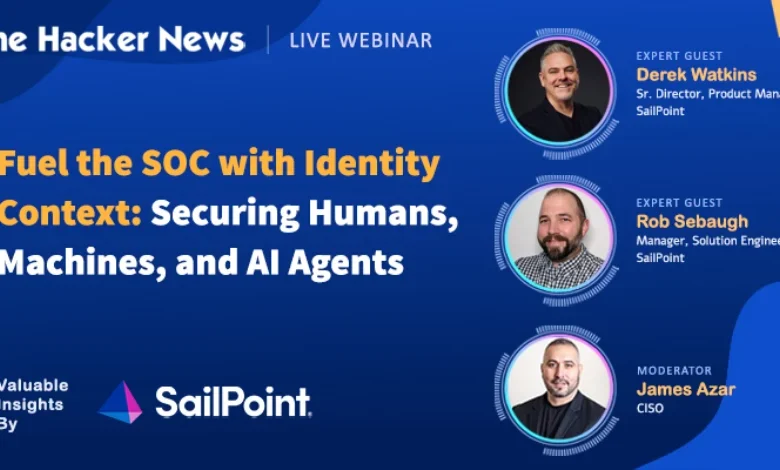
As part of this effort, industry leaders are increasingly turning to expert-led training and webinars to educate their teams on the integration of identity context into their existing toolsets. A focus on "Fueling the SOC with Identity Context" is becoming a standard recommendation for CISOs looking to optimize their security operations. By bringing together experts to discuss real-world enterprise deployments, these initiatives provide the blueprint for investigating lateral movement and understanding the true blast radius of an incident without disrupting critical production systems.
Conclusion: The Future of Defensive Security
The fundamental challenge for the modern SOC is no longer just "detecting" the threat; it is "interpreting" it. As the threat landscape continues to evolve, the distinction between identity management and security operations will continue to blur. The organizations that succeed in the coming years will be those that view identity as the central axis around which their entire security strategy revolves.
By closing the gap between identity intelligence and incident response, security teams can transition from a state of constant, manual reaction to a more strategic, automated, and informed defense. The goal is to ensure that when the next alert flashes on the screen, the analyst doesn’t just see a log entry—they see a clear, actionable picture of who is acting, what they are doing, and how to stop them before the damage is done. Your SOC already has the alerts; the next logical step is to provide the context required to act with precision and confidence.