United Airlines Blocks AI Agents from Booking and Managing Flights, Citing Security and Regulatory Risks

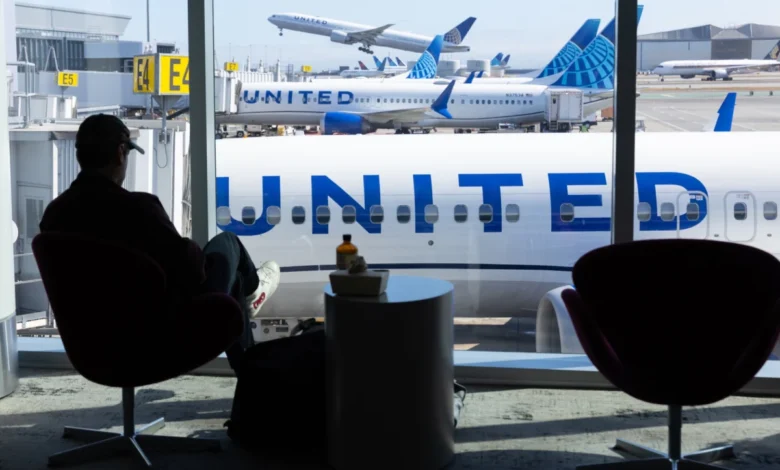
United Airlines has officially announced stringent measures to restrict autonomous artificial intelligence agents from accessing its digital platforms to book flights and manage customer reservations. The aviation giant cited mounting cybersecurity vulnerabilities and potential violations of federal aviation regulations as the primary drivers behind the policy shift. This decision places United at the forefront of a growing corporate movement among airlines, financial institutions, and major digital service providers grappling with the rapid proliferation of generative AI tools and autonomous personal assistants.
As artificial intelligence technologies transition from conversational interfaces to action-oriented agents capable of executing tasks on behalf of users, businesses are confronting unprecedented operational challenges. United Airlines, like many consumer-facing enterprises, is struggling to distinguish between legitimate human customers and automated software systems interacting with its booking engines, ticketing infrastructure, and distribution networks.
The Core Security Dilemma: Credential Sharing and Data Exposure
At the heart of United’s new restrictive policy is the practice of credential sharing. To enable an AI agent to check flight prices, select seats, or manage loyalty accounts, users frequently must surrender their personal login credentials—including usernames, passwords, and multi-factor authentication details—to third-party software developers or locally hosted AI applications.
Security experts have long warned that routing sensitive personal information and private account keys through third-party AI frameworks creates massive attack surfaces. If an AI provider experiences a data breach, suffers from improper log management, or utilizes customer interaction data to train future foundational models, sensitive personal identifiable information (PII), payment details, and loyalty account credentials can be exposed.
Furthermore, United highlighted the unpredictable nature of autonomous digital agents. In its official statement, the airline warned that actions executed independently by these tools frequently result in unintended financial consequences, such as unauthorized ticket purchases, inadvertent account modifications, or the irreversible spending of valuable MileagePlus miles. Because these systems operate on probabilistic algorithms rather than deterministic logic, the risk of misinterpretation during a transaction remains exceptionally high.
Navigating Federal Aviation Regulations and Compliance
Beyond cybersecurity and consumer protection concerns, United’s decision is deeply rooted in compliance with federal aviation laws. Strict regulations governing commercial aviation require direct, verifiable human participation during specific phases of the pre-flight journey.
A prime example cited by the carrier involves the mandatory check-in process. Federal security directives mandate that passengers must personally complete their check-in workflows to acknowledge and certify that their baggage does not contain hazardous materials, restricted weapons, or prohibited dangerous goods. When an autonomous AI agent completes a check-in procedure on a traveler’s behalf, it legally bypasses the direct human attestation required by regulatory authorities. Allowing software to make these representations creates severe legal liabilities for both the passenger and the airline under federal transport law.

To mitigate these compliance risks, United has updated its comprehensive booking, ticketing, and distribution policies. The restrictions are designed to block unauthorized third-party personal AI agents not only from its proprietary consumer-facing websites and mobile applications but also indirectly through external travel agencies, global distribution systems (GDS), and online ticket aggregators.
A Broader Corporate Trend: The Financial Sector Precedent
United’s decisive policy shift does not occur in a vacuum. It mirrors an escalating industry-wide defensive posture adopted by major consumer corporations facing the unauthorized encroachment of autonomous AI tools.
Just weeks prior to United’s announcement, the banking sector signaled identical alarms. In late October 2026, financial titan Bank of America issued a formal, public advisory explicitly urging its millions of customers to refrain from sharing their online banking passwords, account PINs, and security tokens with personal AI assistants. Financial institutions argued that third-party scrapers and autonomous agents attempting to execute banking transactions, review statements, or initiate fund transfers violate standard consumer banking agreements and void fraud protection guarantees.
As retail AI agents become more sophisticated—shifting from simple chatbots to autonomous digital delegates that manage personal schedules, emails, and finances—legacy digital infrastructure is facing an existential strain. Traditional web applications were fundamentally designed for human interaction, utilizing CAPTCHAs, behavioral biometrics, and multi-factor authentication to verify human presence. The introduction of headless browsers and AI agents bypassing these gatekeepers forces companies to either completely overhaul their digital architectures or implement strict access controls.
Industry Implications and the Future of AI Integration
The standoff between major service enterprises and AI developers highlights a critical philosophical split in the evolution of modern software. On one side, AI developers envision a frictionless ecosystem where autonomous agents seamlessly navigate the web, booking flights, managing bank accounts, and coordinating schedules without human intervention. On the other side, corporations prioritize deterministic security, legal compliance, and fraud prevention, viewing autonomous agents as unauthenticated bots that threaten data integrity and regulatory compliance.
For travelers and consumers, United’s policy means the immediate end of using autonomous third-party assistants to hunt for cheap fares or manage itineraries directly via automated credentials. Industry analysts suggest that if consumers want AI assistance in travel planning, the interaction model will likely have to shift from "agent-as-user" (where the AI logs in as you) to "API-native integration" (where airlines officially partner with AI platforms and build secure, authenticated protocols that do not require credential sharing).
As regulatory bodies continue to evaluate the legal status of autonomous artificial intelligence, United Airlines’ aggressive stance serves as a watershed moment for the travel industry. It establishes a clear legal and technical precedent: until secure, standardized, and regulation-compliant frameworks for autonomous agent communication are established, corporate digital fortresses will remain firmly closed to unauthorized AI tools.