White House Network Security Compromised by Unsanctioned Residential Proxy Services

Security researchers have identified a significant and potentially dangerous cybersecurity vulnerability within the Executive Office of the President’s network, where multiple devices appear to be actively participating in residential proxy networks. These services, which allow third parties to rent the internet addresses of unsuspecting users to route their web traffic, have effectively turned high-level government computers into exit nodes for anonymous—and potentially malicious—internet activity.
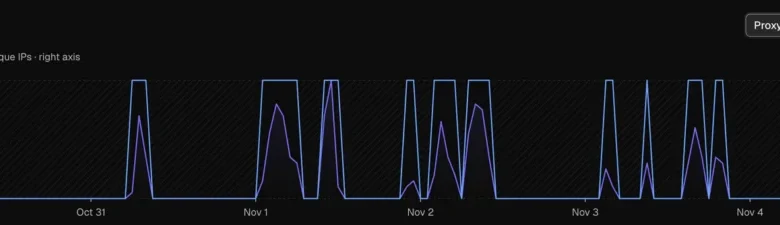
The discovery was made by the security intelligence firm Layer3 Intel, which detected persistent beaconing originating from the specific internet address block assigned to the White House (AS2650). Between October 5 and November 3, researchers observed that the White House network served as an exit point for external traffic on 236 separate occasions. This activity was not an isolated incident but a recurring pattern, with the network being leveraged on 26 out of the 30 days monitored, primarily during evening hours between 5 p.m. and midnight.
The Mechanism of the Breach
The phenomenon of residential proxy networks has grown significantly in recent years. These services function by installing small, often hidden, pieces of software—frequently embedded as Software Development Kits (SDKs) within "free" desktop or mobile applications—onto a user’s device. Once installed, the device becomes a "node" in a global network. Third-party customers can then pay to rent these nodes, allowing them to mask their true location and identity behind the legitimate IP address of the victim.
In the case of the White House, the traffic was linked to several installations of a proxy service known as Infatica. Analysts at the tracking firm Synthient confirmed that the activity observed was consistent with Windows 11 systems running Infatica’s client software. The implications are severe: because the traffic appears to originate from a trusted, government-owned IP address, it can bypass many standard security filters and reputation-based blocking systems used by major websites and platforms.
A Troubling Pedigree
The connection to Infatica carries heightened geopolitical concerns due to the background of its founder, Vladimir Fomenko. Fomenko is the owner of King Servers, a Russian web hosting provider that was explicitly linked to the 2016 interference in U.S. election systems. According to federal investigators and various cybersecurity reports, King Servers provided the infrastructure for six of the eight internet addresses used by Russian state-sponsored actors to breach databases in Arizona and Illinois.
While there is no immediate evidence that current White House activity is linked to state-sponsored espionage, the use of a service with such a documented history of involvement in high-stakes cyberattacks within the Executive Office of the President creates a substantial security risk. By allowing this software to persist on government-issued devices, users have unwittingly provided a conduit for anonymous actors to bypass perimeter defenses.
Layer3 Intel’s Findings: A Systemic Vulnerability
The findings by Layer3 Intel suggest that the issue may be more pervasive than a single proxy service. While Infatica was identified as a primary contributor, the researchers discovered that a total of 28 separate residential proxy services were capable of exiting through the White House’s network during the observation window.
"This is public access," the Layer3 Intel team stated in their report. "Anybody can obtain it by signing up to a public residential proxy service, paying a few dollars and sending requests through it. We did not selectively target this network or try to make our probes exit from it. We caught this by chance, simply by requesting global rotating access through these services."
The fact that this access is available for a negligible cost—in some cases as low as 60 cents per gigabyte—highlights the democratization of sophisticated cyber-probing tools. Criminals, hostile intelligence services, or even corporate entities can purchase this access without undergoing rigorous "Know Your Customer" (KYC) verification, effectively purchasing a "backdoor" into one of the most sensitive networks in the world.
Broader Context and Industry-Wide Risks
The presence of residential proxies on government networks is not a unique problem for the White House; it is a symptom of a much larger, systemic crisis in enterprise and government network security. Research conducted in early 2026 by the security firm Spur identified residential proxy nodes within nearly 300 government-owned networks, as well as 318 utility companies, 166 healthcare providers, and over 140 financial institutions.
The threat landscape for these services has evolved beyond simple IP masking. In early 2026, researchers exposed a vulnerability in residential proxy protocols that allowed attackers to pivot from the proxy node to the user’s local network. This "Kimwolf" exploit demonstrated that a compromised machine—such as a laptop used by a staffer—could serve as a bridge, allowing an attacker to probe, map, and potentially infect other sensitive devices within the same internal, air-gapped, or restricted network.
Ben Brundage, founder of Synthient, has been a vocal critic of the lack of regulation surrounding these services. "Some of these resellers sell bandwidth for as low as 60 cents a gigabyte, meaning for less than a dollar you can gain access into some of the most confidential and trusted networks," Brundage noted. "The reseller ecosystem further enables this with any criminal able to buy access while skipping KYC processes."
Implications for Federal Cybersecurity
The presence of these proxies on the Executive Office of the President’s network suggests a failure in endpoint management and a lack of awareness regarding the risks posed by seemingly innocuous application permissions. When a staffer installs a free, ad-supported, or "utility" application on a government-issued device, they may be granting the software permission to act as a proxy node as part of the application’s terms of service.
The implications of this are twofold:
- Data Exfiltration and Network Mapping: By maintaining an open conduit to the outside world, these devices could inadvertently allow external parties to scan internal network resources, identify vulnerabilities in local infrastructure, or intercept internal traffic patterns.
- Reputational and Operational Damage: The White House IP space is highly trusted. If that network is used to perform illicit activities—such as mass scraping, advertising fraud, or credential stuffing—the government’s own IP addresses could be blacklisted by security vendors, disrupting legitimate government communications and web services.
Official Response and Next Steps
As of this reporting, the White House has not issued an official statement regarding the findings. Cybersecurity experts anticipate that the incident will trigger a sweeping review of device management policies within federal agencies. Industry analysts suggest that remediation will likely require a move toward "Zero Trust" architectures, where network traffic is strictly policed at the endpoint level, and the installation of unauthorized third-party applications is blocked via aggressive Mobile Device Management (MDM) and Endpoint Detection and Response (EDR) solutions.
The incident serves as a stark reminder that in the modern digital age, the "perimeter" of a secure network is only as strong as the most peripheral device connected to it. With residential proxy services becoming increasingly sophisticated and widely available, the risk to national security is no longer confined to traditional hacking techniques; it now includes the quiet, steady erosion of security caused by the very tools employees use in their day-to-day work.
For government IT departments, the challenge will be to balance the functionality required by staff with the stringent security controls necessary to prevent these devices from becoming unwilling participants in the global botnet economy. Until such controls are effectively enforced, the White House—and hundreds of other critical institutions—remain vulnerable to this low-cost, high-impact form of digital encroachment.