Breakneck data center growth challenges Microsoft’s sustainability goals

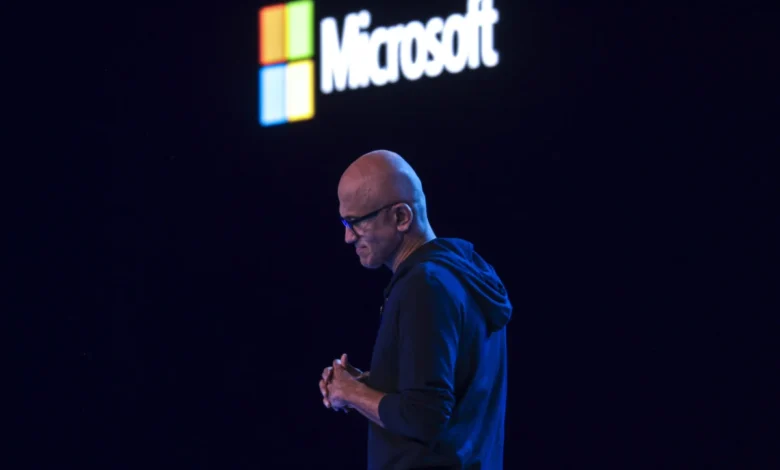
Microsoft’s latest sustainability report, published late last week, serves as a stark case study in the tension between the global race for artificial intelligence supremacy and the corporate imperative to achieve net-zero emissions. While the software giant has long positioned itself as a leader in climate pledges, the document reveals that since 2020, the company’s total carbon emissions have surged by 23.4%. This upward trajectory is primarily attributed to the massive, energy-intensive buildout of data centers required to support the exponential growth of its cloud computing infrastructure and AI model training pipelines.
The Anatomy of Scope 3 Emissions
The core of the issue lies within "Scope 3" emissions—a category of carbon output that encompasses the entire supply chain, including raw materials, manufacturing processes, transportation, and the lifecycle of purchased goods. For Microsoft, these emissions represent a staggering 97% of its total carbon footprint for the 2024 fiscal year.
Unlike Scope 1 (direct emissions from owned sources) or Scope 2 (indirect emissions from purchased electricity), Scope 3 is notoriously difficult to manage because it lies largely outside the company’s direct control. The capital goods and services purchased by Microsoft—specifically the steel, concrete, and high-end semiconductors required to construct and equip sprawling data centers—are the primary drivers of this carbon intensity.
The construction phase is particularly problematic. Steel production remains heavily reliant on traditional blast furnaces that burn coal, while the chemical processes required to manufacture cement are inherently carbon-intensive, releasing significant amounts of carbon dioxide during production. Furthermore, the semiconductor chips that power the AI revolution are manufactured using specialized chemicals like hexafluoroethane. This gas is a potent greenhouse agent; a single ton of hexafluoroethane has a warming potential equivalent to roughly 9,200 tons of carbon dioxide, underscoring the massive environmental cost of high-performance computing.
A Chronology of Corporate Climate Ambition
To understand the current friction, it is necessary to look at Microsoft’s climate roadmap over the last several years:
- 2020: Microsoft makes a bold commitment to become carbon negative by 2030, pledging to remove more carbon from the atmosphere than it emits.
- 2021–2022: The company aggressively expands its data center footprint as cloud demand spikes during the global shift to remote work.
- 2023: Microsoft begins to feel the cooling effect of the "AI boom," as the massive computational power required for Large Language Models (LLMs) significantly increases electricity demand.
- 2024: The latest sustainability report confirms that while total emissions are down slightly from 2023, the baseline remains significantly higher than when the initial 2030 pledge was made.
- 2025: The company shifts its focus toward massive investments in renewable energy and carbon-removal technologies to close the gap.
Navigating the Energy Gap
While the procurement of clean electricity is often cited as the "easy part" of decarbonization, Microsoft’s report highlights a logistical bottleneck: location. Data centers must be built where there is physical space and access to power, but these sites are not always near the most robust sources of renewable energy.
"Our electricity consumption has grown faster than the grids where we operate have decarbonized," a Microsoft spokesperson noted. This mismatch forces the company to rely on renewable energy credits or power purchase agreements (PPAs) that may not always align geographically with their actual consumption, creating a reliance on the existing, still-carbon-heavy grid.
To address this, Microsoft has become a dominant force in the renewable energy market, amassing a portfolio of 34 gigawatts of zero-carbon electricity capacity. Recent months have seen the company anchor massive renewable energy coalitions and sign multi-gigawatt deals for solar and wind energy. However, these investments often take years to come online, creating a "time-lag" between the demand for AI and the availability of the clean energy required to power it.
Industry Implications and Technological Bets
Microsoft is not merely a passive observer of its supply chain emissions; it is actively investing in the decarbonization of industrial materials. The company has directed capital toward startups pioneering "green steel" and low-carbon cement, such as firms developing micro-kilns for cement production or electric iron purification methods.
These investments represent a hedge against the future. If Microsoft can influence the supply chains of the heavy industries that build its infrastructure, it can lower its Scope 3 profile over the long term. However, these are long-horizon bets. As the spokesperson acknowledged, "We reflect the challenges the world must overcome to develop and use greener concrete, steel, fuels, and chips."
Analysts note that the implications of this report extend far beyond Microsoft. The entire "hyperscaler" industry—including Google, Amazon, and Meta—is facing the same dilemma: how to scale infrastructure for the AI era without abandoning climate goals. The Microsoft report effectively signals that the "low-hanging fruit" of corporate sustainability (such as office energy efficiency or business travel) has been picked, and the industry is now confronting the much harder task of decarbonizing the physical economy.
The 2030 Horizon
With 2030 approaching rapidly, the company is under immense pressure to prove that its growth and its climate goals are not mutually exclusive. The forecast suggests that Microsoft must cut its emissions by more than 50% while simultaneously scaling its carbon removal efforts—a daunting task that requires both technological breakthroughs in material science and a fundamental acceleration in grid decarbonization.
Despite the challenges, the slight year-over-year decrease in 2024 emissions provides a glimmer of hope. It suggests that the company’s efforts to optimize its data center designs—improving cooling efficiency, using lower-carbon building materials, and integrating more renewable power—are beginning to yield results.
Whether these gains can outpace the relentless demand for AI compute capacity remains the defining question for Microsoft’s sustainability team. For now, the company remains caught between the promise of the AI revolution and the hard, carbon-intensive reality of building the digital infrastructure that sustains it. The coming years will be critical in determining whether these investments in green technology can scale at the pace required to honor the company’s commitment to the planet.
Related posts: