Amazon S3 Tables Now Support Managed Migration of Apache Hive Tables to Apache Iceberg for Streamlined Data Lake Modernization

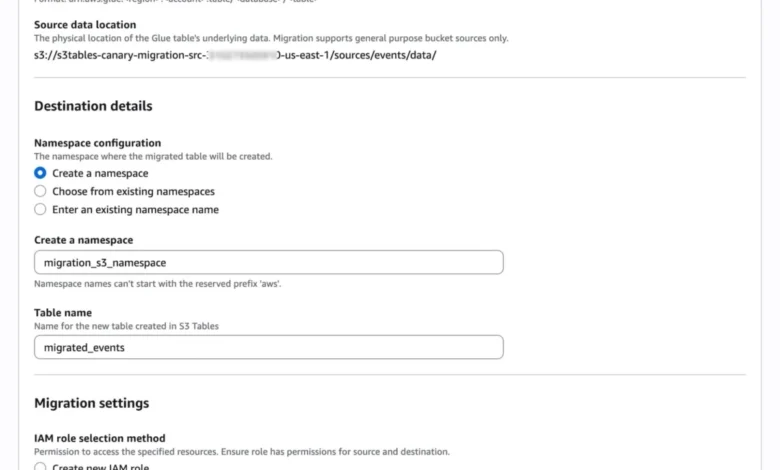
The landscape of big data management is undergoing a significant transformation as Amazon Web Services (AWS) introduces a managed, API-driven solution for migrating legacy Apache Hive tables to the Apache Iceberg open table format within Amazon S3 Tables. This development addresses a long-standing challenge in data engineering: the operational burden of re-platforming petabyte-scale data lakes. By automating the migration workflow—including data validation, compatibility checks, and file recompression—AWS is positioning this feature as a critical component for organizations looking to modernize their analytics infrastructure without incurring the massive downtime or engineering overhead previously associated with such transitions.
The Evolution of Data Lake Architectures
For over a decade, Apache Hive has served as the foundational metadata layer for data lakes built on S3. However, as enterprise data requirements have evolved toward high-frequency updates, schema evolution, and time-travel analytics, the industry has gravitated toward modern table formats. Apache Iceberg has emerged as the de facto standard for large-scale analytics, offering superior performance through features like hidden partitioning and snapshot isolation.
Historically, the transition from Hive to Iceberg was a manual, high-risk endeavor. Data engineers were required to design and deploy custom ETL pipelines to convert Parquet files, map data types, and ensure that downstream applications remained consistent. This process often took weeks or months, required temporary compute resources, and created significant risk of data inconsistency. The new S3 Tables capability effectively eliminates these bottlenecks by moving the logic into a managed service layer.

Mechanics of the Managed Migration Workflow
The migration process is designed to operate with minimal impact on production workloads. When an organization initiates a migration from the S3 console or through the AWS Command Line Interface (CLI), the system first conducts a comprehensive assessment of the source Hive table registered in the AWS Glue Data Catalog.
The workflow is categorized into four primary phases:
- Compatibility Analysis: The system generates a detailed report identifying potential roadblocks, such as incompatible data types or misaligned schema definitions. This allows administrators to rectify issues before any data movement occurs.
- Incremental Synchronization: Unlike traditional "lift and shift" operations, S3 Tables supports repeated synchronization. Data can be copied from the source Hive table to the new Iceberg destination incrementally. This enables organizations to maintain the destination table in a state that reflects ongoing changes to the production source.
- Compaction and Recompression: During the migration, the service handles file recompression and compaction, ensuring that the resulting Iceberg tables are optimized for query performance immediately upon cutover.
- Final Cutover: The final phase involves a brief period of read-only status for the source table to ensure data integrity, followed by the promotion of the new Iceberg table to a full read-write state.
This iterative approach is particularly beneficial for large datasets where a single, instantaneous migration might be impractical due to the volume of data or the constraints of production uptime.
Economic and Operational Implications
From an economic perspective, the managed migration path offers a clear advantage over self-managed alternatives. Users are charged only for the data transferred, with no additional service fees for the actual conversion process. Furthermore, the migration preserves the storage lifecycle policy of the underlying data. If source objects reside in S3 Intelligent-Tiering, they remain in their existing access tier, preventing unnecessary costs associated with moving data between storage classes during the transition.

The integration of this service with the AWS Agent Toolkit and the inclusion of specialized skills for AI-driven coding agents signal a shift toward "autonomous" infrastructure management. By using the migrating-hive-tables-to-s3-tables skill, developers can interact with the migration process through natural language commands, supported by safety guardrails that prevent common configuration errors.
Industry Context and Strategic Significance
The move to normalize Iceberg adoption via S3 Tables is not merely a feature release; it is a strategic maneuver to standardize the AWS data ecosystem. By removing the friction of migration, AWS is encouraging a broader shift toward Iceberg, which is compatible with a wide array of engines including Amazon Athena, Amazon Redshift, and Amazon SageMaker.
Industry analysts observe that this move directly addresses the "migration tax" that has prevented many enterprises from abandoning legacy architectures. By providing a low-risk, API-first migration path, AWS is likely to accelerate the consolidation of disparate data silos into unified, Iceberg-based data lakes. This standardization simplifies the development of downstream machine learning and business intelligence pipelines, as data scientists and analysts no longer need to navigate the complexities of heterogeneous table formats.
Regional Availability and Technical Prerequisites
At the time of launch, the managed migration feature is available in several key AWS Regions, including US East (N. Virginia, Ohio), US West (Oregon), Asia Pacific (Mumbai, Singapore, Sydney, Tokyo), and Europe (Frankfurt, Ireland, Stockholm).
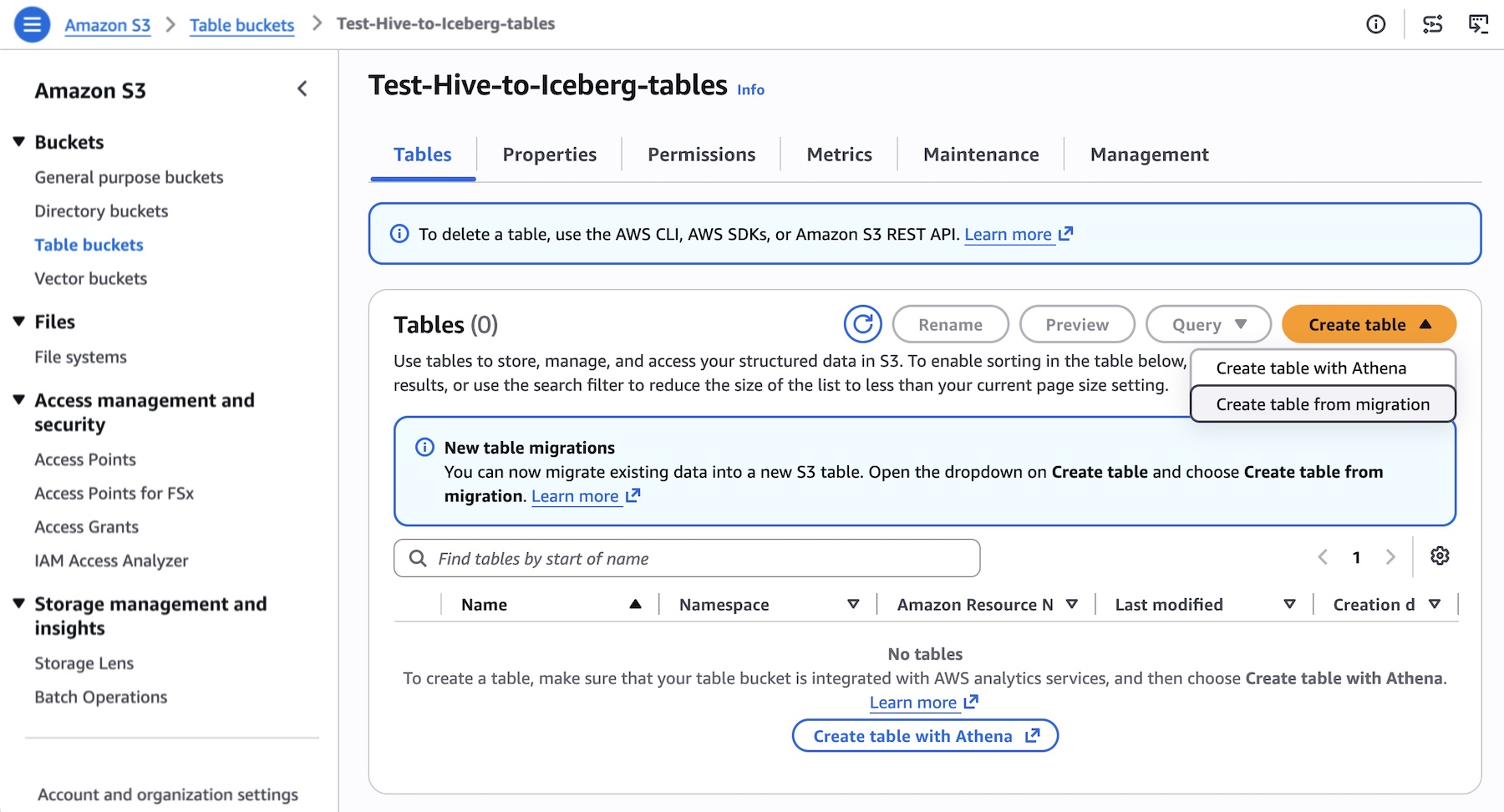
The service currently supports AWS Glue-registered Hive tables stored in Parquet format. To ensure a successful migration, organizations must adhere to standard IAM permission models, allowing the S3 Tables service to access the Glue Data Catalog and the underlying S3 buckets. The use of the start-table-migration API call allows for granular control over settings, including encryption configurations via AWS KMS, storage class selection, and specific compaction strategies.
Future Outlook for Data Lake Management
As the volume of data generated by global enterprises continues to grow, the ability to rapidly modernize infrastructure is becoming a competitive necessity. The introduction of managed migrations for S3 Tables represents a maturity point in the lifecycle of cloud-native data storage.
Future iterations of this service are expected to expand support for additional source formats and cross-account migration scenarios, further reducing the barriers to entry for large-scale data lake modernization. For organizations that have spent years building and maintaining complex Hive-based environments, this development offers a clear, repeatable, and cost-effective pathway to the modern, performant, and flexible architecture that Apache Iceberg promises.
As teams begin to pilot these migration paths, the emphasis will likely shift from the "how-to" of data movement to the strategic utilization of the newfound analytical capabilities enabled by the Iceberg format. With the combination of managed infrastructure and intelligent automation, the era of months-long data lake re-platforming projects appears to be drawing to a close, replaced by a more agile and responsive model of data management.