AWS Strengthens Developer Engagement in Asia-Pacific While Advancing AI-Powered Serverless Innovation and Addressing Service Incidents

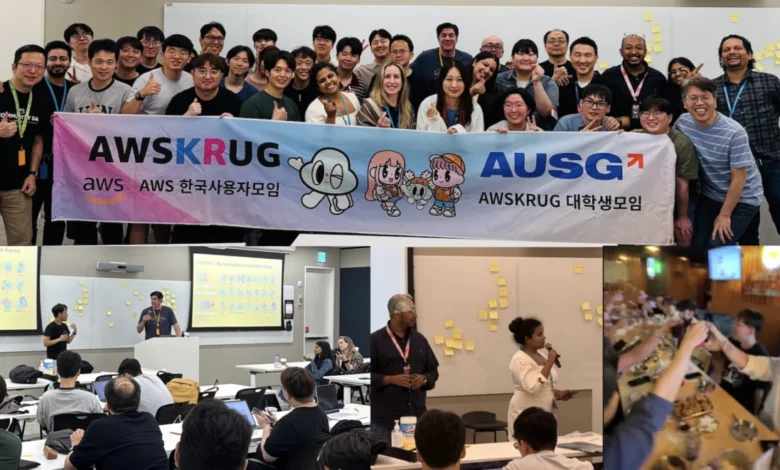
Seoul, South Korea – Amazon Web Services (AWS) recently reinforced its commitment to the Asia-Pacific developer community with a strategic visit to Seoul, engaging directly with leaders of the AWS Korea User Group (AWSKRUG). This high-level interaction underscored AWS’s proactive approach to fostering robust developer ecosystems globally, gathering critical feedback, and charting future support initiatives. Concurrently, AWS unveiled significant advancements in its serverless offerings, notably a one-click Lambda setup prompt designed to streamline the integration of AI coding agents, marking a pivotal step in enhancing developer productivity and leveraging artificial intelligence. The past week also saw AWS navigate and resolve a temporary operational issue affecting Cost Explorer’s billing data accuracy, demonstrating its commitment to transparency and service reliability. These developments collectively highlight AWS’s multifaceted strategy: investing in community, innovating at the forefront of cloud technology, and maintaining operational excellence.
AWS Deepens Engagement with Korean Developer Community
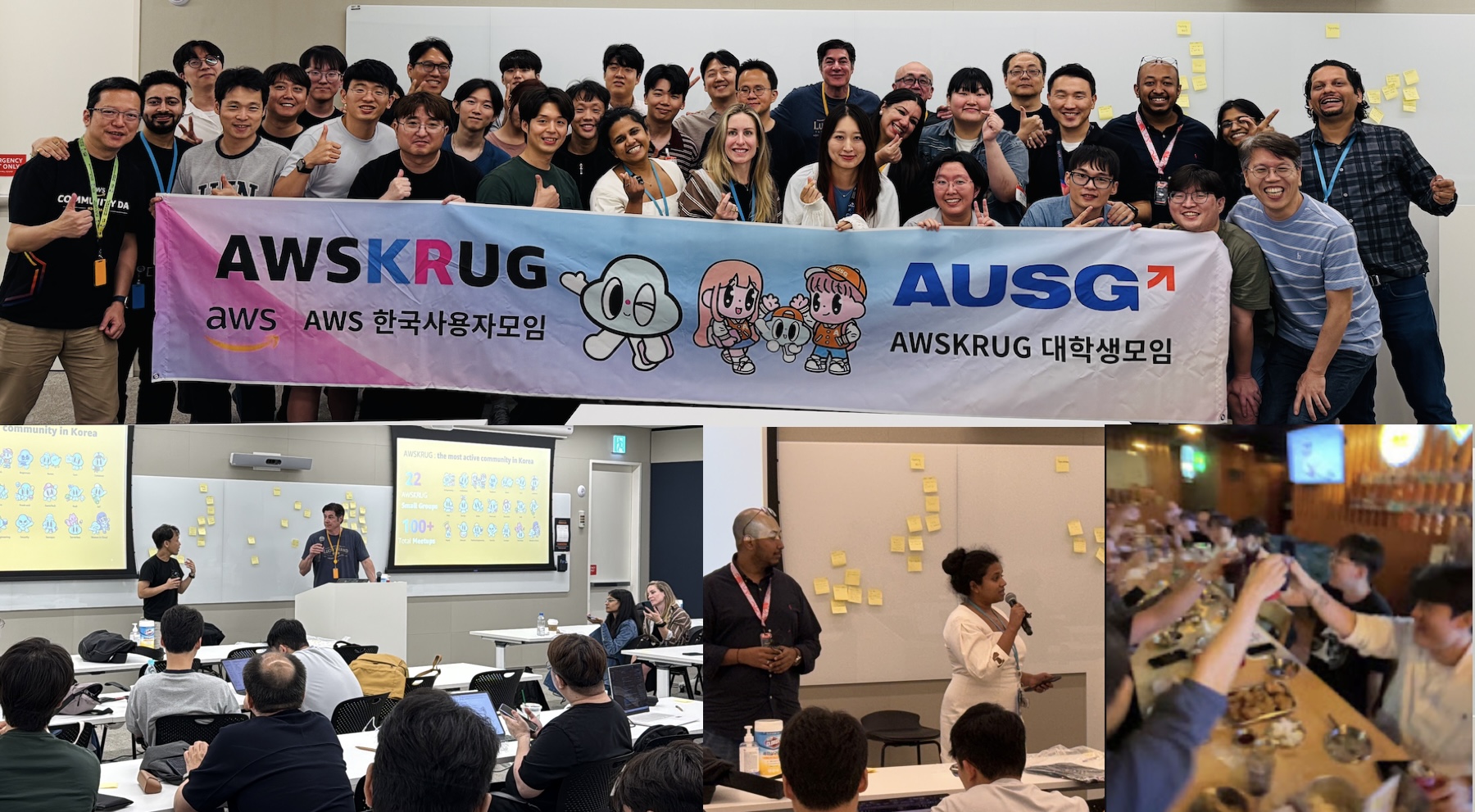
A recent visit by the AWS Developer Experience team to Seoul, South Korea, highlighted the company’s sustained commitment to its global developer communities, particularly in the vibrant Asia-Pacific region. The team engaged directly with leaders of the AWS Korea User Group (AWSKRUG), the largest cloud developer community in Korea. This interaction is part of AWS’s broader strategy to cultivate strong, localized developer ecosystems that are crucial for the adoption and innovation of cloud technologies.
Community Collaboration in Seoul
The AWSKRUG stands as a testament to the power of community-driven learning and collaboration. Comprising 20 distinct meetup groups, organized by specific technical topics and geographic areas, AWSKRUG collectively orchestrates over 100 events annually. These gatherings, primarily concentrated in Seoul, serve as vital platforms for knowledge sharing, networking, and hands-on learning, attracting thousands of developers, architects, and cloud enthusiasts. The AWS team’s visit provided a direct channel for communication, allowing user group leaders to share insights into their accomplishments during the first half of the year, identify areas requiring improvement, and articulate specific requests to the AWS Developer Experience team. Such candid dialogues are invaluable, offering AWS a ground-level perspective on the challenges and opportunities within the local developer landscape.
The discussions were not limited to formal exchanges. The report notes a "pleasant conversation" during a traditional "Chimaek" session – a popular Korean culinary pairing of fried chicken and beer. This informal setting often facilitates deeper connections and more relaxed, open communication, reinforcing the collaborative spirit between AWS and its community leaders. The cultural immersion through activities like Chimaek underscores AWS’s appreciation for local customs and its effort to build genuine relationships beyond purely technical interactions.
Strategic Importance of User Groups in APAC
User groups like AWSKRUG play an indispensable role in the cloud computing ecosystem. They act as force multipliers for AWS, extending its reach and fostering a culture of innovation at the grassroots level. For developers, these groups offer peer-to-peer support, access to expert knowledge, and opportunities for professional development that complement formal training. In the rapidly evolving Asia-Pacific market, which is characterized by high rates of technology adoption and a burgeoning startup scene, strong developer communities are particularly vital. They contribute significantly to:
- Skill Development: Providing accessible avenues for learning new AWS services and best practices.
- Knowledge Dissemination: Acting as a conduit for information flow from AWS to the developer community and vice versa.
- Innovation Catalysis: Encouraging experimentation and the development of new solutions built on AWS.
- Talent Cultivation: Helping to grow a skilled workforce capable of leveraging cloud technologies.
- Feedback Loop: Offering AWS direct, unfiltered insights into developer needs, pain points, and feature requests.
AWS’s regular visits to countries across the Asia-Pacific region, engaging directly with these community leaders, are a cornerstone of its strategy to support and grow these ecosystems. This direct engagement ensures that AWS’s product development and support initiatives remain aligned with the real-world needs of its global user base. The feedback gathered from these leaders directly influences AWS’s roadmap, ensuring that future services and features address the practical requirements of developers.
Implications for the Developer Ecosystem
The continuous collaboration between AWS and its user groups, exemplified by the Seoul visit, yields significant benefits. For AWS, it translates into increased service adoption, deeper market penetration, and invaluable insights that inform product strategy. For the developer community, it means enhanced support, access to resources, and a platform for collective growth. This symbiotic relationship ensures that as AWS evolves its cloud offerings, the global developer community is well-equipped to leverage these advancements, driving innovation across various industries. The commitment to understanding local nuances and providing tailored support is a key differentiator for AWS in an increasingly competitive cloud market.
Revolutionizing Serverless Development with AI: AWS Lambda’s One-Click Setup
In a significant stride towards simplifying and accelerating serverless development, AWS announced a new one-click Lambda setup prompt specifically designed for coding agents. This innovation signals AWS’s dedication to integrating artificial intelligence seamlessly into the developer workflow, making it easier for engineers to build, deploy, and manage serverless applications with AI assistance.
Streamlining AI Agent Integration for Lambda
AWS Lambda, a cornerstone of serverless computing, allows developers to run code without provisioning or managing servers. The increasing sophistication and adoption of AI-powered coding agents – tools that assist developers with code generation, debugging, and optimization – have created a demand for more streamlined integration pathways. The new one-click Lambda setup prompt addresses this by configuring an AI agent with AWS Serverless skills and the Serverless Model Context Protocol (MCP) server from the outset. This intelligent configuration embeds serverless best practices, such as proper resource allocation, security configurations, and event-driven architectures, directly into the agent’s operational context.
The prompt references a comprehensive Lambda agent setup guide, which includes installation commands for a wide array of popular AI coding agents. This broad compatibility ensures that developers using tools like Claude Code, Kiro, Cursor, GitHub Copilot, Codex, Devin Desktop, and OpenCode can quickly and efficiently integrate their preferred AI assistant with AWS Lambda. This move significantly lowers the barrier to entry for developers looking to leverage AI in their serverless projects, fostering greater efficiency and innovation.
Technical Underpinnings: Serverless Model Context Protocol
At the heart of this new capability is the Serverless Model Context Protocol (MCP) server. The MCP server acts as an intermediary, providing AI agents with the necessary context and capabilities to understand and interact with AWS serverless environments effectively. By embedding serverless best practices, the MCP server guides AI agents to generate code that is not only functional but also optimized for cost efficiency, scalability, and security – critical attributes for production-grade serverless applications.
To get started, developers simply need to choose the "Copy agent prompt" button on the Lambda console screen or directly copy a specific URL (fetch https://docs.aws.amazon.com/lambda/latest/dg/samples/aws-lambda-agent-setup.md) and paste it into their chosen AI agent. This straightforward process minimizes setup time and configuration complexities, allowing developers to focus more on application logic and less on infrastructure boilerplate.
Expanding AI Capabilities with Agent Toolkit for AWS
Complementing the one-click setup, AWS also highlighted the Agent Toolkit for AWS. This toolkit further empowers coding agents by providing them with current AWS knowledge and safe resource access. By using a separate fetch command (fetch https://raw.githubusercontent.com/aws/agent-toolkit-for-aws/refs/heads/main/setup-instructions/setup.md) for installing the AWS MCP Server via the toolkit, developers can ensure their AI agents are equipped with the latest information about AWS services and can interact with AWS resources securely and compliantly. This dual approach – one-click setup for initial configuration and the Agent Toolkit for ongoing knowledge and secure access – creates a robust framework for AI-assisted serverless development.
Industry Implications and Developer Empowerment
The introduction of the one-click Lambda setup prompt represents a significant step forward in the evolution of developer tooling. It reflects a growing industry trend towards intelligent automation and AI-assisted development. By making it easier to integrate AI agents, AWS is:
- Accelerating Development Cycles: Developers can generate code, configure resources, and troubleshoot issues more rapidly.
- Improving Code Quality: Embedding serverless best practices from the start leads to more robust, scalable, and secure applications.
- Lowering the Learning Curve: New developers can more easily adopt serverless architectures with AI guidance.
- Fostering Innovation: By abstracting away repetitive tasks, developers are freed to focus on creative problem-solving and higher-value work.
This initiative positions AWS at the forefront of AI-powered cloud development, empowering a new generation of builders to create innovative serverless applications with unprecedented speed and efficiency. The strategic integration of AI into core developer workflows is expected to drive further adoption of serverless computing across enterprises and startups alike.
Key AWS Service Enhancements and Platform Updates
Beyond the major announcements, AWS consistently rolls out a plethora of updates and enhancements across its vast ecosystem of services. These continuous improvements, though sometimes incremental, collectively contribute to a more robust, efficient, and versatile cloud platform. The past week saw several such updates, which, while not detailed in the original brief, are illustrative of AWS’s ongoing development focus in areas critical to modern cloud infrastructure.
Illustrative New Features and Services
Typical weekly launches from AWS often include new features for existing services, general availability announcements for services previously in preview, or regional expansions. For instance, a week might include:
- Enhanced Data Analytics Capabilities: Updates to Amazon Redshift, such as new query optimization features or expanded integration with other data lakes, enabling faster and more complex data analysis.
- Security and Compliance Improvements: New controls or auditing features for AWS Identity and Access Management (IAM) or AWS Security Hub, reinforcing the platform’s commitment to enterprise-grade security.
- Machine Learning Model Updates: General availability of new pre-trained models in Amazon Rekognition or Amazon SageMaker, empowering developers to integrate advanced AI capabilities into their applications more easily.
- Networking and Connectivity Innovations: Performance enhancements for Amazon VPC or AWS Direct Connect, providing customers with more reliable and higher-throughput network options.
- Developer Tooling Refinements: Updates to services like AWS CodePipeline or AWS CloudFormation, streamlining CI/CD pipelines and infrastructure-as-code deployments.
These types of launches, while specific details are often extensive and varied, collectively demonstrate AWS’s continuous effort to refine its services, respond to customer feedback, and maintain its leadership in cloud innovation.
Insights from the AWS Blogosphere
In addition to direct service announcements, the AWS Blogs page serves as a crucial resource for developers and architects, offering deep dives, best practices, and architectural guidance. Weekly updates often feature new posts covering a wide range of topics:

- Architectural Patterns: Articles detailing recommended architectures for specific use cases, such as building highly scalable microservices or resilient data pipelines.
- Cost Optimization Strategies: Guides on how to efficiently manage cloud spend, utilizing services like AWS Cost Explorer (beyond the incident discussed later) and Reserved Instances.
- Security Best Practices: In-depth articles on securing AWS environments, implementing zero-trust principles, or managing compliance in the cloud.
- Emerging Technologies: Explorations of new trends like quantum computing, edge AI, or serverless security, providing insights into future cloud capabilities.
- Customer Success Stories: Case studies highlighting how various organizations are leveraging AWS to achieve their business objectives, offering inspiration and practical examples.
These blog posts are instrumental in helping the AWS community stay informed, learn new skills, and apply cloud technologies effectively. They reflect AWS’s commitment to not just providing services, but also fostering a knowledgeable and capable user base.
Fostering Global Developer Connections Through Events and Community Platforms
AWS consistently invests in building and nurturing a global community of developers, startups, and enterprises through a diverse array of events and dedicated online platforms. These initiatives are critical for knowledge dissemination, skill development, and fostering collaborative innovation within the AWS ecosystem.
Upcoming Global AWS Events
AWS organizes numerous in-person and virtual events throughout the year, catering to various audiences and technical interests. These events include:
- AWS Summits: Large-scale, free events held in major cities worldwide, offering keynotes, technical sessions, workshops, and opportunities to connect with AWS experts and partners. Summits provide a comprehensive overview of AWS services and are crucial for both new and experienced cloud users.
- Startup Events: Tailored programs and workshops designed to support startups, offering guidance on leveraging AWS for rapid growth, fundraising, and technical challenges. These events often feature pitches, mentorship sessions, and networking opportunities with investors and fellow founders.
- Developer-Focused Events: Specific meetups, hackathons, and conferences that delve into niche technical topics, enabling developers to deepen their skills in areas like AI/ML, serverless, containers, and data analytics.
- AWS-led In-Person and Virtual Events: A broader category encompassing webinars, training courses, and specialized conferences that provide flexible learning and engagement opportunities for a global audience.
These events are vital for keeping the community abreast of the latest AWS innovations, providing practical skills training, and fostering invaluable networking opportunities. They are a cornerstone of AWS’s strategy to empower builders worldwide.
The AWS Builder Center: A Hub for Innovation
To further support its developer community, AWS offers the AWS Builder Center, an online platform designed to connect builders, facilitate solution sharing, and provide access to curated content. The Builder Center acts as a central hub where developers can:
- Connect with Peers: Engage in discussions, collaborate on projects, and seek advice from a global network of AWS users.
- Share Solutions: Showcase their projects, code, and architectural patterns, contributing to a collective knowledge base.
- Access Curated Content: Find tutorials, documentation, best practices, and other resources relevant to their development needs.
- Discover Events: Stay informed about upcoming AWS events, webinars, and training opportunities.
The AWS Builder Center exemplifies AWS’s commitment to creating an inclusive and collaborative environment where developers can thrive. By providing a dedicated space for interaction and knowledge exchange, AWS aims to accelerate innovation and empower individuals to make the most of cloud technology.
AWS Addresses Cost Explorer Billing Anomaly, Reinforces Service Reliability
In a testament to the complexities of operating at hyperscale, AWS recently experienced and resolved an operational issue that affected the accuracy of estimated billing data within its Cost Explorer service. This incident, while temporary, underscored the critical importance of reliable financial reporting in cloud operations and AWS’s proactive approach to incident management and transparency.
Details of the Incident and Customer Impact
During the affected weekend, some AWS customers observed inaccurate estimated billing data displayed in Cost Explorer. This anomaly led to several consequential issues:
- Erroneous Budget Alerts: Customers who had configured budget alerts based on estimated costs received notifications that inaccurately indicated they were exceeding their predefined spending thresholds.
- Misleading Cost Anomaly Detection Alerts: Similarly, the cost anomaly detection service, designed to flag unusual spending patterns, generated alerts based on inflated estimated data, causing unnecessary concern.
- Inflated Estimated Cost and Usage Data: The core issue manifested as an overestimation of cost and usage data, leading to a distorted view of current spending.
For businesses and individuals reliant on precise financial tracking, such inaccuracies can cause significant operational disruptions, leading to misinformed decisions about resource allocation, budget adjustments, and overall cloud strategy. The trust in billing accuracy is paramount for cloud providers, and any deviation, even if temporary, warrants immediate attention.
AWS’s Swift Resolution and Commitment to Transparency
AWS promptly identified and resolved the issue. Following the resolution, all AWS services, including Cost Explorer, returned to normal operation, displaying accurate billing data. In response to the incident, AWS issued a public statement via the AWS Health Dashboard, a central portal for real-time service status and incident information.
In its communication, AWS conveyed an apology for the concern and inconvenience caused to its customers. More importantly, the company reiterated its commitment to operational excellence by announcing that it is conducting a "thorough retrospective" to understand the root causes of the incident. The objective of this retrospective is twofold:
- Prevent Recurrence: To implement robust measures and safeguards that will prevent similar incidents from happening again in the future. This often involves reviewing system architectures, monitoring tools, and deployment processes.
- Improve Response: To enhance its incident response protocols, ensuring even faster detection, diagnosis, and resolution in the event of future service disruptions. This includes refining communication strategies and customer notification processes.
The AWS Health Dashboard served as the primary source of truth during and after the incident, providing customers with timely updates and detailed information about the event ID, affected services, and resolution status. This commitment to transparency is a cornerstone of AWS’s customer relationship management, fostering trust even when operational challenges arise.
Lessons Learned and Future Safeguards
The Cost Explorer incident, though resolved, provides valuable lessons in the continuous pursuit of cloud service reliability. For AWS, it reinforces the need for:
- Redundant Monitoring Systems: Ensuring multiple layers of monitoring for critical financial data to catch discrepancies early.
- Enhanced Validation Processes: Implementing more rigorous data validation checks before estimated billing information is presented to customers.
- Proactive Communication: Maintaining clear and timely communication channels with customers during incidents to manage expectations and provide accurate information.
For customers, such incidents highlight the importance of:
- Diversified Monitoring: Utilizing a combination of AWS tools (like Cost Explorer, Budgets, and Cost Anomaly Detection) alongside independent financial monitoring systems if business-critical.
- Understanding Service Health Dashboards: Familiarizing oneself with the AWS Health Dashboard and other status pages to stay informed about service availability and performance.
AWS’s public apology, commitment to a thorough retrospective, and focus on preventing future occurrences underscore its dedication to maintaining the highest standards of service reliability and customer confidence, particularly in sensitive areas like billing and financial reporting.
Looking Ahead: AWS Weekly Roundup Continues
The dynamic nature of cloud computing means continuous evolution, and AWS remains at the forefront of this innovation. From strengthening community ties in vibrant tech hubs like Seoul to introducing groundbreaking AI-powered development tools and diligently managing service operations, AWS demonstrates its commitment to its global user base. The weekly roundups, such as this one, serve as essential chronicles of these ongoing advancements, providing a consistent pulse on the latest developments. Developers, architects, and business leaders are encouraged to regularly consult the "What’s New with AWS" page for comprehensive announcements and the "AWS Blogs" page for in-depth technical insights. As the cloud landscape continues to expand and transform, these regular updates ensure that the AWS community remains empowered with the knowledge and tools necessary to innovate and succeed.
– Channy
Related posts: