Asics America Corp. Deploys Autonomous Drones to Optimize Inventory Accuracy and Reduce Fulfillment Disruptions at its North American Distribution Hub

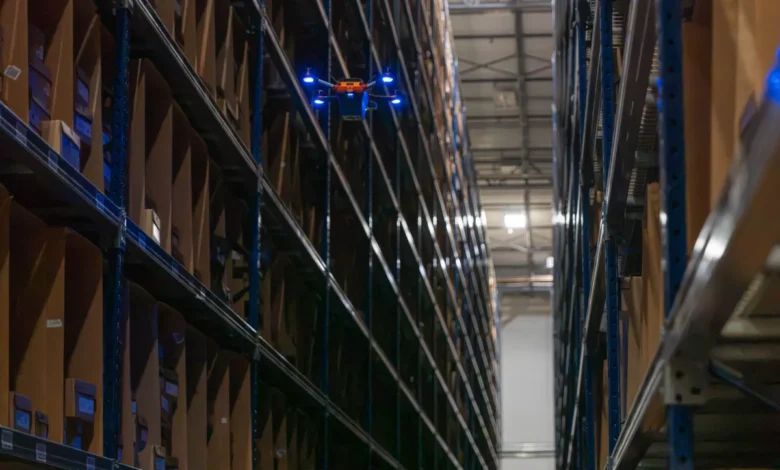
Asics America Corp. has officially integrated autonomous drone technology into its primary North American distribution center in Byhalia, Mississippi, as part of a strategic effort to modernize supply chain logistics and minimize the frequency of unfulfilled consumer orders. The implementation, developed in collaboration with warehouse automation provider Corvus Robotics, represents a significant shift in how the sportswear giant approaches inventory management, moving from sporadic, labor-intensive manual counts to a high-frequency, automated surveillance model.
The transition to Corvus One drone technology has already yielded measurable improvements, with the company reporting that it now recovers misplaced inventory approximately 60% faster than under its previous operational protocols. This technological leap addresses a critical pain point in modern logistics: the "inventory invisibility" that occurs when products are misfiled or displaced within massive, high-density storage environments.
The Operational Challenge of Modern Warehousing
The Asics distribution facility in Byhalia is a sprawling, 855,000-square-foot operation that acts as the nerve center for the brand’s North American logistics. The site manages a complex inventory portfolio of nearly 3 million units of footwear, apparel, and accessories, spanning roughly 44,000 distinct stock-keeping units (SKUs). This facility serves three distinct sales channels—ecommerce, physical retail, and wholesale—all while concurrently processing high volumes of customer returns.
Prior to the deployment of the Corvus drone fleet, maintaining an accurate picture of what was on the shelves was a logistical hurdle. Kyle Koestler, senior director of distribution and transportation at Asics America, highlighted that manual audits were often too infrequent to prevent downstream issues. Previously, misplaced items could remain undetected for up to six months. In a high-velocity retail environment, this delay often meant that a customer would place an order for a product that the system believed was in stock, only for the warehouse team to discover that the item was missing during the picking process. Such incidents inevitably led to order cancellations, diminishing customer trust and brand reputation.
The Technical Mechanics of Autonomous Inventory Auditing
The Corvus One drones operate with a level of precision that eliminates the need for expensive structural modifications to the warehouse. Each unit is equipped with advanced computer vision and spatial reasoning sensors, allowing the drones to navigate aisles as narrow as six feet without the need for additional beacons or floor markers.
The operational cadence is rigorous. Starting at 7 p.m. each evening, the drones perform seven scheduled flights across two specific zones: the "singles area," where returns and individual pairs are housed, and the "case reserve area," which contains full shipping cartons. As the drones move through the aisles, they scan universal product codes (UPCs) and count boxes, cross-referencing this real-time visual data against the warehouse management system’s digital ledger.
The following morning, inventory control managers receive a comprehensive data set. Angela Williford, inventory control operations manager at Asics America, notes that the system provides high-definition images and video of the shelf locations. This allows staff to perform "virtual audits" from their desks, identifying the exact location of discrepancies without the need to physically walk the aisles or deploy heavy machinery like lift equipment. This shift has not only improved safety by reducing human traffic in narrow aisles but has also allowed staff to pivot from the mundane task of manual cycle counting to higher-value analytical work, such as investigating systemic inventory discrepancies and supporting large-scale wholesale projects.
Strategic Implications for Marketplace Integration
The most profound impact of this automation has been on Asics’ relationship with online marketplaces. Historically, the company withheld between 12% and 15% of its available inventory from marketplace feeds. This "buffer" was a necessary defensive strategy; because the company could not be certain that an item marked "in stock" was actually on the shelf, it chose to suppress the listing to avoid the risk of a cancellation.
By shifting to a monthly cycle count—a significant increase from the previous twice-annual cadence—Asics has gained the confidence to publish its full inventory availability. By making more stock visible to the consumer, the company is better positioned to sell goods at full price, reducing the necessity of offloading stagnant or "lost" inventory through deep-discount liquidation channels. While the exact revenue impact remains proprietary, the shift marks a fundamental change in how the company leverages its digital presence to move physical goods.
The Broader Industry Context
Asics is by no means an outlier in this trend. The adoption of robotics and artificial intelligence in supply chain management has accelerated as retailers face rising labor costs and the increasing complexity of omnichannel fulfillment. GNC, for instance, has leveraged the same Corvus technology to increase its inventory counts from as few as two times per year to as many as 12, mirroring the success seen by Asics. Similarly, Southern Glazer’s Wine & Spirits has expanded its use of drones to nine separate distribution centers, reporting a 100-basis-point improvement in cases handled per hour.
These investments coincide with massive capital outlays by industry titans. Walmart Inc., for example, recently committed $6 billion to Symbotic, a move designed to integrate AI-driven robotics into 25 of its regional distribution centers. These investments are part of a broader "industrial evolution" where warehouse throughput is no longer determined solely by human capacity but by the synergy between autonomous systems and human supervisors.
Chronology of Implementation and Future Outlook
The progression of this project reflects a methodical approach to warehouse automation:
- Pre-2026: Reliance on twice-yearly manual inventory audits; high rates of inventory inaccuracy; forced withholding of stock from marketplace feeds to mitigate cancellation risk.
- Q3 2026: Pilot integration of Corvus One drone systems in the Byhalia, Mississippi, facility.
- Q4 2026: Scaling to a monthly automated count schedule; validation of a 60% faster recovery rate for misplaced goods.
- Current State: Full integration of drone-captured data into the daily inventory reconciliation process; expansion of product availability on external marketplaces.
As the retail sector grapples with the demands of "instant gratification" commerce, the ability to maintain a real-time, accurate digital twin of physical inventory has become a competitive necessity. For Asics, the drones represent a transition from reactive, manual troubleshooting to a proactive, data-driven supply chain.
While the immediate benefits have centered on efficiency and accuracy, the long-term implications are broader. By automating the most tedious aspects of warehouse management, companies like Asics are effectively "future-proofing" their operations against the volatility of global supply chains. As technology providers like Corvus continue to refine the sensors and navigation algorithms of these drones, it is likely that even more complex, high-density environments will shift toward this autonomous model.
For now, the Asics-Corvus partnership serves as a high-profile case study for the industry. It demonstrates that the path to profitability in the digital age is often paved with physical, autonomous machines working in tandem with the human workforce. The ability to recover hundreds of pairs of shoes that would otherwise have been "lost" to the system is a small but powerful example of how automation can prevent the small, compounding errors that traditionally plague large-scale retail operations. As the company looks toward future quarters, the data gathered by these drones will likely inform even deeper optimizations in space utilization and demand forecasting, further cementing the role of robotics as a core pillar of modern retail logistics.