Apollo Chief Economist Torsten Slok Sounds the Alarm on the AI Boom as Wall Street Questions Compute Valuations and Capital Returns

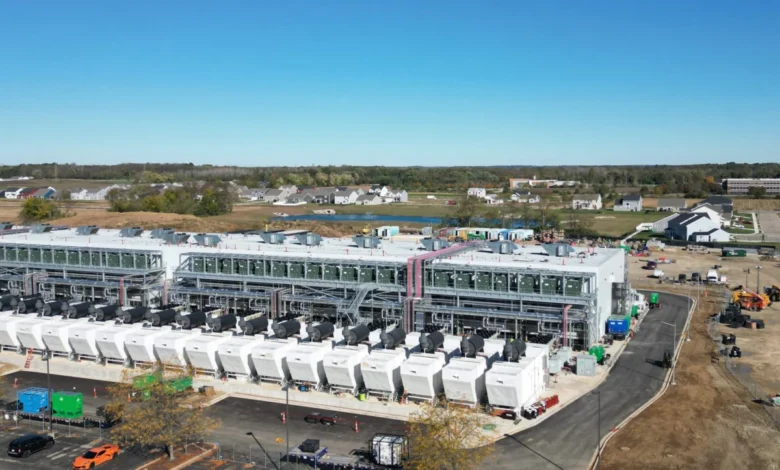
The artificial intelligence sector is facing an unprecedented reckoning as financial analysts, macroeconomic forecasters, and institutional investors begin to pull back from the relentless valuation highs that have defined the technology landscape over recent years. Central to this shifting sentiment is a blistering series of economic critiques issued by Torsten Slok, chief economist at Apollo Global Management. Throughout a single consequential week, Slok released a cascade of research notes dismantling the foundational narrative of the AI boom: the unyielding, exponential growth of compute demand.
As technology stocks falter on major exchanges and semiconductor names experience severe pullbacks, Slok’s warnings have shone a harsh light on the underlying economics of data centers, corporate spending efficiency, and the increasingly murky web of venture capital funding that sustains the modern AI ecosystem. The core argument put forward by Apollo’s chief economist challenges the very premise of data center expansion models, forcing Wall Street to reevaluate whether the trillion-dollar capital expenditure cycle currently underway is backed by sustainable economic fundamentals or driven by speculative fervor.
The Core Economic Flaw: Compute Cost Versus Marginal Benefit
The crux of Slok’s critique centers on what he terms the core economic flaw in the current artificial intelligence bull case: the marginal cost of producing compute heavily outweighs the marginal benefit it delivers to commercial users. Addressing clients and market observers, Slok pointed to a notable deceleration in token spending growth, arguing that the demand curve for compute has flattened significantly and remains hyper-sensitive to price adjustments.
For months, major cloud providers and hyperscalers have justified massive infrastructure outlays by asserting that enterprise demand for data centers is virtually unlimited. However, Slok contends that the primary determinant in data-center construction models should not be physical space, electrical grid capacity, or raw hardware availability. Rather, it must be the actual price that commercial users are willing to pay for computing power.
That willingness to pay, according to economic logic, relies entirely on whether advanced compute translates directly into higher revenue growth, expanded profit margins, or substantial operational cost savings. Thus far, corporate earnings reports across the broader economy show little evidence of such a payoff. For the vast majority of firms investing in AI integrations, the technology is functioning more as a perpetual cost center than a catalyst for top-line expansion.
The slow materialization of a measurable financial return has naturally bred a growing reluctance among mainstream enterprises to pay premium prices for AI services. As Slok starkly summarized in his research note: how much compute and how many data centers are ultimately required depends entirely on the financial returns firms can generate with that infrastructure. At present, those returns remain elusive.
A Chronology of Warnings: From Token Spending to Macroeconomic Reality
The evolution of Slok’s public critique followed a rapid and deliberate timeline over the course of a single week, capturing the shifting anxieties of the broader financial market.
On Tuesday, the focus fell squarely on slowing token spending growth and the flattening compute demand curve. Slok warned that the commercial appetite for continuous AI utilization was hitting a ceiling dictated by cost-effectiveness rather than technological capability.
By Thursday, the discussion expanded into the structural mechanics of financing, specifically targeting the phenomenon of "circularity" within token spending and startup capitalization. Slok highlighted that approximately 80% of the top 1% of artificial intelligence spenders are currently backed by venture capital. This revelation pointed to an unsustainable circular financial loop: rather than funding compute bills through organic earnings generated by robust business models, many AI startups are effectively recycling venture capital funds right back to the cloud providers and hardware manufacturers that the VC firms are heavily invested in.
By Saturday, Slok delivered his most sweeping macroeconomic assessment yet, declaring that artificial intelligence has thus far yielded zero financial payoff for United States corporations outside of the elite group of technology hyperscalers. While profit margins and revenue per worker have climbed steadily for the so-called "Magnificent Seven," the remaining constituents of the S&P 500 have experienced no discernible productivity or margin improvements attributable to artificial intelligence deployment.
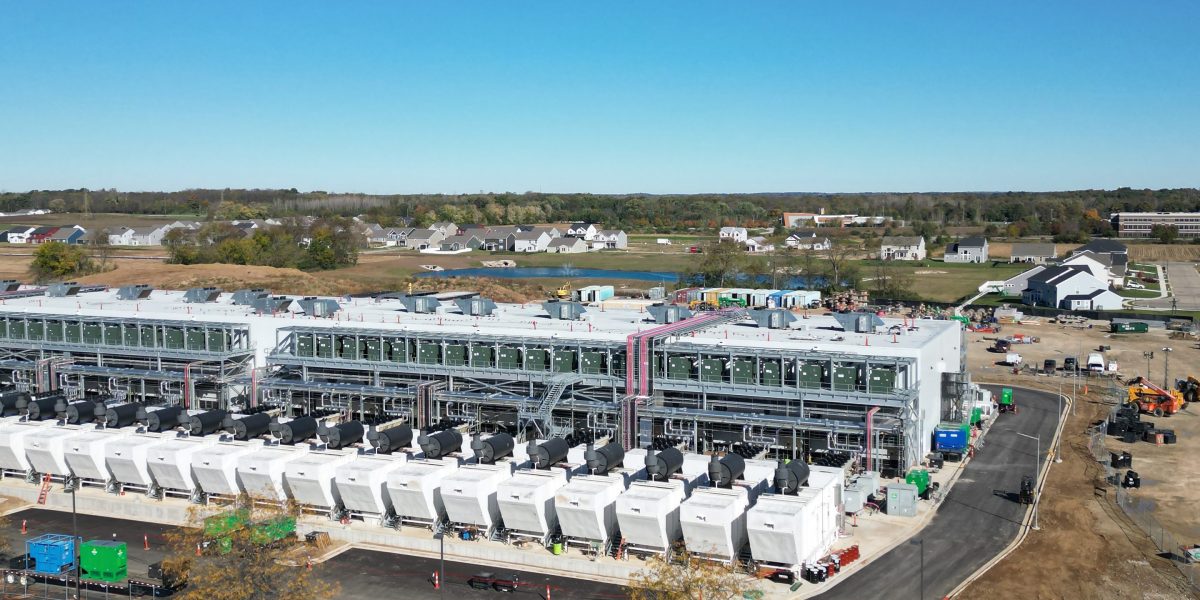
In this weekend note, Slok introduced a philosophical distinction regarding the limits of machine intelligence in a corporate environment. AI, he argued, functions exceptionally well as a calculator, but business success relies primarily on human judgment. Judgment requires context, nuance, accountability, trust, corporate culture, unwritten rules, and the ability to navigate ethical trade-offs. Because algorithms cannot comprehend these foundational elements, they fail to mitigate the reputational risks that ultimately drive long-term revenue growth and sustainable profit margins.
The Trillion-Dollar CapEx Orgy and Corporate Debt Pressures
Slok’s economic warnings arrived in lockstep with a broader market retreat, particularly affecting semiconductor manufacturers and companies heavily exposed to artificial intelligence hardware. Traders are increasingly questioning how long the staggering capital expenditure cycle can persist without triggering severe liquidity crunches.
Current industry estimates indicate that a handful of major hyperscalers plan to plow an astounding $800 billion into capital expenditures this year alone, with projections for the following year threatening to breach the $1 trillion threshold. Raising capital on this scale, however, is encountering new friction.
Meta Platforms, for instance, has actively issued debt to finance its ambitious infrastructure goals. The social media giant announced plans to issue a new class of shares, a move partially attributed to CEO Mark Zuckerberg’s need to manage prospective wealth tax liabilities in California. With Meta projecting annual capital expenditures between $135 billion and $145 billion, the cost of insuring the company’s debt against default reached historic highs. Five-year credit default swaps widened significantly, touching an all-time high of 114.79 basis points.
The strain is even more acute among smaller entities in the AI ecosystem, frequently referred to as "neoclouds." Companies such as CoreWeave have faced intense downward pressure, with stock valuations crashing by more than 30% over a single month. Simultaneously, CoreWeave’s five-year credit default swaps surged past 1,145 basis points, reflecting profound investor anxiety regarding the creditworthiness and cash-flow stability of smaller infrastructure providers.
Interconnected Financing and Hidden Liabilities
Compounding these market jitters are warnings from credit rating agencies regarding complex financial engineering behind the scenes. Mark Habib, Global Head for Digital Infrastructure at S&P Global, sounded a complementary alarm during a financial roundtable in London. Habib drew attention to the deeply interconnected financing structures binding hyperscalers, data center development projects, and smaller artificial intelligence firms.
According to Habib, market participants can safely assume that there is a substantial volume of hidden debt circulating within the ecosystem that remains undisclosed in standard corporate filings. Because many of these complex transactions and liability accruals bypass traditional credit rating agencies, financial transparency is severely compromised. If off-balance-sheet financing arrangements are not formally reported, they cannot be factored into the risk disclosures of major hyperscalers, leaving investors blind to the true scale of systemic exposure.
Market Implications and Future Outlook
The convergence of Apollo’s macroeconomic analysis, surging credit default swaps, and S&P Global’s warnings regarding hidden liabilities marks a critical inflection point for the artificial intelligence sector. For months, the narrative was dominated by the fear of missing out, driving valuations to astronomical heights on the assumption that infrastructure deployment would automatically generate perpetual economic value.
As the market transitions from an era of uncritical expansion to one of rigorous financial scrutiny, the demands on artificial intelligence developers are shifting. Companies can no longer rely solely on technological capability or speculative market enthusiasm. They must demonstrate clear, scalable, and measurable financial returns that justify the immense capital required to build and maintain the global compute infrastructure.
Whether Corporate America will eventually find profitable, wide-scale applications for generative AI remains an open question. For now, however, the financial architecture supporting the boom is facing its most rigorous stress test to date. As Torsten Slok succinctly noted, the economic payoff may eventually materialize, but until it does, Wall Street’s willingness to finance the expansion without tangible proof of productivity is rapidly drying up.