Federal Government Escalates Medicaid Fraud Crackdown with New Funding Deferrals for California and Minnesota

Health Secretary Robert F. Kennedy Jr. announced a significant escalation in the administration’s strategy to combat Medicaid fraud, revealing new actions that include deferring substantial federal funding to California and Minnesota. These measures, building upon earlier Medicaid funding deferrals in these states, represent a shift in approach, prioritizing the prevention of fraudulent payments before they occur rather than solely focusing on recouping funds after prosecuting bad actors, a method previously employed by prior administrations.
"We have a duty to stop the payments, demand answers and then follow the evidence wherever it leads," Secretary Kennedy stated at a press conference, underscoring the proactive stance the administration is taking. This new tactic is a cornerstone of a broader campaign aimed at demonstrating a firm crackdown on fraud, a critical objective given the current economic climate. With rising healthcare costs and persistent economic pressures making affordability a paramount concern for voters ahead of the November midterm elections, the administration is keen to project fiscal responsibility and safeguard taxpayer dollars.
The intensified focus on fraud prevention was formally initiated in March with the establishment of a new anti-fraud task force. Vice President JD Vance spearheaded the launch of this initiative at the direct request of President Donald Trump. This task force is designed to harness the collective expertise and resources of various government departments, leveraging data analytics and advanced technology to meticulously identify and investigate suspected instances of wrongful expenditure of federal funds. The goal is to create a more robust and efficient system for detecting and rectifying potential misuse of taxpayer money within federal healthcare programs.
However, the implementation of these new federal actions has not been without friction and has drawn sharp criticism from state officials. John Connolly, the temporary commissioner and state Medicaid director for Minnesota’s Department of Human Services, expressed significant concerns regarding the lack of transparency from the federal government. He noted that Minnesota has not received adequate "data or explanation on how the deferral amount was calculated or what it was based on."
Connolly characterized the federal government’s actions as "unprecedented and punitive," framing them as part of a "war on Medicaid and its recipients." He emphasized the need for collaboration, stating, "Partnership—not politics—is required to stop criminals and protect services for the people who need them." This sentiment highlights a growing tension between federal oversight and state autonomy in managing Medicaid programs, particularly when significant funding is at stake.
The political implications of these deferrals have also been a focal point of discussion. Minnesota’s Democratic Governor Tim Walz suggested that the Republican administration might be using these funding deferrals as a means to offset the costs of tax cuts previously enacted for wealthy Americans. Similarly, California’s Democratic Governor Gavin Newsom accused the administration of targeting his state for political retribution. These accusations underscore the partisan undercurrents that often accompany significant federal policy shifts, especially in the lead-up to critical elections.
The Trump administration’s recent history of intensified actions in Minnesota, including a robust deployment of Immigration and Customs Enforcement officers that led to significant public outcry and tragic civilian deaths, has also been cited by critics as evidence of a pattern of aggressive federal intervention. President Trump’s frequent public criticisms of California’s governance further fuel the perception that these actions might be politically motivated rather than purely driven by fraud detection.
States Grapple with Obstacles and Inaccuracies in Federal Fraud Investigations
The administration’s new proactive strategy, while aiming to prevent fraud, has encountered challenges and created administrative burdens for the states involved. The approach has led to instances of miscalculation and has required states to navigate complex documentation processes.
A notable example occurred in April when the Centers for Medicare & Medicaid Services (CMS) admitted to The Associated Press that it had made a "significant error" in the data it used to justify a fraud probe in New York. This acknowledgment cast doubt on the accuracy of the federal government’s investigative methodologies. More recently, in May, California’s Medicaid director informed a congressional committee that CMS had failed to provide "any instances of fraud, waste or abuse" to the state, despite justifying a substantial $1.3 billion Medicaid funding deferral based on such concerns.
In Minnesota, state officials have been actively implementing a comprehensive corrective action plan designed to address the concerns raised by CMS. This plan is intended to mitigate the federal agency’s apprehension, which has already resulted in the deferral of approximately $260 million in federal funds and the threat of future financial penalties. Connolly reiterated Minnesota’s commitment to good-faith cooperation, stating, "We have cooperated in good faith and proactively engaged the Centers for Medicare and Medicaid Services to first raise the alarm on fraud in Minnesota’s Medicaid program, to effectively investigate fraud and to institute further safeguards against future misuse of funds."
The specifics of the latest deferrals, totaling $867.5 million for California and $199 million for Minnesota, were announced by Secretary Kennedy. It remains unclear whether these new deferrals are entirely separate from or overlap with earlier deferrals that were announced earlier in the year. This ambiguity adds another layer of complexity for states attempting to manage their Medicaid budgets and operations.
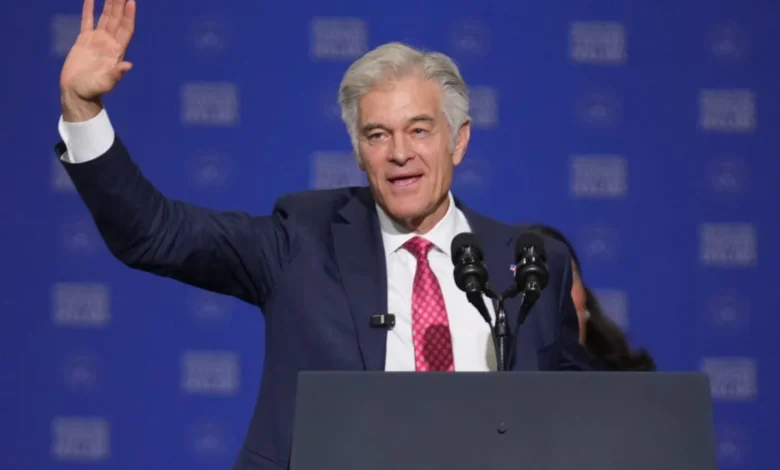
CMS Administrator Dr. Mehmet Oz, in justifying the deferrals, did not provide specific, documented examples of fraud in either state. Instead, he highlighted certain "patterns" that the agency found questionable. These included instances where providers were allegedly billing for services for four or more patients concurrently, or submitting claims for deceased Medicaid beneficiaries.
Dr. Oz also pointed to the rapid growth of California’s home care program as a source of concern. However, California officials have strongly contested this interpretation, explaining that the expansion of their home care services is a deliberate and strategic effort to offer more cost-effective alternatives to expensive nursing home placements. Anthony Cava, a spokesperson for the California Department of Health Care Services, asserted, "In-home care growth reflects intentional, federally encouraged expansion, not improper spending." He concluded with a plea to CMS: "California is calling on CMS to stop threatening care for California’s most vulnerable residents."
Pathways to Restoring Funding and Expanding Enforcement Capabilities
Both Secretary Kennedy and Administrator Oz have indicated that the flow of federal funding can be restored to the affected states. The condition for reinstatement is the provision of adequate documentation that substantiates the legitimacy of the payments in question. This suggests that the administration is willing to engage in a transparent process of review, provided that states can effectively demonstrate the proper use of federal dollars.
Officials from both California and Minnesota have previously acknowledged their ongoing efforts to furnish the federal government with the requested information. Administrator Oz noted that Minnesota had already submitted documents to the federal government, which are currently undergoing "reevaluation very carefully." This indicates a degree of progress in the dialogue between federal and state agencies, though the ultimate resolution remains pending.
In addition to these deferral actions, Secretary Kennedy hinted at a broader expansion of enforcement powers. He proposed extending the authority to exclude providers from participating in Medicaid, Medicare, and other federal health programs to CMS. Historically, this crucial power has been vested solely with the Office of the Inspector General within the Department of Health and Human Services.
HHS Inspector General Thomas March Bell expressed enthusiasm for this proposed expansion, describing it as a "full force multiplier." He believes that granting CMS this authority will "create additional momentum, and it’s going to exclude additional bad actors." This move signals a commitment to a more aggressive and comprehensive approach to rooting out fraud and abuse within the federal healthcare system, aiming to enhance the government’s capacity to protect public funds and ensure the integrity of its programs.
The administration’s strategy, while intended to be a preventative measure against fraud, is clearly navigating a complex landscape of intergovernmental relations, data accuracy, and political sensitivities. The coming months will likely reveal whether this more assertive approach will effectively curb fraud without unduly hindering essential healthcare services for vulnerable populations. The success of this strategy will hinge on the ability of federal and state agencies to collaborate effectively, ensure accurate data, and maintain transparency throughout the process. The stakes are high, as the integrity of federal healthcare programs and the financial well-being of millions of Americans are directly impacted by these ongoing developments.