Port Disruption Looms as Contract Impasse Threatens Southern California Supply Chain

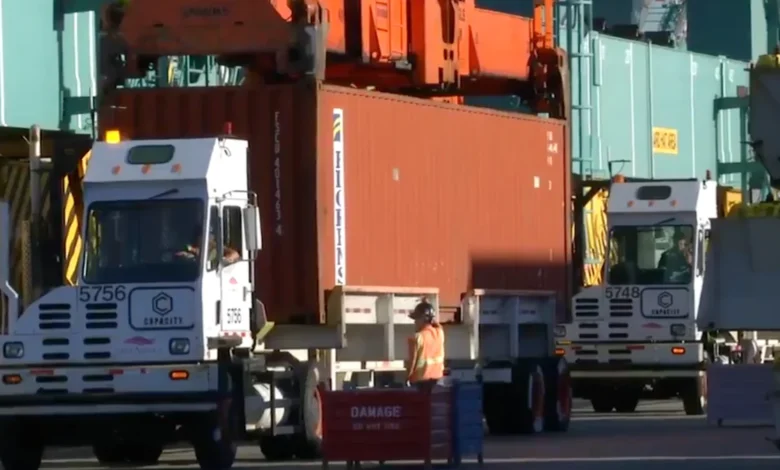
A high-stakes labor dispute involving approximately 250 union watchmen threatens to severely disrupt cargo operations at the nation’s busiest container port complex, the Ports of Los Angeles and Long Beach, as early as Saturday. Negotiations between the Pacific Maritime Association (PMA), which represents terminal operators and ocean carriers, and International Longshore and Warehouse Union (ILWU) Local 26 have stalled, leaving a narrow window for a last-minute breakthrough before the contract expiration deadline at 12:01 a.m. Saturday.
The impending labor friction highlights the fragile nature of the American supply chain, where localized disputes involving a tiny fraction of the workforce can cascade into macroeconomic crises. With peak shipping seasons, retail inventory builds, and agricultural export windows hanging in the balance, stakeholders across the logistics ecosystem are closely monitoring the developments in Southern California.
Background and Scope of the Dispute
At the center of the negotiations is ILWU Local 26, a specialized unit representing unarmed security watchmen who perform vital safety and security functions across six critical container terminals within the Ports of Los Angeles and Long Beach. Their day-to-day responsibilities include verifying identification credentials at terminal gates, conducting routine security patrols, and identifying and reporting potential safety or security infractions.
Although these watchmen account for roughly 2% of the total ILWU workforce across the two ports, the terminals where they are deployed bear an outsized operational load. According to data provided by the PMA, these six specific facilities handle more than 50% of the combined container volume for the entire port complex. Broken down further, they process approximately 85% of cargo moving through the Port of Long Beach and roughly 33% through the Port of Los Angeles.
The core vulnerability for terminal operators is not just the potential absence of the 250 watchmen, but the anticipated solidarity of other maritime workers. Industry analysts and the PMA expect that thousands of longshore workers, marine clerks, and foremen—who are not directly party to this specific contract dispute—will honor picket lines established by Local 26. Such solidarity actions would effectively shutter operations at these key terminals, multiplying the impact of the strike well beyond the immediate bargaining unit.
Chronology of Negotiations and Breakdown
Contract talks between the PMA and ILWU Local 26 have dragged on for over a year, marked by slow progress and entrenched positions. The negotiations recently involved intervention by the Federal Mediation and Conciliation Service (FMCS) in an effort to bridge the gap between labor demands and management offers.
According to a public statement issued Wednesday by the PMA, the latest round of talks broke down on Tuesday after union representatives demonstrated little to no movement on employer proposals. The PMA stated that Local 26 has already conducted a formal strike vote and has explicitly signaled its unwillingness to extend the current collective bargaining agreement past the Saturday expiration time.
The two sides are officially scheduled to return to the bargaining table on Friday, leaving negotiators less than 24 hours to avert a work stoppage that could paralyze a significant portion of West Coast import and export activities.
Employer Proposals and Union Demographics
In its defense, the PMA maintains that its contract offers are exceptionally generous and reflect the high cost of living in Southern California while rewarding essential workers for their contributions during and after the pandemic.
According to the employers’ association, the comprehensive economic proposal includes:
- A one-time $3,200 bonus for each local union member.
- Substantial wage adjustments that would elevate the average annual earnings for full-time watchmen from more than $170,000 to approximately $198,000.
- The continuation of a fully employer-paid healthcare plan for active workers and retirees, a benefit valued by the PMA at more than $62,000 annually per employee.
- Enhanced pension benefits, scaling up to an annual payout of as much as $93,200 for workers with the longest tenures.
Despite these figures, the PMA contends that Local 26’s core demands have remained essentially unchanged since bargaining commenced more than a year ago. Furthermore, the association expressed frustration over the pace of talks during recent extensions, asserting that the union participated in active bargaining on only three days during a multiweek contract extension secured specifically to facilitate an agreement.
Attempts by media outlets to secure a detailed response or comment from ILWU Local 26 leadership regarding the specifics of the PMA’s latest claims and proposals were ongoing at the time of publication.
Macroeconomic Implications and Supply Chain Vulnerabilities
The potential disruption at the Ports of Los Angeles and Long Beach carries severe implications for the broader American economy. Maritime and aviation consultancy Martin Associates conducted an economic impact study highlighting the vital role played by the six terminals where Local 26 members are deployed.
In 2025 alone, these six facilities handled approximately 6.2 million containers (TEUs). The economic footprint of these specific terminals is immense:
- Directly generates 50,000 jobs.
- Supports nearly 4.2 million jobs nationwide across logistics, warehousing, transportation, and retail sectors.
- Underpins approximately $885 billion in national economic activity.
- Generates $48 billion in federal, state, and local tax revenues.
- Accounts for $190 billion in personal income nationwide.
Martin Associates has warned that the financial and operational losses resulting from a strike would not scale linearly; rather, they would compound exponentially the longer operations remain suspended. Once dockworkers refuse to cross picket lines, vessels cannot be worked, container discharge halts, and export boxes cannot be loaded onto waiting ships. Furthermore, import containers already residing inside the terminals remain trapped, inaccessible to motor carriers.
Cascading Effects Across the Logistics Network
A multi-day or extended shutdown of key Southern California terminals would trigger immediate logistical bottlenecks:
- Trucking and Intermodal Transport: Motor carriers servicing the ports would experience immediate truck idle times, canceled dispatch orders, and severe asset utilization drops. Drayage drivers depending on turn times for daily income would face sudden revenue losses.
- Rail Operations: Intermodal rail ramps connected to the ports would quickly run out of export inventory and experience backlogs of inbound railcars, disrupting rail networks heading east toward Chicago and the interior United States.
- Warehousing and Distribution: Warehousing facilities in the Inland Empire and across the country that rely on a steady, predictable flow of containerized imports would see inbound volumes dry up temporarily, followed by overwhelming surges once operations resume.
- Shippers and Exporters: American agricultural producers, manufacturers, and bulk exporters would face missed shipping windows, potentially damaging international commercial relationships and resulting in spoiled goods or costly storage fees.
- Retailers and Consumers: With the holiday shipping season underway, retailers and small business owners relying on timely inventory replenishment could encounter delayed deliveries, empty shelves, and elevated logistics costs passed down to the end consumer.
The Broader Context of West Coast Labor Relations
This localized dispute unfolds against a backdrop of broader labor sensitivities within the North American supply chain. Following the prolonged and contentious negotiations that led to a coast-to-coast master contract agreement for ILWU dockworkers across all major West Coast ports, supply chain stakeholders remain highly sensitive to any signs of labor unrest.
While the master agreement averted a coast-wide strike across major container ports, local auxiliary units like Local 26 negotiate their own specific agreements, leaving room for localized friction points. The current standoff underscores the complex interplay between specialized auxiliary union locals and major terminal operators, where even a bargaining unit representing a microscopic fraction of the total headcount possesses the leverage to halt continental commerce.
As Friday’s bargaining session approaches, pressure mounts on both the PMA and ILWU Local 26 to find common ground. Failure to reach a compromise before Saturday morning could plunge the West Coast maritime sector into turmoil, testing the resilience of supply chains that have fought hard to recover stability in the post-pandemic era.
Related posts: