Tesla Inc. has announced plans to wind down production of its polarizing, stainless-steel-clad Cybertruck, bringing a definitive close to one of the most unconventional chapters in modern automotive history. In a statement posted to social media on Friday, Chief Executive Officer Elon Musk revealed that manufacturing operations for the electric pickup truck at Gigafactory Texas will cease around the middle of next year. The decision is designed to clear factory floor space for an aggressive scale-up of the company’s newly launched autonomous Cybercab, marking a profound strategic pivot as Tesla seeks to redefine itself as a leader in artificial intelligence, robotics, and driverless transportation.
The phase-out signals the end of an extraordinary, albeit turbulent, commercial run for a vehicle that Musk once heralded as the crown jewel of the automaker’s lineup. When the Cybertruck was first unveiled in late 2019, it was pitched as a revolutionary vehicle that would disrupt the traditional pickup market with its sci-fi aesthetic and rugged durability. However, a combination of engineering hurdles, soaring price tags, persistent supply chain challenges, and a shifting macroeconomic landscape ultimately limited its mass-market appeal. As Tesla prepares to close the book on the Cybertruck, industry analysts are closely examining the broader implications for the automaker’s financial health, its ongoing transition into autonomous mobility, and the future of the electric vehicle market at large.
The Rise, Fall, and Evolution of a Futuristic Pickup
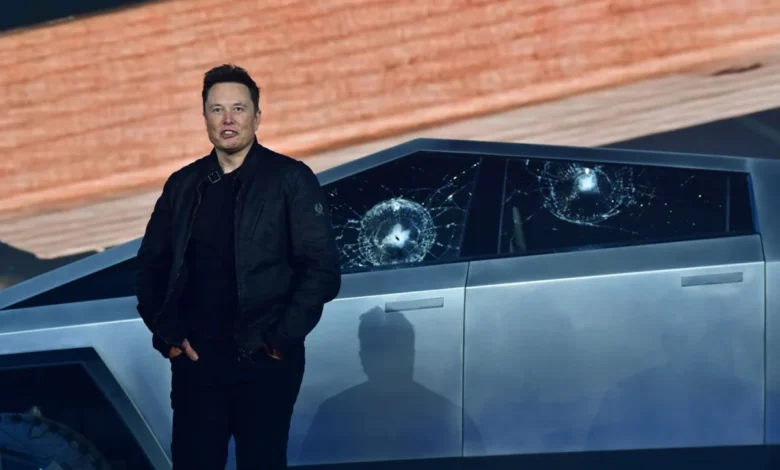
The story of the Cybertruck began in November 2019 at a high-profile, sci-fi-themed launch event at Tesla’s design studio in Hawthorne, California. Complete with pyrotechnics and a live on-stage demonstration of the vehicle’s purported "armor glass," the unveiling immediately captured global headlines. In a memorable misstep during the demonstration, Tesla’s lead designer shattered two of the truck’s windows with a steel ball. Despite the mishap, Musk remained overwhelmingly confident in the vehicle’s commercial potential. Just a month prior, during Tesla’s third-quarter earnings call in 2019, Musk boldly declared the Cybertruck to be the company’s finest creation to date, telling investors and analysts that it could be his absolute best product.
At the time of its introduction, Tesla promised an accessible entry-level price point, aggressively advertising a starting figure of just $39,900 for the rear-wheel-drive variant, with higher-end trims expected to cost considerably more. However, translating the angular, stainless-steel exoskeleton design from a concept car into a mass-manufacturable production vehicle proved exceptionally difficult. Production was pushed back repeatedly from an initially promised 2021 launch, with customer deliveries finally commencing in late 2023—four years after the initial debut.
By the time the first vehicles rolled off the line, inflation, supply chain bottlenecks, and the sheer cost of manufacturing the vehicle’s unique components had driven prices significantly higher than originally promised. The entry-level model was quietly sidelined, and subsequent price hikes pushed the cost of available variants upward. In the weeks leading up to the production wind-down announcement, Tesla further adjusted its pricing strategy, discontinuing orders for the Dual Motor AWD model and leaving the remaining configurations starting at a substantial $92,490. These steep price increases effectively priced out a large segment of truck buyers who were initially drawn to the vehicle’s promised affordability.
Sales Trajectory and Market Challenges
While the Cybertruck generated immense media buzz and initial enthusiasm among early adopters and Tesla enthusiasts, official registration and sales data reveal a steep decline in demand following its initial commercial peak. According to industry estimates compiled by Kelley Blue Book and its parent company, Cox Automotive, Tesla sold 38,965 Cybertrucks in the United States during its first full year on the market in 2024.
That momentum stalled rapidly. In 2025, U.S. sales plummeted to 20,237 units, representing a staggering 48% year-over-year decline. Data from the first half of the year indicated that sales continued to contract, placing the vehicle on a trajectory for further downward revisions. These figures stand in stark contrast to the lofty production targets Musk had previously floated, which envisioned an eventual annual output of 250,000 to 500,000 Cybertrucks.
Furthermore, the vehicle’s bumpy run was compounded by persistent quality and safety concerns. Since customer deliveries began in November 2023, the Cybertruck has been subjected to 11 separate safety recalls, according to reports by Reuters. These recalls addressed a range of mechanical and software issues, further complicating the ownership experience and dampening mainstream consumer confidence.
Despite these setbacks, Musk maintained an upbeat perspective on the vehicle’s legacy. Responding to a social media user who lamented the end of production as the conclusion of a distinct era, Musk replied on X, "True, but the Cybertruck fleet will be around for a long time." Tesla has not yet formally clarified how long it intends to supply replacement parts or maintain service support for existing owners, though winding down manufacturing does not inherently eliminate the automaker’s statutory obligations to support vehicles already on the road.
Pivoting Toward the Cybercab and Autonomous Mobility
The decision to shutter Cybertruck production is not merely a reaction to cooling sales figures; it is a calculated reallocation of manufacturing real estate to support Tesla’s next major corporate bet: the autonomous Cybercab. First unveiled during a heavily publicized autonomy event in late 2024, the Cybercab is a dedicated two-seater vehicle devoid of a traditional steering wheel or pedals, engineered from the ground up for ride-hailing and robotaxi services.
Tesla launched its initial Cybercab operations in Austin, Texas, in September, marking a major milestone in the company’s efforts to commercialize fully driverless technology. Alongside the dedicated Cybercab rollout, Tesla has expanded its existing Robotaxi operations—utilizing modified Model Y vehicles outfitted with Full Self-Driving capabilities—into major metropolitan areas across Texas, including Houston, Dallas, and Fort Worth, as well as Florida markets such as Miami, Orlando, and Tampa. The company has indicated plans to secure regulatory approval for launches in additional U.S. cities in the near future.
This strategic pivot comes at a critical juncture for Tesla’s core automotive business. Traditional electric vehicle sales have experienced headwinds over the past year, exacerbated by the expiration of federal EV tax credits in the United States. By shifting capital, engineering talent, and factory space from the low-volume, high-complexity Cybertruck program to the mass-scalable Cybercab, Tesla’s leadership aims to convince Wall Street that artificial intelligence and autonomous software services will drive the company’s next phase of explosive growth.
Regulatory Hurdles and Steep Competition
As Tesla charges headfirst into the autonomous vehicle sector, it faces a complex landscape fraught with stringent regulatory oversight and formidable established competitors. The company’s strategy of deploying steering-wheel-free vehicles has already drawn intense scrutiny from federal safety authorities. In September, the National Highway Traffic Safety Administration (NHTSA) opened an investigation into whether Tesla properly certified that the Cybercab complies with all applicable federal motor vehicle safety standards.
Although Tesla submitted formal responses to NHTSA’s inquiries in late October, the company requested that its answers remain sealed under the designation of confidential business information. According to industry reports from Electrek, the federal safety agency has not yet issued a ruling on Tesla’s confidentiality request, leaving the regulatory status of the vehicle subject to ongoing federal review.
Compounding these regulatory challenges is the intense competitive pressure within the robotaxi market. Tesla enters the autonomous ride-hailing space as a latecomer compared to incumbent players like Alphabet’s Waymo. Waymo currently operates commercial robotaxi services across 15 major U.S. cities, providing hundreds of thousands of paid passenger trips per week and establishing a commanding early lead in consumer trust and operational reliability.
Implications for Investors and the Broader EV Market
The phase-out of the Cybertruck marks a symbolic transition for Tesla. For years, the vehicle served as a rolling billboard for the company’s engineering audacity and willingness to defy conventional automotive design norms. However, its high cost of production, recurring recall campaigns, and inability to capture the mass-market volume achieved by the Model 3 and Model Y ultimately made it unsustainable in a competitive environment where profit margins and capital efficiency are paramount.
For investors, the termination of the Cybertruck line is viewed as a necessary, if dramatic, step toward rationalizing Tesla’s manufacturing footprint at Gigafactory Texas. By retooling the facility to maximize production of the Cybercab, Tesla is doubling down on its vision of a software-and-services-driven business model. Whether the autonomous bet can successfully offset cooling hardware sales and satisfy regulators remains one of the most closely watched questions in the global automotive and technology sectors. As the middle of next year approaches, all eyes will be on Austin to see if the transition from stainless-steel trucks to driverless cabs can deliver the financial and strategic rewards Tesla’s leadership has promised.