Google Responds to Backlash Over Russell Brand Prison Video as U.K. Officials Launch Urgent Investigation

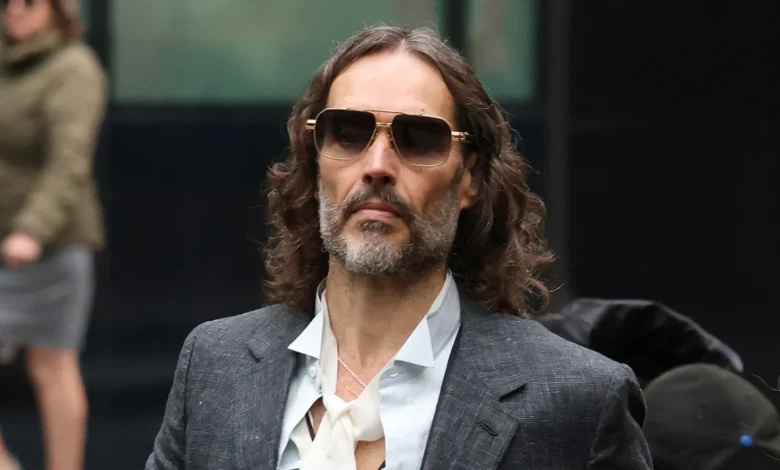
The digital landscape has once again become a battleground for accountability and platform governance following the release of a controversial video featuring a statement from the recently incarcerated Russell Brand. Shared via his official YouTube account, the clip features Brand’s wife, Laura Brand, reading a prepared message from her husband, who is currently serving a ten-and-a-half-year prison sentence at HMP Littlehey. The video, which has garnered nearly one million views, has sparked a firestorm of criticism from U.K. government officials and victims’ advocacy groups, placing pressure on Google to reconcile its content moderation policies with the public outcry surrounding the broadcast of messages from convicted sex offenders.
The Legal Context of the Conviction
The current controversy stems from the conclusion of a high-profile four-week trial at Southwark Crown Court, which ended last Monday. The jury delivered a verdict that sent shockwaves through the media and entertainment industry, finding Brand guilty of one count of rape and three counts of sexual assault. While the court acquitted him of two additional rape charges and one count of attempted indecent assault, the resulting sentence—over a decade behind bars—marked a definitive end to Brand’s career as a mainstream broadcaster and cultural commentator.
The charges were the culmination of an extensive investigation into allegations of sexual misconduct. The trial was closely monitored by both the public and legal experts, who viewed it as a test case for how the justice system addresses historical and contemporary claims of sexual violence within the celebrity sphere. Upon his sentencing, Brand was remanded into custody at HMP Littlehey, which is recognized as one of the largest facilities for sex offenders in Europe.
The Content of the Disputed Message
In the video uploaded to his channel, Laura Brand reads a letter that frames the comedian’s incarceration through a lens of religious faith. Addressing his followers as "beloved brothers and sisters in Christ," the message asserts his innocence regarding the offenses for which he was convicted.
"As you know, I am not guilty for the offenses I have been jailed for, so something strange is happening," the message read. Beyond the claim of innocence, the statement included descriptions of life at HMP Littlehey. Brand remarked, "I am incarcerated in HMP Littlehey. Little as in small, and hey as in, ‘Hey, I’m in the biggest sex offenders prison in Europe.’" He further characterized the staff as "strong, kind, and dedicated," and expressed a desire to show empathy toward his fellow inmates, stating, "I don’t know which other men here are not guilty, and the ones that are, they are people that Christ died to save."
Government Response and Regulatory Scrutiny
The broadcast of this message from behind prison walls has prompted an immediate and severe reaction from the United Kingdom’s political establishment. Justice Secretary Alex Norris led the criticism, labeling the act as "completely unacceptable." In a post shared on the social media platform X, Norris emphasized that the prison system maintains strict protocols designed to prevent inmates from using public-facing platforms to cause further distress to victims or to undermine judicial outcomes.
"Prisoners are rightly banned from making statements that cause distress to victims," Norris stated. "This is being urgently investigated, and I expect action to be taken if he is found to have broken the rules."
The Ministry of Justice has confirmed that it is reviewing how such content was recorded and transmitted from the prison environment. A spokesperson for U.K. Prime Minister Andy Burnham echoed these concerns, describing the message as "clearly appalling" and confirming that the government is treating the matter with the utmost urgency. The core of the legal inquiry rests on whether Brand circumvented prison communication policies—which generally restrict a prisoner’s ability to broadcast public statements—by using an intermediary to record and upload the content.
Google’s Stance on Content Moderation
The incident has placed Google, the parent company of YouTube, in a precarious position. When approached by the BBC for comment, a Google spokesperson confirmed that the company is "aware of the new content and our teams are investigating." However, the tech giant signaled that it had not found sufficient grounds to remove the video based on its current community guidelines.
Google further clarified that it had already taken significant measures against the account in September 2023, following the initial wave of allegations against Brand. "We suspended Russell Brand’s channel from the YouTube Partner Program in September 2023. The channel has not been able to monetize on YouTube since then," the statement noted. By stripping the channel of its ability to generate advertising revenue, Google effectively curtailed the financial incentive for the account to remain active, though it stopped short of a permanent ban.
The refusal to remove the video has reignited the debate surrounding the power and responsibility of digital platforms. Critics argue that allowing a convicted sex offender to broadcast claims of innocence to an audience of nearly a million people constitutes a form of victim-blaming and a misuse of public forums. Conversely, the company’s decision highlights the legal complexities of "de-platforming," where tech companies must balance the pressure to suppress harmful content with their stated commitment to maintaining a platform for diverse, albeit controversial, expression.
Historical Chronology of the Brand Investigation
- September 2023: Allegations of sexual misconduct emerge against Russell Brand. In response to the growing controversy and the potential for reputational harm, YouTube suspends Brand’s channel from the YouTube Partner Program, preventing him from earning revenue through ads.
- Late 2023 – Mid 2024: The legal investigation proceeds, with prosecutors gathering evidence related to multiple complaints of rape and sexual assault.
- November 2024 (Early): The trial commences at Southwark Crown Court, lasting four weeks.
- November 2024 (Mid): The jury returns a verdict of guilty on one count of rape and three counts of sexual assault. Brand is sentenced to 10 years and six months.
- November 2024 (Late): The YouTube video featuring the statement read by Laura Brand is uploaded, triggering an immediate inquiry by the Ministry of Justice and public criticism from government officials.
Implications for Digital Content and Prison Reform
The incident highlights a significant gap in modern communications technology. While prisons were designed in an era where communication was strictly limited to letters, phone calls, and authorized visits, the digital age allows for near-instantaneous global reach. The ability for an inmate to influence public opinion through a partner on the outside creates a "gray area" that current prison regulations are struggling to manage.
From a regulatory standpoint, the U.K. government is likely to use this incident as a catalyst to update its guidelines regarding the digital footprint of incarcerated individuals. Legal experts suggest that if it is found that prison staff were complicit or negligent in the recording of the message, there could be significant structural changes to how inmates are monitored regarding external communication.
Furthermore, the case serves as a broader reminder of the "creator economy"’s persistent influence. Even after being demonetized by YouTube, Brand retains a large, dedicated subscriber base. This highlights a reality that platform moderators have long feared: the power of influencers to command attention and shape narratives regardless of their standing within the traditional media or legal systems.
Future Outlook
As the investigation into the video’s production continues, the public, the Ministry of Justice, and legal advocates are waiting to see if Google will eventually reverse its decision to keep the content live. For now, the video remains accessible, serving as a focal point for the ongoing tension between freedom of expression and the protection of victims of sexual violence.
The incident also poses a question about the future of Russell Brand’s digital presence. While his channel remains demonetized, the continued availability of his content suggests that, without a policy shift from Google or a direct court order requiring the removal of the content, the digital archive of a convicted offender remains protected under current platform standards. This case is almost certain to result in a tightening of both prison communication policies and, potentially, more aggressive content moderation standards for high-profile figures who have been convicted of violent crimes.
Related posts: