Elon Musk Pitches Austin-to-San Antonio Hyperloop Project Following $3 Billion UAE-Backed Funding Round

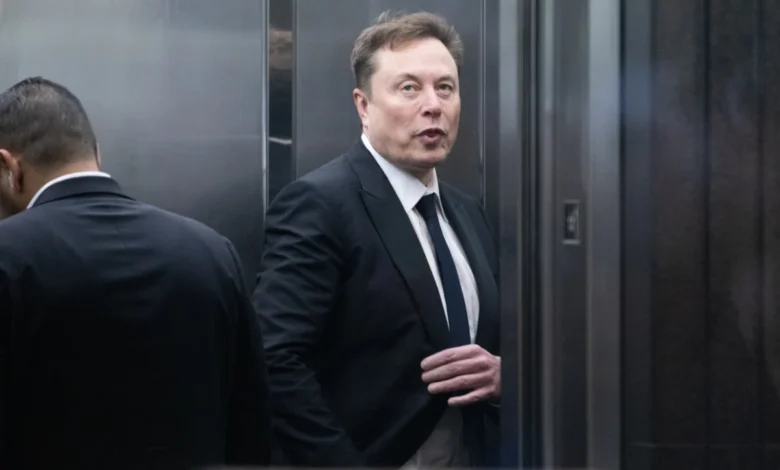
The landscape of modern transportation could be on the verge of another ambitious transformation as billionaire entrepreneur Elon Musk sets his sights on Texas. In a recent announcement that has sparked both enthusiasm and skepticism across the infrastructure and tech sectors, Musk revealed that his tunneling enterprise, The Boring Company, is actively conceptualizing a high-speed transit link between Austin and San Antonio. According to the proposals shared via social media, this venture aims to deploy what Musk describes as a "simple precursor Hyperloop," a high-speed transit system designed to dramatically collapse travel times between the two burgeoning Texan cities to under 30 minutes.
The announcement arrives at a pivotal financial juncture for The Boring Company. Just weeks prior to Musk’s public statements, the infrastructure firm successfully closed a massive $3 billion funding round led heavily by investors from the United Arab Emirates. This substantial capital injection has provided the privately held company with the financial ammunition necessary to pursue large-scale, capital-intensive public works projects—an arena where the company has historically faced severe criticism regarding feasibility, regulatory hurdles, and unfulfilled promises.
The Genesis of the Announcement and the Sci-Fi Vision
The revelation regarding the Austin-San Antonio transit link did not emerge from a traditional corporate press conference or a formal municipal bidding process. Instead, it materialized as an offshoot of an online exchange on the social media platform X, formerly known as Twitter. The dialogue began when Musk reposted an artificial intelligence-generated video depicting a sweeping, futuristic science fiction metropolis populated by interstellar human colonies. Alongside the video, Musk declared to his millions of followers, "This is the future we shall bring into being."
When challenged or questioned by users regarding the practicality and immediate utility of such grand, space-age ambitions on Earth, Musk pivoted the conversation toward terrestrial transit infrastructure. He asserted that developing regional high-speed connections serves as a foundational step toward broader technological and engineering milestones. Shortly thereafter, the official corporate account for The Boring Company amplified Musk’s statements, issuing a public affirmation that the company "would be excited and honored to build this massive infrastructure project."
This ideological reliance on futurism has frequently drawn the scrutiny of academics, historians, and industry critics. Observers often point out that Musk’s aesthetic and operational blueprints appear heavily influenced by mid-century pulp science fiction and comic book narratives. For instance, prominent historian Jill Lepore recently critiqued the broader technology sector’s leadership, arguing that modern tech titans are frequently guided by a superficial reading of science fiction literature—a genre that, ironically, often explores themes that run counter to their stated political and societal philosophies. Nevertheless, whether viewed as grandiose marketing or genuine long-term planning, Musk’s vision continues to dictate the strategic direction of his corporate empire.
A Troubled Track Record: Past Promises vs. Reality
While the prospect of a sub-30-minute commute between Austin and San Antonio offers immense appeal to regional planners grappling with Texas’s explosive population growth and highway congestion, skepticism remains deeply embedded in the engineering community. This skepticism is largely a byproduct of The Boring Company’s historical delivery record.
Since its founding, The Boring Company has floated numerous high-profile, highly publicized transit proposals that ultimately failed to materialize. Among the most notable casualties of the company’s ambitious early roadmap were proposed tunnel systems intended to alleviate severe traffic congestion in major metropolitan areas such as Chicago and Los Angeles. Perhaps most famously, Musk once touted a revolutionary underground transit system designed to connect New York City and Washington, D.C., promising travel times of under 30 minutes between the nation’s political and financial capitals. Despite initial regulatory dialogues and immense public fascination, the East Coast project quietly dissolved into inactivity, hampered by regulatory resistance, geological complexities, and insurmountable permitting barriers.
However, the company’s narrative is not entirely devoid of operational success. The most prominent operational proof-of-concept for The Boring Company remains the Las Vegas Convention Center Loop, alongside its subsequent expansions across the Las Vegas Strip. This subterranean transportation network utilizes a fleet of fully electric Tesla vehicles operating within dedicated tunnels to transport convention-goers across vast resort properties. While the Las Vegas system operates on a much smaller scale than an interstate Hyperloop or regional high-speed rail corridor, it demonstrated that the company could successfully bore tunnels and secure municipal operating permits within a constrained urban environment.
The Financial Landscape and the $3 Billion UAE Investment
The viability of tackling a massive infrastructure project spanning the vast geographic expanse between Austin and San Antonio heavily depends on The Boring Company’s recent financial fortification. In September 2026, the company achieved a major milestone by securing $3 billion in a financing round led by strategic entities within the United Arab Emirates.

The UAE has positioned itself as a global hub for advanced transportation technologies, having previously expressed sustained interest in hyperloop systems, autonomous mobility, and futuristic urban planning paradigms. This massive influx of capital fundamentally changes The Boring Company’s balance sheet. Historically, the firm relied on a mix of private capital from Musk’s ventures, smaller venture capital contributions, and localized municipal contracts that frequently required shared funding models. With $3 billion in fresh liquidity, the firm possesses the capital reserves required to accelerate research and development into tunneling technology, proprietary boring machine manufacturing, and high-speed pod design.
Economic analysts note that deploying capital in Texas offers distinct regulatory and economic advantages compared to heavily unionized or densely regulated states like California or New York. Texas state officials have traditionally fostered a business-friendly regulatory climate, which could theoretically streamline the preliminary environmental reviews and land acquisition phases required for a project of this magnitude.
Technical Feasibility: What is a "Precursor Hyperloop"?
Engineering experts have focused heavily on Musk’s specific phrasing: a "simple precursor Hyperloop." Traditional hyperloop concepts—originally popularized by Musk in a 2013 white paper—envisioned passenger pods traveling at near-supersonic speeds (exceeding 700 miles per hour) through low-pressure or near-vacuum steel tubes. The engineering hurdles associated with maintaining a vacuum across vast inter-city distances, managing thermal expansion, and ensuring passenger safety during rapid deceleration have stalled numerous independent hyperloop startups worldwide, many of which have downsized or closed operations in recent years.
By describing the proposed Austin-to-San Antonio link as a "precursor," Musk may be signaling a phased engineering approach. Instead of attempting an immediate, full-scale vacuum-sealed hyperloop system, The Boring Company could potentially deploy an intermediate technology. This might combine high-speed electric sleds or pods operating within larger-diameter tunnels, drawing inspiration from existing Loop technology while incrementally upgrading propulsion, aerodynamics, and pressure regulation systems over time.
The geographic distance between downtown Austin and downtown San Antonio is approximately 80 miles. To achieve a travel time of under 30 minutes, a transit system would need to maintain an average operational speed of well over 160 miles per hour, factoring in acceleration and deceleration phases. While significantly lower than the theoretical speeds of a true hyperloop, 160+ mph represents a formidable speed for subterranean transit, requiring advanced safety protocols, robust ventilation, and precise guidance systems.
Broader Implications for Texas Infrastructure and Regional Growth
The announcement comes at a critical juncture for the Texas Innovation Corridor, the rapidly urbanizing stretch along Interstate 35 connecting Austin, San Antonio, and major intermediate hubs like San Marcos and New Braunfels. The region has experienced unprecedented demographic expansion, straining existing highway infrastructure, public bus networks, and commuter rail proposals.
State and local transportation officials have spent years debating how to manage the staggering influx of residents and corporate relocations. Traditional highway expansions have proven costly and environmentally contentious, while regional passenger rail initiatives face complex negotiations with freight rail operators who own the existing right-of-way tracks.
If The Boring Company can successfully navigate the engineering, environmental, and regulatory hurdles of an Austin-San Antonio transit link, it could fundamentally alter the economic geography of central Texas, effectively merging the two metropolitan areas into a single, highly integrated economic powerhouse. Conversely, if the project follows the trajectory of previous unfulfilled announcements in Chicago and the Northeast, it risks being categorized as another high-profile distraction in the ongoing debate over sustainable, long-term public mass transit.
As stakeholders await formal engineering proposals and official municipal filings, the intersection of massive Middle Eastern investment, Texas regional growth, and Musk’s relentless pursuit of sci-fi infrastructure ensures that the Austin-San Antonio transit concept will remain a focal point of intense industry analysis in the months and years ahead.