Tesla Expands Central Texas Logistics Footprint With Massive Mustang Ridge Facility Amid Booming U.S.-Mexico Cross-Border Automotive Trade

The landscape of North American supply chains and cross-border manufacturing continues to undergo rapid transformation, highlighted by major infrastructural investments in both Texas and Northern Mexico. Electric vehicle pioneer Tesla has officially filed plans to construct a massive 538,720-square-foot distribution center near Austin, Texas, a strategic move designed to bolster its expanding manufacturing footprint and support its complex regional logistics network. Simultaneously, industrial engineering giant Danfoss has launched a specialized production line at its expanding campus in Apodaca, Nuevo León, explicitly targeting the booming North American data center and HVAC markets.
These concurrent developments underscore the deepening economic integration between the United States and Mexico. As automotive and high-tech manufacturers grapple with shifting consumer demands, component constraints, and the imperative for supply chain resilience, the Texas-Mexico corridor has firmly established itself as one of the most critical industrial arteries in the global economy.
Tesla Deepens Central Texas Roots With Mustang Ridge Logistics Hub
Tesla’s aggressive expansion in Central Texas reached a new milestone with state filings detailing plans for a substantial lease-space build-out at the Mustang Ridge Distribution Center I. Located at 6925 FM Road 1327 in Mustang Ridge—just south of Austin—the private project spans 538,720 square feet of office and warehouse space.
According to documentation submitted to the Texas Department of Licensing and Regulation, the project carries an estimated construction cost of $1.44 million. While the relatively modest construction valuation suggests the project is primarily a tenant improvement and interior fit-out of an existing shell building rather than a ground-up construction, the sheer scale of the facility illustrates the sheer volume of logistics capacity Tesla requires to sustain its operations.
State filings indicate that work on the project is scheduled to commence on December 7, with an anticipated completion date of December 4, 2028. Although Tesla has not yet publicly disclosed the specific product lines, raw materials, or finished goods that will pass through the Mustang Ridge facility, nor the exact headcount required to operate it, the strategic placement of the warehouse aligns neatly with the company’s broader regional strategy.
The facility adds another critical node to Tesla’s supply chain ecosystem centered around its corporate headquarters and Gigafactory Texas, located just miles away in Austin. The automaker has poured billions of dollars into expanding its manufacturing capabilities in the region as it seeks to scale production across multiple vehicle platforms.
Financial Momentum and Production Scaling
The logistics expansion comes at a time of robust financial and operational growth for Tesla. In its recent quarterly financial disclosures, the company reported revenue of $28.24 billion, representing a 26% year-over-year increase. During the same period, Tesla achieved a significant production milestone by delivering a record 480,126 vehicles worldwide.
To support this rapid scaling, capital expenditures more than doubled sequentially to $5.8 billion, with executive management signaling that total annual spending is projected to exceed $25 billion. These investments are directed not only toward passenger vehicle lines but also toward heavy-duty commercial transport. Tesla is actively preparing to ramp up production of its Class 8 electric semi-truck, the Tesla Semi, at its dedicated manufacturing facility in Nevada, with commercial rollout slated to gain momentum.
However, this rapid growth has not been without operational hurdles. Tesla executives have consistently pointed to ongoing constraints regarding battery cell availability and specialized electronic components as primary bottlenecks limiting the speed at which vehicle production can be accelerated. Consequently, optimizing regional supply chains, improving inventory staging, and minimizing transit times through facilities like the Mustang Ridge distribution center are vital components of the company’s strategy to mitigate these friction points.
The Texas-Mexico Automotive Corridor Connection
While the Texas Department of Licensing and Regulation filings for the Mustang Ridge distribution hub do not explicitly name external suppliers, customers, or cross-border freight lanes, the facility is perfectly positioned to integrate with Tesla’s extensive Mexican supply chain.
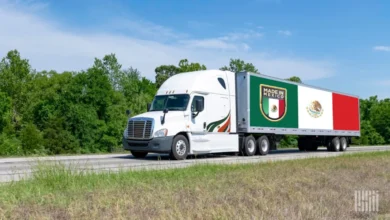
Central Texas does not operate in a vacuum; rather, it serves as the northern anchor of a deeply integrated cross-border automotive corridor. Tesla draws a substantial volume of specialized components, structural castings, wiring harnesses, and electronic subassemblies from an extensive network of tier-one and tier-two suppliers operating across Mexico. According to industrial real estate and trade data from organizations such as Tecma, Tesla suppliers maintain robust manufacturing operations in states including Nuevo León, Coahuila, Tamaulipas, Chihuahua, the Bajío region, and the State of Mexico.
Components produced in these industrial clusters routinely cross the international border via key international bridges, moving northward to feed the assembly lines at Gigafactory Texas. The establishment of a massive new distribution and staging center in Mustang Ridge gives Tesla enhanced buffer capacity to manage these complex international logistics flows, smoothing out any potential disruptions caused by border crossing bottlenecks, regulatory inspections, or customs processing delays.
Danfoss Expands Apodaca Complex to Serve North American Data Centers
While Tesla expands its distribution footprint in Texas, industrial manufacturing continues to boom south of the border. Danfoss Climate Solutions, a subsidiary of the Denmark-based engineering conglomerate Danfoss, has officially launched a new production line at its sprawling manufacturing complex in Apodaca, Nuevo León.
The strategic expansion is a direct response to soaring regional demand driven by the unprecedented construction boom of North American data centers. Modern data centers require immense cooling power to maintain optimal operating temperatures for high-density computing servers, leading to a surge in demand for advanced commercial chillers, heat pumps, and precision climate control systems.
The newly inaugurated production line in Apodaca is dedicated to manufacturing oil-free check and block valves. These specialized components are critical elements used in conjunction with Danfoss Turbocor centrifugal compressors, which are widely utilized in large-scale commercial chillers and industrial heat pumps.
By localizing production of these essential valves in Mexico, Danfoss aims to significantly shorten delivery times, insulate its supply chains from transatlantic shipping vulnerabilities, and provide more agile service to original equipment manufacturers (OEMs) throughout the United States and Canada.
Scaling Footprint and Workforce in Nuevo León
The launch of the new valve production line represents the latest phase of a broader, aggressive expansion strategy executed by Danfoss in Apodaca over the past several years. Recognizing the strategic advantages of nearshoring, the company has aggressively invested in scaling its physical presence and manufacturing capacity in the region.
Over a two-year period, Danfoss effectively doubled the physical footprint of its Apodaca manufacturing campus, expanding the facility from approximately 366,000 square feet to an expansive 721,000 square feet. This real estate growth has been mirrored by a corresponding surge in local employment. The workforce at the Apodaca complex grew from 800 employees to 1,300 skilled workers, providing valuable high-tech manufacturing jobs to the local economy in Nuevo León.
Despite serving a massive international market, the operations in Apodaca maintain a high degree of regional integration. Danfoss has reported that approximately 90% of the finished products manufactured at the Apodaca plant already comply with the stringent rules of origin requirements outlined in the United States-Mexico-Canada Agreement (USMCA). This high level of compliance ensures that the company’s customers can seamlessly benefit from duty-free trade advantages when importing the equipment across international borders.
While initial production runs from the new line are utilized by OEMs operating directly within Mexico, the vast majority of the finished goods—roughly 80%—are ultimately exported to international markets. Once integrated into chillers and commercial air-conditioning units, these systems are shipped primarily to the United States to support the rapid build-out of commercial real estate and technology infrastructure.
Broader Economic Implications for North American Trade
The simultaneous expansions by Tesla in Texas and Danfoss in Nuevo León illustrate the maturation of the nearshoring movement. For years, manufacturers relied heavily on distant offshore suppliers, exposing their supply chains to severe disruptions, geopolitical friction, and unpredictable maritime freight costs. The events of the past half-decade catalyzed a structural shift toward regionalization, with global enterprises choosing to build manufacturing and distribution ecosystems closer to their end markets.
For Texas and Northern Mexico, this trend has created an economic powerhouse. The Texas-Mexico border region is no longer merely a transit point for goods moving between two separate countries; it has evolved into a unified, cross-border industrial workshop. Raw materials, engineered components, and finished products move fluidly back and forth, supported by massive infrastructure investments such as Tesla’s Mustang Ridge warehouse and advanced manufacturing facilities like Danfoss’s Apodaca campus.
As Tesla pushes toward its December 2028 completion target for the Mustang Ridge distribution center, and as Danfoss ramps up its data center valve production to meet North American tech demands, both companies are cementing the long-term viability of the cross-border trade corridor. These investments ensure that the region will remain at the forefront of advanced manufacturing, electric mobility, and industrial technology for decades to come.
Related posts: