DHL Express launches new Heavy Weight Express service to help US businesses ship large items faster

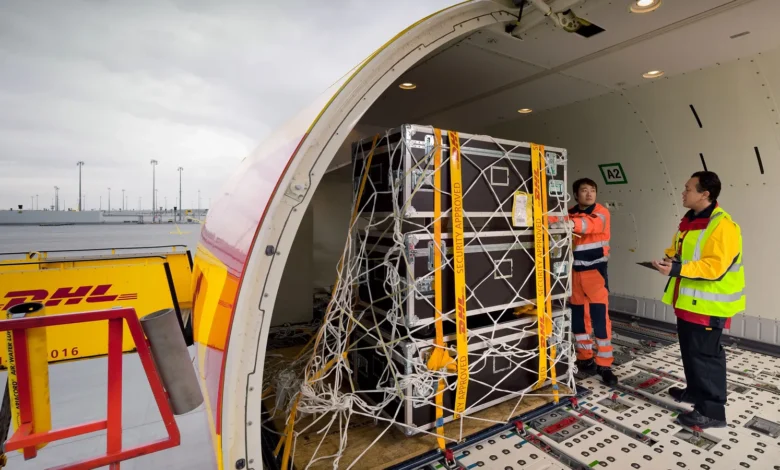
DHL Express has officially introduced Heavy Weight Express, a standardized, scheduled air freight service designed to streamline the international transit of bulky, industrial-grade cargo. Announced on September 9, this service marks a strategic pivot for the logistics giant, aiming to bridge the gap between traditional air freight and express courier services. By leveraging its global aviation infrastructure, DHL Express is targeting sectors that require rapid, reliable delivery of large components, such as automotive manufacturing, life sciences, and the energy sector.
The new service is designed to handle shipments weighing up to 2,200 pounds per individual piece, with a maximum shipment weight of 6,000 pounds. According to Laurice Bancroft, Senior Vice President of Network Operations for DHL Express Americas, the service offers transit times of one to three business days, depending on the specific origin and destination corridors. By integrating these shipments into its existing express air network—which spans more than 220 countries and territories—DHL seeks to offer a predictable, end-to-end logistics solution for high-stakes cargo.
Strategic Context and Market Evolution
The launch of Heavy Weight Express comes at a critical juncture for the global logistics industry. Over the past several years, the supply chain sector has faced unprecedented volatility, characterized by fluctuating air capacity, port congestion, and the urgent need for "just-in-time" manufacturing agility. Historically, heavyweight freight has often been relegated to standard air freight, which lacks the time-definite guarantees of express shipping, or to ocean freight, which has proven increasingly unreliable during periods of geopolitical and environmental disruption.
DHL’s decision to standardize its heavy-weight offering is a response to the growing demand for "express-style" reliability in the heavy industrial sector. As companies move away from large, centralized inventory hubs toward decentralized, multisite supply chains, the ability to move heavy machinery components or sensitive pharmaceutical equipment at high speeds has become a competitive necessity. The introduction of this service effectively allows DHL to utilize its existing fleet more efficiently while providing a premium, value-added service to enterprise clients.
Operational Framework and Network Infrastructure
The Heavy Weight Express service is built upon DHL’s existing, robust infrastructure. Unlike third-party freight forwarding models that rely heavily on subcontracted capacity, DHL manages the entire lifecycle of the shipment—from the initial pickup to final delivery. This includes control over its own aircraft fleet, regional hubs, global gateways, and customs clearance operations.
Bancroft emphasized that this integrated, "closed-loop" model is the service’s primary differentiator. By maintaining control over the entire journey, DHL aims to mitigate the common pitfalls of international freight, such as handover delays between different carriers or inconsistent documentation standards.
Key operational components include:
- In-house Customs Expertise: By centralizing customs operations, DHL aims to minimize the bureaucratic delays that frequently stall heavyweight shipments at international borders.
- End-to-End Tracking: Clients gain full visibility throughout the transportation process, a feature often lacking in traditional, fragmented freight models.
- Upfront Pricing: To address the volatility of shipping costs, the service provides a single, all-inclusive quote, which effectively eliminates the "surprise" surcharges often incurred during complex cross-border transit.
Dedicated Support: The Heavy Weight Priority Desks
Perhaps the most significant structural change introduced alongside this service is the creation of "Heavy Weight Priority Desks." These are specialized, regional teams tasked with the active management of heavy-weight shipments. Each shipment is assigned a level of "dedicated case ownership," meaning that a specific team is responsible for the cargo from start to finish.
This proactive approach is designed to identify "exceptions"—such as flight delays, weather-related disruptions, or documentation errors—before they escalate into systemic problems. These teams are empowered to intervene in real-time, rerouting cargo or expediting ground transportation to ensure that the delivery timeline remains intact. This high-touch service model is intended to minimize costly downtime for manufacturers, where even a 24-hour delay in receiving a critical machine part could result in significant financial losses.
Economic Implications for Key Sectors
The sectors targeted by DHL—technology, automotive manufacturing, engineering, life sciences, and energy—are those where the cost of downtime is exceptionally high. In the automotive sector, for instance, a single missing robotic component can stall an entire assembly line, resulting in thousands of dollars in lost production per minute.
By offering a service that combines the capacity for heavy loads with the speed of express air, DHL is effectively helping these industries reduce their reliance on large, "safety-stock" inventory buffers. When transit times become predictable and reliable, businesses can move toward leaner operations, reducing the amount of capital tied up in warehouses.
Furthermore, in the life sciences and pharmaceutical sectors, speed is often a matter of regulatory compliance and product integrity. Many high-value medical devices and temperature-sensitive materials require rapid transit to maintain efficacy. The Heavy Weight Express service provides these sectors with a standardized framework that ensures sensitive goods remain within a controlled environment for the duration of the journey.
Market Analysis and Competitive Landscape
DHL’s entry into this specific niche segment places it in a strong position relative to traditional freight forwarders and integrators. While companies like FedEx and UPS also maintain massive express networks, DHL’s heavy international focus and its established global footprint provide a unique advantage in cross-border trade.
From an industry analyst perspective, the service is a play for market share in the high-margin, high-reliability segment of the freight market. As the global economy continues to recover from post-pandemic imbalances, the demand for "premium" freight services that offer high visibility and low risk is expected to grow. Data from the International Air Transport Association (IATA) suggests that air cargo demand remains sensitive to global economic indicators, but there is a clear, sustained shift toward services that offer greater resilience against potential supply chain shocks.
Chronology of Service Rollout
The launch on September 9 follows a period of internal testing and infrastructure refinement. According to industry reports, DHL had been piloting elements of this service across select international corridors throughout early 2024 to stress-test the capacity of its ground handling teams and customs protocols. The decision to standardize the service globally reflects the positive results of these pilots, specifically regarding the reduction in transit time variance.
Looking forward, the success of Heavy Weight Express will likely be measured by the adoption rate among existing enterprise clients. If the service succeeds in reducing the "cost of failure" for large-scale logistics, it could trigger a trend toward more standardized, premium-tier services in the broader freight industry.
Conclusion and Future Outlook
The launch of Heavy Weight Express is more than a simple expansion of service capabilities; it is an evolution in how global logistics providers view the relationship between speed and scale. By moving away from the traditional, often opaque processes of standard air freight and toward an integrated, "express-model" approach for heavy items, DHL is positioning itself to capture a larger share of the enterprise logistics market.
For businesses currently navigating the complexities of global supply chains, the service offers a tool to enhance agility and reduce risk. As the global logistics landscape continues to prioritize resilience and visibility, the ability to move heavy cargo with the same precision as a small parcel will likely become a benchmark for excellence in the industry. Whether this model will be adopted by competitors or remain a unique DHL offering remains to be seen, but for now, the Heavy Weight Express service represents a significant step forward in the modernization of international freight logistics.