Mexican Heavy-Duty Truck Exports to the U.S. Roar Back in August as Nexio Secures a 77-Acre Texas Campus for Commercial Production

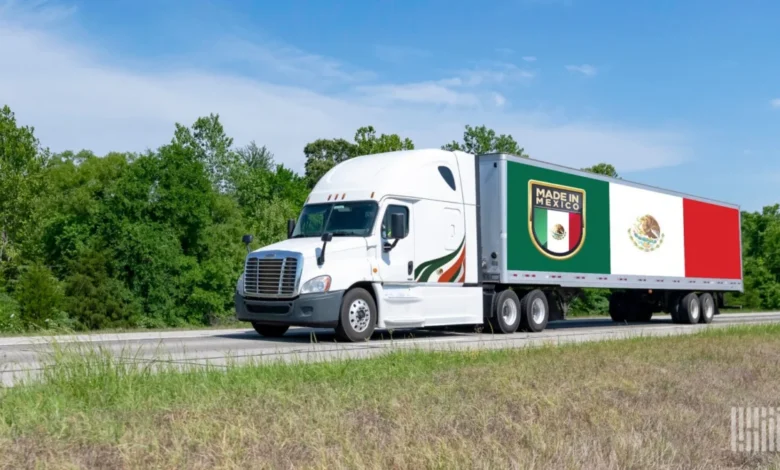
The North American cross-border commercial vehicle sector experienced a significant operational surge in late summer, anchored by an extraordinary rebound in Mexican heavy-duty truck manufacturing and strategic domestic infrastructure expansion in Texas. According to preliminary data released by Mexico’s National Institute of Statistics and Geography (INEGI), production and export figures for heavy-duty trucks and buses staged a dramatic recovery in August, erasing earlier seasonal sluggishness and reaffirming the deeply integrated supply chain binding Mexico and the United States.
Simultaneously, within the domestic U.S. market, alternative-fuel commercial vehicle manufacturer Nexio Power cemented its long-term manufacturing trajectory by securing a sprawling 77-acre industrial campus in Anderson, Texas. Together, these developments underscore a dynamic period for the heavy-duty transportation industry, marked by robust cross-border trade volumes, shifting regional trade policies, and an escalating demand for specialized commercial fleet assets.
A Sharp August Rebound in Mexican Heavy-Duty Manufacturing
Mexico’s heavy-duty vehicle industry posted a dramatic turnaround in August, characterized by production doubling and exports more than doubling year over year, while domestic wholesale sales continued a steady path toward recovery. Heavy-duty manufacturers operating within Mexico produced a combined 16,389 trucks and buses during the month. This output represents a staggering 100.2% increase compared to the 8,187 units recorded in August of the previous year.
Export channels experienced an even steeper upward trajectory. Cross-border shipments jumped 116.7% year over year, reaching 14,310 units in August, compared with 6,605 vehicles during the corresponding month a year earlier. This remarkable monthly performance served as a vital corrective wave, offsetting periods of softness earlier in the calendar year.
Despite the sheer scale of the August acceleration, cumulative year-to-date growth figures remain comparatively modest due to the uneven pacing of the broader macroeconomic landscape. From January through August, manufacturers across Mexico produced a cumulative 101,940 heavy-duty vehicles. This figure reflects a modest 2.6% increase compared to the 99,311 units turned out during the same eight-month span in the prior year. Similarly, cumulative exports over the first eight months reached 85,687 units, representing a 3.7% increase from the 82,620 vehicles shipped abroad during the same timeframe last year.
A detailed breakdown of the production data reveals that cargo vehicles continue to dominate the manufacturing landscape, accounting for 97.6% of total Mexican heavy-duty vehicle production through August. Cargo manufacturing totaled 99,526 units, while specialized passenger buses comprised the remaining 2,414 vehicles produced during the period.
The United States Remains the Anchor Market
The structural reliance of North American supply chains on cross-border manufacturing was once again underscored by geographical destination metrics. The United States remains overwhelmingly the primary export market for heavy-duty vehicles built in Mexico.
Through the first eight months of the year, Mexican manufacturers shipped 79,261 heavy-duty vehicles directly to the United States. This volume accounts for an overwhelming 92.5% of all Mexican heavy-duty exports. Canada secured the distant second position, receiving 3,809 units, or 4.4% of the total export share. Colombia rounded out the top destinations, importing 1,697 units, which translates to roughly 2% of the total volume leaving Mexican assembly lines.
Industry analysts note that this heavy concentration of exports directed toward the United States highlights the irreplaceable nature of the integrated North American manufacturing ecosystem. Major truck builders have spent decades optimizing production footprints across both sides of the border, utilizing cost-competitive assembly labor in Mexico alongside advanced engineering, R&D, and component sourcing hubs located in the U.S.
Freightliner and International Drive the Production Surge
A closer examination of individual manufacturer performance reveals that the August production surge was heavily anchored by major industry players. Freightliner led all heavy-duty vehicle producers in Mexico during August, turning out 10,240 units—an impressive 133.1% increase compared to the 4,393 units produced a year earlier. International followed as the second-largest producer, rolling out 4,525 units, representing a 100.8% year-over-year increase. Kenworth maintained a steady presence with 1,087 units produced, marking an 8.5% increase.
Freightliner similarly dominated the export arena during August, shipping 10,073 Mexico-built vehicles to international buyers, which represents a 151.4% surge over the previous year. International exported 3,877 units, achieving an 89.6% year-over-year increase. Conversely, Kenworth experienced a contraction in export volume for the month, with foreign shipments falling 35.3% to 358 units.
Other notable participants in the monthly INEGI report included Isuzu with 132 units produced, Mercedes-Benz Autobuses with 106 units, Hino with 105 units, Foton with 70 units, Volkswagen Camiones y Autobuses with 51 units, Volvo Buses with 49 units, and Dina with 24 units. While some smaller manufacturers posted percentage gains, the aggregate volume was decisively driven by the industrial might of Freightliner and International.
The Aging Fleet Dilemma and Used Vehicle Imports
Even as manufacturing facilities hum at high capacities, industry associations within Mexico continue to voice strategic concerns regarding the domestic fleet’s structural health. According to the National Association of Producers of Buses, Trucks, and Tractors (ANPACT), the average age of Mexico’s commercial truck fleet stands at an aging 19.3 years.
To combat fleet obsolescence, ANPACT has repeatedly urged federal policymakers to implement expanded financing programs, targeted tax incentives, vehicle scrappage initiatives, and stricter regulatory frameworks governing the importation of used heavy-duty vehicles from the United States.
The inflow of used trucks remains a persistent point of friction for domestic manufacturers. Approximately 26,000 used heavy-duty vehicles entered Mexico from the U.S. in 2025, down slightly from roughly 29,000 units in 2024. Although these used imports fell 29.2% year over year during the first seven months of the year, ANPACT emphasizes that market distortion persists. Statistically, roughly 53 used imported vehicles cross the border into Mexico for every 100 new heavy-duty vehicles sold domestically, dampening the growth potential of local sales networks.
Trade Policy, Tariffs, and the Looming USMCA Review
Beyond domestic fleet dynamics, broader macroeconomic headwinds and trade policies loom large over the manufacturing sector. ANPACT leadership has identified evolving trade policies as a primary strategic concern for manufacturers, particularly with the upcoming United States-Mexico-Canada Agreement (USMCA) review on the horizon and the ongoing shadow of U.S. Section 232 tariffs.
Association representatives have formally advocated for preserving the existing rules of origin embedded within the trade pact. Simultaneously, they are pushing to reduce tariff burdens for industrial operators that have invested heavily to comply with regional-content requirements.
Industry leaders stress that long-term investment cycles in the automotive and commercial vehicle sectors require absolute regulatory visibility. Building new assembly plants, securing tier-one and tier-two suppliers, and scaling production lines involve capital expenditures planned years in advance. Consequently, sudden policy shifts or tariff implementations can disrupt finely calibrated cross-border supply chains.
ANPACT has explicitly stated its support for increasing regional content requirements—as previously agreed under the USMCA timeline—to reach 70% by 2027. Rather than loosening rules of origin, the association seeks relief from tariffs that inadvertently penalize the highly integrated North American heavy-duty vehicle supply chain.
Nexio Secures a 77-Acre Texas Campus for Commercial Truck Production
While Mexican manufacturing operations supply the vast majority of cross-border heavy equipment, domestic manufacturing capacity within the United States continues to expand to meet specialized regional demand. In a major operational milestone, Nexio Power announced the acquisition and securing of a massive 77-acre industrial campus located in Anderson, Texas.
The company, a recognized Texas-based manufacturer of propane-powered commercial vehicles and alternative-fuel engines, plans to deploy the facility for comprehensive commercial truck production, finishing, testing, and warehousing operations.
The Anderson property represents an immediate operational upgrade for the alternative-fuel manufacturer. The site features approximately 180,000 square feet of existing, highly specialized production capacity. Because the property was previously utilized for heavy industrial fabrication and assembly, it arrived fully equipped with heavy-duty manufacturing infrastructure. Assets on-site include dedicated paint and blast facilities, 13 heavy-duty overhead cranes, a specialized testing complex, and extensive racked warehousing.
Strategic Bridge to Future Expansion
According to corporate disclosures, the Anderson facility will serve as an immediate production hub, allowing Nexio to accelerate commercial truck output while acting as a strategic bridge to a much larger manufacturing campus the company intends to develop in Lufkin, Texas. Once the Lufkin facility comes fully online, the Anderson campus is expected to retain excess production capacity, providing the company with operational flexibility and dual-site manufacturing redundancy.
The Anderson facility is engineered to support full vehicle assembly from the ground up. Production workflows will initiate with chassis preparation, followed by the seamless integration of alternative-fuel powertrains and cabs. Assembly lines will then progress through superstructure construction, complex wiring and plumbing installation, bodywork application, painting, and final finishing.
Furthermore, the facility houses rigorous quality-control infrastructure, including chassis dynamometer testing capabilities, ensuring that every vehicle meets safety and performance standards before departing the property. To support its product line, the site includes dedicated on-site propane Autogas fueling infrastructure. Repair and refurbishment operations will also run parallel to new-vehicle manufacturing lines.
Geographic Advantages of the Grimes County Site
Positioned along Highway 30 in Grimes County, the Anderson campus occupies a strategically advantageous logistics corridor. Situated geographically between College Station and Huntsville, the property sits roughly 90 miles from the Port of Houston and approximately 80 miles from George Bush Intercontinental Airport. This positioning grants the manufacturer convenient access to both major maritime import-export channels and vital domestic freight arteries.
While Nexio did not disclose the precise financial terms of the property acquisition or lease agreement in its public announcements, nor did it release specific employment counts or annual production targets, the physical footprint signals a serious commitment to scaling the production of alternative-fuel commercial fleets, including Class 5 through 8 commercial trucks tailored for propane distribution and heavy-duty delivery operations.
Implications for the North American Freight Landscape
The dual developments—the dramatic production and export resurgence reported by INEGI in Mexico and Nexio’s infrastructure expansion in Texas—illustrate a vibrant, evolving commercial vehicle market across North America.
The sharp August rebound in Mexican heavy-duty manufacturing demonstrates the unmatched scalability and resilience of the region’s cross-border production networks. With over 92% of Mexican heavy-duty truck exports destined for the United States, the health of the U.S. freight economy remains intrinsically linked to the industrial capacity of Mexican manufacturing hubs.
At the same time, domestic investments like Nexio’s Anderson campus highlight a parallel push toward supply chain diversification, regionalized alternative-fuel manufacturing, and localized capability building. As industry stakeholders navigate upcoming USMCA trade reviews, regulatory hurdles regarding used vehicle imports, and evolving environmental mandates, the North American commercial vehicle sector continues to adapt, combining cross-border integration with targeted domestic industrial growth.