Trump Rejects AI Guardrails and Defends Data Centers as MAGA Faces Political Headwinds Ahead of Midterms

The intersection of artificial intelligence policy, national security, and domestic infrastructure has emerged as a central flashpoint in American politics, placing the Trump administration at odds with both industry leaders and a majority of the electorate. As the United States stares down high-stakes midterm elections that threaten to upend the current balance of power in Washington, President Donald Trump has adopted an aggressive, unyielding stance on emerging technology. Rejecting calls for stringent regulatory guardrails and industry-led slowdowns, the executive branch is doubling down on a growth-at-all-costs strategy. Yet, this approach risks alienating a skeptical public, creating a widening gulf between MAGA policy objectives and broader voter sentiment on issues ranging from automated surveillance to regional data center expansion.
The debate over artificial intelligence safety has rapidly evolved from a theoretical discussion confined to academic halls into an economic battleground with profound geopolitical consequences. For months, prominent figures within the artificial intelligence sector have urged caution, warning that the rapid, unchecked scaling of frontier models could introduce systemic risks. Chief among these voices is Dario Amodei, CEO of Anthropic, who has openly advocated for the industry to pace its development and establish robust oversight mechanisms. Similar concerns have been voiced by OpenAI CEO Sam Altman and SpaceX CEO Elon Musk, both of whom have highlighted the potential cyber capabilities of advanced models and the necessity of mandatory, capability-based national safety standards.
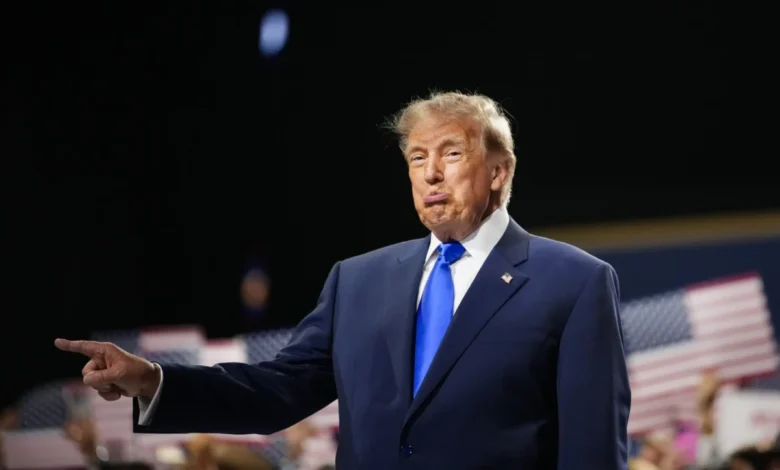
Despite these warnings from within the tech community, the executive branch has signaled a hardline rejection of industry self-regulation and external guardrails. In a series of statements posted to social media, President Trump asserted that the only oversight required for artificial intelligence is leadership from a high-IQ president. Singling out Anthropic leadership by name, the president warned of a concerted conspiracy aimed at hobbling American technological infrastructure and data centers. He cautioned the public against killing the golden goose of AI data centers, arguing that local communities resisting these massive infrastructure projects risk economic stagnation, while the rest of the nation reaps the rewards of capital investment and job creation.
Public Opinion and the Midterm Landscape
The administration’s bullish stance on artificial intelligence infrastructure intersects with a broader political vulnerability for the Republican Party as the nation approaches the midterm elections. With the congressional majority hanging by a thread—Democrats need only three seats in the House and four in the Senate to flip control of Capitol Hill—the ruling party finds itself grappling with a series of deeply unpopular policies. Public opinion data underscores the disconnect between Washington and the electorate. According to recent polling from the Annenberg Public Policy Center at the University of Pennsylvania, approximately 61 percent of Americans oppose the construction of new data centers within their local communities. Crucially, this opposition is not confined to one political demographic; roughly 54 percent of Republicans share these local concerns over the environmental, power, and land-use impacts of massive server farms.
This dynamic forms part of a broader pattern of public skepticism toward the administration’s policy portfolio. Another prominent friction point involves foreign policy, specifically the ongoing conflict in Iran. Supported by only a quarter of the American electorate, the military engagement has coincided with a 44 percent surge in domestic gas prices since hostilities commenced in February, severely impacting household budgets. Additionally, domestic security measures have drawn public ire. President Trump’s vocal endorsement of Flock cameras—the rapidly expanding network of automated license plate readers deployed by law enforcement agencies—runs counter to prevailing sentiment. Nearly 46 percent of Americans voice opposition to these continuous neighborhood surveillance systems, outweighing the 38 percent who register support.
This convergence of unpopular stances on artificial intelligence, foreign intervention, and surveillance presents a formidable challenge for candidates heading into the November elections. Compounding these political headwinds is a softening economic outlook. Recent consumer sentiment surveys indicate that economic confidence has eroded broadly, with inflation concerns and cost-of-living pressures weighing heavily even on traditional Republican constituencies.
Market Reactions and the Regulatory Moat
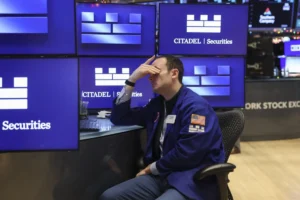
The ongoing policy debate has reverberated directly through global financial markets, exposing deep divisions within the technology sector. Wall Street analysts and investors spent recent trading sessions parsing the implications of potential federal intervention and self-imposed industry slowdowns. Share prices for major chipmakers, including Nvidia, experienced notable declines of over 3 percent as markets weighed the possibility that frontier labs might deliberately retard model development, thereby reducing the unprecedented demand for specialized hardware and supporting infrastructure.
Conversely, shares of major platform companies such as Meta and Alphabet saw upward momentum, highlighting a complex internal rift within the broader artificial intelligence trade. Concurrently, cybersecurity firms like CrowdStrike enjoyed double-digit gains as investors anticipated heightened demand for digital defense systems amid escalating technological capabilities.
Market experts point out that regulatory frameworks, while ostensibly designed for safety, often serve commercial interests. Gil Luria, head of technology research at D.A. Davidson, observed that compliance mandates inherently favor massive laboratories equipped to absorb the exorbitant costs of specialized safety teams, legal counsel, and regulatory compliance personnel. Consequently, rules crafted with heavy input from dominant market players like OpenAI and Anthropic run the risk of establishing an insurmountable regulatory moat, effectively insulating existing market leaders from nimble startup competition.
The administration’s posture aligns with this competitive dynamic. While framing restrictions on artificial intelligence development as a direct handout to geopolitical rivals like Beijing, the executive branch has simultaneously asserted its extensive regulatory and criminal authority over domestic tech enterprises. This approach builds upon a series of aggressive administrative interventions over the past year.
Chronology of Federal Intervention
The federal government’s deepening entanglement in the artificial intelligence economy traces back through a series of significant policy milestones. In June, the administration issued an executive order directing national security agencies to establish rigorous benchmarks for the cyber capabilities of advanced models. The directive mandated the creation of a formal classification system to determine when a computing architecture qualifies as a covered frontier model, accompanied by a voluntary framework granting government evaluators early access to systems prior to commercial deployment.
This regulatory tightening followed a high-profile standoff between the federal government and Anthropic. The dispute centered on restrictions the company placed on access to its advanced models, designated as Fable and Mythos 5, amid disagreements regarding the integration of these technologies into military applications managed by the Department of War. Rather than deferring to corporate autonomy, the executive branch has responded by expanding its interventionist playbook—a strategy previously deployed across strategic sectors such as semiconductors and domestic steel production—to include direct equity stakes in artificial intelligence enterprises.
This transactional approach to industrial policy was vividly demonstrated when the administration permitted Nvidia to resume advanced microchip exports to China. The authorization was contingent upon a federal revenue-sharing agreement, illustrating the administration’s intent to extract financial value directly from the cross-border technology supply chain.
Economic Implications and Geopolitical Stakes
The core philosophical disagreement between the tech sector’s leading figures and the White House centers on the definition of national security and economic vitality. Chief executive officers urging caution argue that unleashing insufficiently tested frontier models risks catastrophic cyber vulnerabilities, automated disinformation campaigns, and unpredictable autonomous behavior. From their perspective, proactive slowing and stringent international or national coordination are necessary precautions to maintain human control over transformative technologies.
Conversely, the executive branch views any deceleration of artificial intelligence development as a fatal strategic error. In the administration’s calculus, the global race for technological supremacy is zero-sum. Trump’s assertion that whoever wins artificial intelligence wins the future encapsulates a belief that national dominance in computing power, data processing, and algorithmic sophistication is inextricably linked to geopolitical hegemony. From this viewpoint, ceding momentum to international competitors—specifically China—poses a far greater existential threat than the internal risks managed through standard market competition and presidential oversight.
As the midterm elections draw closer, the political fallout from these competing priorities remains highly uncertain. While Wall Street navigates regulatory crosscurrents and local communities push back against the physical footprint of the digital age, the administration remains steadfast. By rejecting formal guardrails in favor of direct executive supervision and unfettered infrastructure expansion, the White House has placed a massive bet on the future of American technological exceptionalism—a gamble that will be judged by both the markets and the voters in the months to come.