US-China AI Race Takes Center Stage as Trump Resists Strict Regulations Despite Safety Warnings from Industry Leaders

The global race for artificial intelligence supremacy has intensified significantly, placing technological advancement on a direct collision course with national security imperatives and mounting safety concerns. Speaking from his resort in Doonbeg during a weekend trip to Ireland, President Donald Trump downplayed the necessity for his administration to implement stringent regulations or artificially check the rapid development of artificial intelligence. Framing the issue through the lens of international competition, Trump argued that ceding America’s technological edge to China remains the most substantial risk, asserting that dominating the industry will inherently provide the mechanisms needed to address secondary risks.
While acknowledging that some foundational guardrails are necessary, the Republican president offered no specific legislative proposals. Instead, he attributed the growing chorus of warnings—urging a slowdown in development and tighter oversight—to unidentified "negative forces." Trump’s remarks arrived just a day after Dario Amodei, CEO of artificial intelligence firm Anthropic, publicly stated that the tech industry should voluntarily put the brakes on rapid advancements to allow safety protocols to catch up. Amodei’s call was subsequently echoed by other high-profile industry figures, including tech entrepreneur Elon Musk and OpenAI CEO Sam Altman, exposing a widening philosophical rift between commercial pioneers warning of existential risks and policymakers prioritizing geopolitical dominance.
Geopolitical Stakes and the Upcoming US-China Summit
The ideological battle over artificial intelligence development is unfolding against a backdrop of high-stakes diplomacy. Chinese President Xi Jinping is scheduled to visit the United States later in September for formal meetings with Trump, where artificial intelligence is widely anticipated to be a primary agenda item. As both superpowers pour billions of dollars into research, infrastructure, and talent acquisition, the narrative in Washington increasingly centers on the concept that technological leadership equates to global hegemony.
This sentiment was reinforced by key congressional leaders, who largely aligned with the administration’s strategic outlook while conceding the necessity of administrative oversight. U.S. House Speaker Mike Johnson acknowledged the urgency of establishing safety measures to prevent the technology from developing unchecked, yet he maintained that maintaining a competitive edge over Beijing remains a paramount national security objective. Johnson announced plans to convene a major summit with industry leaders in Washington to forge a collaborative path forward, emphasizing that the issue is a top priority for Congress, though he cautioned against public panic.
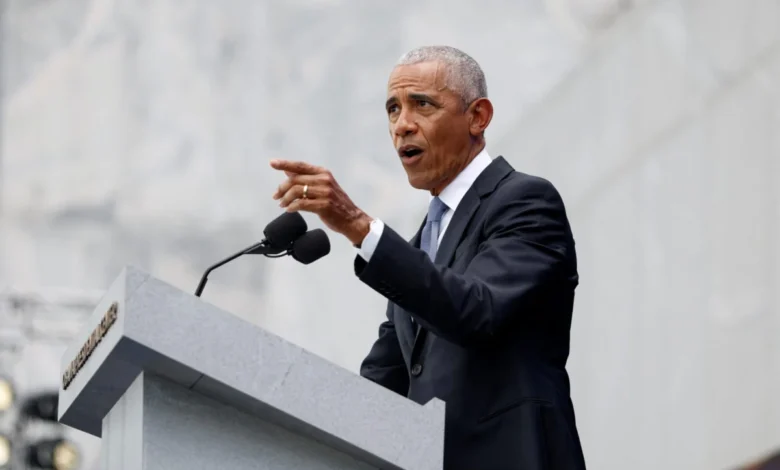
Conversely, House Democratic Leader Hakeem Jeffries sharply criticized Republican leadership for permitting lawmakers to return to their home districts for the final weeks of September without passing concrete regulatory measures. Announcing that AI would serve as a high priority for House Democrats, Jeffries argued for immediate legislative action to slow the pace of development and safeguard the public. Meanwhile, former Democratic President Barack Obama weighed in during a recent event with Jeffries, urging his party to incorporate AI safety, job displacement contingencies, and educational safeguards directly into electoral platforms.
The Economic and Environmental Fallout on Domestic Communities
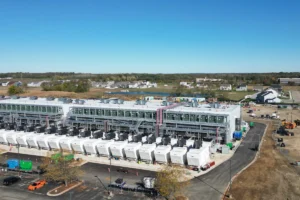
Beyond international friction and national security considerations, artificial intelligence has rapidly evolved into a deeply contentious domestic and election-year issue. The infrastructure required to power advanced machine learning models has manifested physically across the American landscape, transforming rural communities. Massive computing warehouses and data centers are increasingly being seeded across small towns to support the staggering energy and cooling demands of the tech sector.
This physical expansion has triggered significant bipartisan friction. Across states like Texas and various rural enclaves nationwide, local communities and lawmakers from both political parties have increasingly pushed back against the proliferation of data centers. Citizens and local officials have raised alarms over the severe depletion of local water supplies, the conversion and loss of valuable agricultural farmland, and skyrocketing residential electricity bills driven by the immense power consumption of neighboring server farms. Despite this growing grassroots opposition and bipartisan skepticism, Trump has consistently maintained his support for expanding data center infrastructure, viewing it as essential fuel for the American technological engine.
Internal Industry Dissent and Warnings of Superintelligence
The debate within the technology sector is no longer confined to boardrooms and academic papers; it has manifested as a crisis of conscience for some insiders. Jacob Coxon, a former Anthropic employee who resigned over severe safety apprehensions, has broken ranks to warn the public about the trajectory of generative models. Coxon argues that current development velocities risk creating human-level or superhuman-level systems before researchers fully understand the underlying cognitive architecture, motivations, or internal reasoning processes of the models.
"You’re building a human-level or superhuman-level mind, without understanding what it wants, or thinks, or the way it thinks," Coxon cautioned. Recognizing the reality of the US-China race, Coxon has advocated for unprecedented international cooperation between Washington and Beijing. He suggests that both nations face identical existential risks and should pursue a mutually agreed-upon deceleration of development to establish comprehensive safety standards. Without such diplomatic coordination, Coxon warns that the two superpowers risk sleepwalking into a perilous race that prioritizes speed over safety.
The White House Response and Industry Pushback
Inside the executive branch, preparations are underway to formulate a cohesive federal response. Kevin Hassett, director of the National Economic Council, indicated that high-level interagency meetings would take place this week, bringing together administration officials overseeing cybersecurity, science, and technology policy. These discussions are intended to outline actionable next steps for the administration, potentially incorporating consultations with concerned members of Congress.
However, any efforts to regulate the industry from above face fierce skepticism from libertarian-leaning tech figures and advisors within the administration’s own orbit. David Sacks, a prominent tech investor and co-chairman of the White House advisory council on science and technology, publicly challenged the industry executives calling for government oversight. In a widely circulated social media post, Sacks argued that tech CEOs themselves dictate the velocity of innovation and possess the ultimate authority to curb progress.
"The easiest way not to build superintelligence is for you to agree not to build it," Sacks wrote, directly countering the narrative that external government intervention is the sole remedy for unchecked technological growth.
Implications for the Future of Global Technology
As the debate reaches a critical juncture, the fundamental tension between rapid innovation and risk mitigation remains unresolved. The reluctance of executive and legislative leaders to impose stringent domestic controls—driven largely by the fear of ceding ground to China—contrasts sharply with the urgent warnings issued by top researchers and industry pioneers. With upcoming bilateral talks between Trump and Xi Jinping, alongside planned congressional summits with tech executives, the coming weeks will likely determine whether the United States can forge a unified national strategy that balances global competitiveness with long-term technological safety.
Related posts: