Summer Sales Show Record Participation But Shrinking Baskets Amidst AI-Driven Price Arbitrage

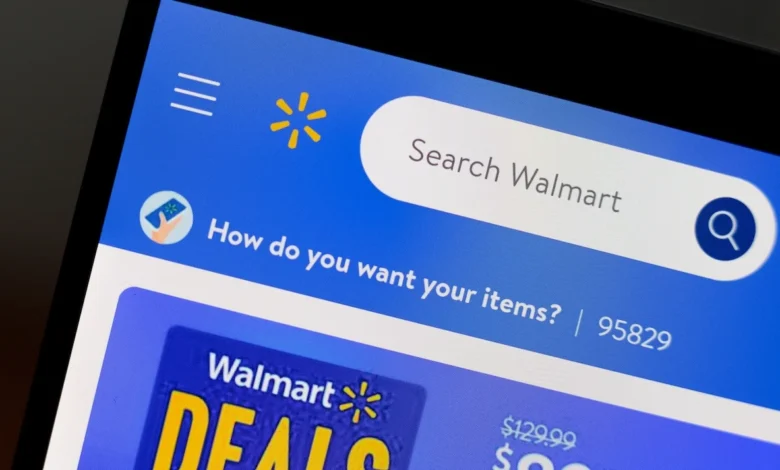
The 2026 summer retail season concluded with unprecedented consumer engagement in overlapping promotional events from Amazon and Walmart, yet paradoxically, average spending per shopper declined significantly at both retail giants. This shift, highlighted by a PYMNTS Intelligence survey, signals a profound evolution in the landscape of mass-market retail, where market saturation, intense price competition, and the burgeoning influence of artificial intelligence are reshaping consumer behavior and retailer strategies. The concurrent June sales periods, notably Amazon’s earlier Prime Day and Walmart Deals, drew an estimated 244 million U.S. consumers—a staggering 93% of the adult population—into the promotional fray. This marked a substantial increase from 135 million participants the previous year, demonstrating near-universal market penetration. However, this expanded reach came at a considerable cost to average transaction values, forcing retailers to re-evaluate the true profitability of these marquee events.
The Evolution of Summer Retail Dominance
Amazon Prime Day, initially conceived in 2015 as a celebration of Amazon’s 20th anniversary, rapidly transformed into a mid-year retail holiday, anchoring summer consumer spending. Its strategic timing, often in July, provided a crucial boost to sales during an otherwise quieter period, establishing a template for online promotional events. Over the years, Prime Day’s scale grew exponentially, compelling competitors to launch their own counter-sales. Walmart, leveraging its extensive physical footprint and rapidly expanding e-commerce capabilities, became a prominent player in this competitive arena, consistently offering "Deals for Days" or similar promotions designed to rival Amazon’s allure.
The 2026 summer season presented a notable deviation from this established rhythm. Amazon strategically moved Prime Day to June 23-26, a departure from its traditional July slot, with the exception of the pandemic-disrupted 2021 event. This calendar adjustment, analysts suggest, was likely an aggressive move to capture early summer discretionary spending, potentially pre-empting competitors and aligning with internal fiscal quarter objectives. However, this move directly coincided with Walmart’s own major promotional event, Walmart Deals, creating an unprecedented head-to-head confrontation. This synchronous timing transformed what were once distinct, albeit competitive, events into a singular, highly concentrated battle for consumer attention and wallets. The resulting "Overlap Effect," as termed by PYMNTS Intelligence, painted a clearer picture of how large-scale shopping events are changing, moving beyond mere sales volume to a more nuanced competition over consumer attention and loyalty across an increasingly fragmented purchase journey.
Record Engagement Meets Shrinking Wallets
The PYMNTS Intelligence survey, conducted in June among 2,160 U.S. consumers, underscored the dramatic increase in participation. The share of U.S. adults engaging in at least one of these events soared from 52% in 2025 to 93% in 2026, meaning only 7% of adults bypassed both promotions—a stark drop from 48% the prior year. This near-saturation of the adult market signifies a new peak in the promotional retail cycle, where the vast majority of consumers are now actively seeking deals during these designated periods.
Despite this record engagement, the data revealed a significant contraction in average spending. At Amazon, the average spending per participant fell from $360 in 2025 to $308 in 2026, representing a 14.4% decrease. Walmart experienced an even sharper decline, with average spending dropping from $484 to $326, a substantial 32.6% reduction year-over-year. This inverse relationship between market reach and individual spending indicates that while retailers succeeded in drawing a larger audience, they struggled to translate this expanded top-of-funnel interest into higher-value transactions. The overlap effectively broadened the consumer pool but simultaneously compressed the value derived from each customer, challenging the traditional metrics of success for such events. This suggests a potential maturation or even oversaturation of the market for these intense promotional periods, where consumers are increasingly selective and less prone to impulse buying, even amidst widespread discounting.
The Erosion of Brand Loyalty in Favor of Price Arbitrage
The simultaneous staging of Amazon Prime Day and Walmart Deals fostered an environment ripe for direct price comparisons, fundamentally altering consumer behavior and eroding traditional brand loyalty. The survey found that nearly three-quarters of consumers who participated in both events actively compared prices across Amazon and Walmart platforms. More strikingly, 46% of these dual-event participants reported that price alone was the decisive factor in where they ultimately completed a purchase. In stark contrast, loyalty to a specific retailer influenced only 15% of purchasing decisions.
This phenomenon illustrates a pronounced shift towards "price arbitrage," where consumers fluidly move between platforms, optimizing their purchases based purely on the lowest available offer rather than any ingrained preference or relationship with a particular brand. The digital infrastructure of modern retail, with its seamless navigation between websites and apps, facilitates this comparative shopping behavior. Consumers can check the price of a television, a home appliance, or a household item on multiple platforms in real-time, effectively neutralizing retailers’ ability to leverage brand equity or the urgency of the event to soften price sensitivity. This dynamic transforms promotional events into a zero-sum game, where the primary victor is the retailer offering the most aggressive discount, rather than the one with the strongest customer relationship. Industry analysts, like Dr. Evelyn Reed, a prominent retail consultant, note, "The battleground has shifted from merely attracting eyeballs to securing the transaction amidst a cacophony of competing offers. Loyalty, once a cornerstone of retail strategy, is now a luxury that few consumers afford during these hyper-competitive sale periods."
Artificial Intelligence: A New Arbiter of the Path to Purchase
Adding another layer of complexity to this evolving retail landscape is the increasing influence of Artificial Intelligence (AI) in consumer decision-making. The PYMNTS Intelligence survey revealed that 21% of event participants utilized an AI assistant or chatbot to research products, locate deals, or compare prices. This trend was particularly pronounced among younger demographics, with 35% of Generation Z consumers leveraging AI for their shopping endeavors.
The significant implication of this trend is that AI is moving "upstream" in the path to purchase, effectively becoming an independent arbiter of product discovery and recommendation. Instead of initiating their search within a specific retailer’s ecosystem, shoppers are increasingly turning to AI interfaces that can evaluate prices, features, and reviews across multiple merchants before directing them to a checkout page. This means that a substantial portion of the product discovery process is now occurring outside the direct control or influence of Amazon or Walmart. Nearly three-quarters of those who used AI tools reported buying at least one product primarily because an AI tool recommended it, underscoring the power of these nascent technologies.
This development presents a unique challenge for major retailers. While Amazon, for instance, has invested heavily in AI for its own recommendations and services (such as the reported revamp of Prime Video to spotlight AI, as covered by PYMNTS), the rise of third-party, impartial AI assistants threatens to disintermediate the direct relationship between consumer and retailer at the crucial discovery phase. Retailers must now contend with an external influence that can guide consumer choices based on criteria potentially beyond their immediate control, such as price comparisons aggregated from across the entire market. This necessitates a strategic shift towards ensuring competitive pricing and robust product information that can satisfy AI algorithms, alongside developing proprietary AI capabilities to retain influence over their own customer journeys.
Broader Implications and the Future of Retail
The findings from the 2026 summer sales season point to several profound implications for the retail industry. The concept of a discrete "sales event" is rapidly dissolving, giving way to a continuous demand-management system. Retailers can no longer rely on isolated promotional sprints but must instead manage a perpetual cycle of consumer attention and purchasing intent. This demands greater agility in inventory management, more dynamic pricing strategies, and an integrated approach to marketing and logistics that extends beyond traditional peak seasons.
One of the most critical challenges emerging from this trend is distinguishing between sheer reach and genuine profitability. While attracting 93% of the adult U.S. market is an impressive feat, the shrinking average basket sizes suggest that these events may be generating significant top-line revenue at potentially reduced margins. Retailers must now critically evaluate the profitability of each transaction during these periods, moving beyond simple sales volume to metrics like customer lifetime value, acquisition cost, and net profit per sale.
Moreover, the survey highlighted that consumers now expect major retailers to coordinate their discounting around specific shopping windows, much like they expect competitive shipping, accessible reviews, and transparent pricing. What once served as a differentiator for a retailer – such as the novelty of Prime Day – can quickly become a market-wide expectation, transforming a unique selling proposition into a baseline condition for competition.
For retailers, the strategic imperatives are clear:
- Beyond Price: While price remains paramount, retailers must explore other avenues to create value, such as exclusive product offerings, enhanced convenience (e.g., faster delivery, seamless returns), and personalized shopping experiences that go beyond simple discounts.
- Omnichannel Integration: A seamless experience across online and physical stores becomes even more critical, allowing consumers to research online, compare in-store, and pick up purchases with maximum flexibility.
- Data-Driven Personalization: Leveraging advanced analytics to understand individual consumer preferences and predict demand can help tailor offers more effectively, potentially increasing basket sizes without resorting to unsustainable price cuts.
- AI Adaptation and Integration: Retailers must actively develop and integrate their own AI tools for discovery, customer service, and personalized recommendations to counter the influence of third-party AI assistants and retain control over the customer journey. Amazon’s internal directives to embed AI more deeply across its services, including Prime Video, are indicative of this proactive approach.
As the retail calendar continues to evolve into a more fluid, interconnected system, winning requires merchants to meticulously distinguish between broad participation and enduring loyalty, between fleeting promotional velocity and sustainable, profitable growth. The 2026 summer sales season served as a stark reminder that the future of retail will be defined not just by who can attract the most shoppers, but by who can most effectively navigate an increasingly price-sensitive, AI-influenced, and loyalty-agnostic consumer landscape.