United Natural Foods Inc. reports fiscal 2026 sales declines amid strategic supply chain optimization and digital transformation efforts.

United Natural Foods Inc. (UNFI), one of the largest publicly traded wholesale distributors of health and specialty foods in North America, has announced its financial results for the fiscal fourth quarter and the full year ending August 1, 2026. The company reported a contraction in total sales, a development management characterized as a byproduct of planned operational optimization efforts, short-term project-based adjustments, and the lingering effects of historical cybersecurity challenges. Despite these top-line headwinds, leadership remains optimistic, citing the successful deployment of AI-integrated logistics platforms and increased automation as evidence that the company is building a more resilient, technology-forward infrastructure.
Financial Performance Overview
In the fourth quarter of fiscal 2026, UNFI generated $7.64 billion in sales, representing a 0.7% decrease compared to the $7.7 billion recorded during the same period in the prior year. This trend of modest decline extended to the full fiscal year results, where total sales reached $31.15 billion, a 2% drop from the $31.78 billion reported in fiscal 2025.
Beyond the wholesale segment, the company’s retail arm, which includes the Cub Foods grocery banner, experienced a decline in same-store sales during the fourth quarter compared to the third quarter. While these numbers might suggest a broader slowdown, company executives have emphasized that the figures must be viewed through the lens of specific, intentional business transitions. Chief Operating Officer Giorgio Tarditi noted that when adjusting for planned optimization actions, short-term project disruptions, and the tail-end impact of a significant cybersecurity incident from the previous year, the company’s underlying wholesale sales performance remains aligned with its long-term target addressable market of $90 billion.
Chronology of the 2025 Cybersecurity Incident
The financial data for 2026 is inherently linked to operational recovery efforts following a major cybersecurity event that impacted UNFI in the summer of 2025. The incident, which began in early June 2025, forced the company to navigate a complex recovery process to restore its primary electronic ordering and invoicing systems.
The timeline of that event highlights the volatility inherent in modern supply chain management:
- June 9, 2025: UNFI identifies unauthorized activity within its digital systems, necessitating an immediate suspension of certain automated processes.
- June 15, 2025: The company confirms that it has transitioned to alternative, manual, or semi-automated processes to ensure that grocery store customers continue to receive essential products while IT teams work to restore core systems.
- June 26, 2025: UNFI announces that it has successfully restored its core electronic ordering and invoicing systems, declaring the incident contained and returning to more normalized levels of distribution.
While the incident occurred in the previous fiscal year, the "cycling" of this event—comparing current performance against a period where the company’s operations were artificially constrained—has played a role in the year-over-year percentage comparisons reported in the 2026 fiscal summary.
Strategic Investments: The Role of AI and Automation
CEO Sandy Douglas has framed the recent fiscal results not as a failure of growth, but as a period of necessary recalibration. According to Douglas, the company’s progress is defined by the strength of its customer base and a pivot toward "next-generation" supply chain management. Central to this strategy is the integration of Artificial Intelligence (AI) and full-case automation.
During the fourth quarter, UNFI completed the comprehensive rollout of its AI-powered supply chain and procurement planning platform across its entire network of distribution centers. This platform is designed to enhance fill rates—the percentage of orders filled on the first attempt—and improve inventory management accuracy. By leveraging predictive analytics, the company aims to reduce waste and increase free cash flow, providing a more stable financial foundation for future quarters.
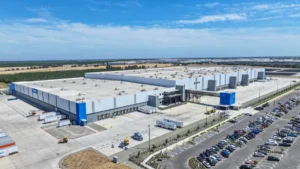
Furthermore, the company has made significant capital investments in its physical infrastructure. In the fourth quarter, UNFI consolidated its facility in Racine, Wisconsin, and expanded its distribution center in Joliet, Illinois. The Joliet expansion is notable for its implementation of full-case automation, which utilizes robotics to handle the packing and movement of entire cases rather than individual items. This move toward automation is part of a broader effort to improve safety, increase delivery accuracy, and reduce the variable operating costs associated with manual labor.
The UNFI Insights Platform
In addition to internal logistical improvements, UNFI is extending its digital capabilities to its partners. The company has introduced new AI-enabled features to its "UNFI Insights" platform. This tool allows suppliers to access granular, store-level performance data, facilitating more effective demand planning and allowing suppliers to better align their production with consumer purchasing behaviors. By providing this visibility, UNFI aims to foster deeper integration with its supplier network, potentially mitigating the "short-term project work" disruptions that contributed to the 2026 sales variance.
Broader Implications and Market Context
The wholesale food industry is currently undergoing a period of intense digital transformation. Companies are under pressure to manage thin margins while facing volatile labor markets and the constant threat of cyberattacks. UNFI’s focus on "effectiveness and efficiency" reflects a wider industry trend where the winners are those who can successfully transition from legacy, manual-heavy operations to tech-enabled, automated systems.
Analysts observe that while the 0.7% to 2% sales decline may appear concerning in isolation, the company’s ability to maintain its "target addressable market" performance when adjusted for internal restructuring suggests a stable underlying demand for its services. The real challenge for UNFI in fiscal 2027 will be proving that its investments in AI and automation can lead to sustained margin expansion. If the company can achieve its goal of increasing delivery accuracy and reducing operational costs, the short-term sales contraction may be viewed in hindsight as a strategic sacrifice made to achieve long-term scale.
The company’s focus for the upcoming year rests on three primary pillars: optimizing the core business, accelerating the digital transformation of the supply chain, and strengthening the customer-supplier ecosystem through data transparency. As the retail landscape continues to shift toward omnichannel shopping, UNFI’s move to modernize its infrastructure appears designed to ensure that it remains the backbone for the independent grocers and natural food retailers that rely on its distribution capabilities.
Ultimately, the results for fiscal 2026 serve as a snapshot of a firm in transition. By prioritizing the stability of its supply chain through technology, UNFI is positioning itself to handle the increased complexity of the modern food retail environment. Whether these investments will yield the desired profitability growth remains the central question for stakeholders heading into the 2027 fiscal year. For now, the company remains committed to its trajectory of technological modernization, betting that the efficiencies gained through AI and robotics will outweigh the temporary costs of implementation and system optimization.