India’s Digital Commerce Revolution: The Open Network for Digital Commerce (ONDC) Reshapes the E-commerce Landscape.

India stands at the precipice of an unprecedented e-commerce boom, fueled by its burgeoning digital population and a unique demographic dividend. With the world’s largest population, a significant portion of which is under 25, and an impressive 840 million smartphone users, the nation presents an immense, yet largely untapped, online commerce opportunity. Despite this potential, online commerce penetration remains considerably lower than in developed economies like China and the U.S., signaling a vast runway for growth. Recognizing this transformative potential, the Indian government has embarked on ambitious initiatives to foster digital transformation while simultaneously safeguarding the interests of its traditional retail backbone: the millions of small, physical mom-and-pop merchants known as kiranas, which collectively account for a staggering 75% of national consumer goods sales. This delicate balancing act has given rise to innovative digital public infrastructure projects, most notably the United Payments Interface (UPI) and, more recently, the Open Network for Digital Commerce (ONDC).
The Genesis of a Digital Transformation: Navigating Growth and Protection
India’s journey towards a digital economy has been characterized by strategic government intervention aimed at democratizing access and ensuring inclusive growth. The initial thrust came with the Digital India program, launched in 2015, which sought to transform India into a digitally empowered society and knowledge economy. A cornerstone of this vision was the creation of robust digital public infrastructure. The United Payments Interface (UPI), a government-backed peer-to-peer digital payment system, emerged as a runaway success, revolutionizing digital transactions across the country. Its ease of use, instant settlement, and interoperability quickly made it a preferred payment method for millions, processing billions of transactions monthly. This success demonstrated the power of open, public digital infrastructure in accelerating financial inclusion and digital adoption.
However, the rapid ascent of large e-commerce marketplaces, often dominated by foreign players, presented a unique challenge. While these platforms brought convenience and choice to urban consumers, they also threatened the traditional livelihood of kirana stores, which lacked the technological infrastructure, marketing muscle, and logistics capabilities to compete effectively online. Government policymakers faced the critical task of encouraging digital adoption among these small merchants without displacing them, ensuring that the benefits of the e-commerce boom were widely distributed rather than concentrated. This imperative led to the conceptualization and launch of the Open Network for Digital Commerce (ONDC).
ONDC: A Paradigm Shift in E-commerce
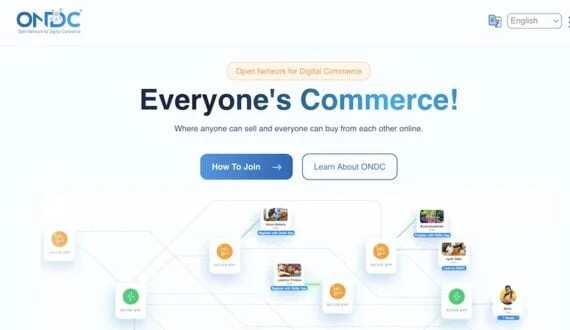
Launched in 2021 by the Department for Promotion of Industry and Internal Trade (DPIIT) under the Ministry of Commerce and Industry, ONDC is not a marketplace in the traditional sense, but rather an open-source commerce framework. Unlike centralized platforms such as Amazon India and Flipkart, which act as intermediaries controlling every aspect of the transaction, ONDC operates as an unbundled, interoperable network. It connects buyers, sellers, payment providers, and logistics companies through open standards and protocols, much like UPI did for payments or the internet itself did for information.
The core philosophy behind ONDC is to "democratize" e-commerce, making it accessible and equitable for all participants. It aims to empower kirana owners and independent merchants to establish an online presence and engage in digital commerce without being locked into a single marketplace’s terms, fees, and algorithms. This framework promises to level the playing field, fostering a more competitive and inclusive digital retail ecosystem.
How ONDC Operates: An Interoperable Network
At its heart, ONDC functions through a federated model, where various applications (apps) interact seamlessly. There are distinct categories of apps within the ONDC ecosystem:
- Seller Apps: These applications enable merchants, from small kiranas to large brands, to list their products, manage inventory, process orders, and connect with logistics providers. Leading seller apps currently include platforms like Mystore, CostBo, and GoFrugal, among others. These apps act as an entry point for businesses onto the network, allowing them to digitize their catalogs and operations.
- Buyer Apps: These are consumer-facing applications that allow shoppers to browse products, compare prices, and make purchases from any seller on the ONDC network, regardless of which seller app the merchant is using. Popular buyer apps include Paytm, Bajaj Finserve, and Magicpin, integrating ONDC functionality into their existing user bases.
The key innovation lies in the interoperability. A shopper using a buyer app like Paytm can purchase an item listed by a kirana store that is registered on a seller app like Mystore. The ONDC network facilitates the discovery, transaction, and fulfillment across these disparate applications, creating a unified yet decentralized marketplace. This architecture ensures that sellers are not reliant on a single platform for customer reach, and buyers have access to a wider array of products and services.
Distinct Advantages for Merchants
One of ONDC’s most compelling features for merchants is its significantly lower cost structure compared to traditional e-commerce marketplaces. Selling fees on ONDC typically range from 3% to 10% of the transaction value. This is a substantial reduction from the 18% to 40% commissions often levied by established marketplaces, which can significantly eat into a small merchant’s profit margins. This cost advantage directly translates to better profitability for kiranas and other small businesses, making online selling a more viable proposition.
Beyond cost, ONDC offers merchants greater control and transparency. The network’s open-source nature, transparent algorithms, and non-discriminatory sorting mean that sellers are not subject to the often-opaque ranking systems of private marketplaces. Their presence and approach are dictated by their own strategy and product quality, rather than platform-specific biases. Furthermore, portable ratings mean that a merchant’s reputation can potentially be carried across different buyer applications, fostering trust and encouraging quality service. This fundamental shift empowers merchants, giving them more agency over their digital storefronts and customer interactions.
Growth, Adoption, and Expanding Categories
Since its pilot launch in 2022 and subsequent national rollout, ONDC has demonstrated steady, albeit measured, growth across India. While it has yet to achieve the ubiquitous adoption rates of UPI, its expansion is significant, particularly in tier-2 and tier-3 cities where the digital divide is more pronounced. The network’s initial focus was on empowering small and medium-sized businesses (SMBs), especially kiranas, to participate in online commerce.
The network’s scope is broad, spanning various categories including retail goods, logistics services, restaurants, and hotels. Early adoption trends indicate faster scaling in categories with higher order frequency and necessity, such as groceries, food delivery, and home and kitchen items. These segments naturally lend themselves to repeated purchases and localized fulfillment, aligning well with the kirana model. While fashion, pharmaceuticals, and hospitality are also part of the network, their scaling might be more gradual due to different consumption patterns and regulatory complexities.
Beyond SMBs, ONDC has also attracted larger local brands, which view it as an additional, cost-effective distribution channel rather than a direct replacement for existing marketplace strategies. This indicates the network’s versatility and its potential to serve a diverse range of businesses.
International Engagement and Regulatory Considerations
The promise of India’s vast consumer market extends its appeal to global brands. Foreign companies that comply with India’s foreign direct investment (FDI) regulations for e-commerce can also access the ONDC seller app ecosystem. This has led to the participation of numerous multinational corporations, including household names like Red Bull, Unilever, Nestle, PepsiCo, Procter & Gamble, L’Oréal, and Johnson & Johnson. Many global food brands already active on quick commerce platforms such as Blinkit, Swiggy Instamart, and Zepto are leveraging ONDC at minimal additional cost, further expanding their reach within the Indian market.
However, foreign brands looking to enter or expand within India’s e-commerce landscape must first navigate a complex regulatory environment. India has specific policies designed to protect domestic industries and prevent foreign dominance, including restrictions on foreign direct investment in multi-brand retail and specific rules for inventory-based versus marketplace-based e-commerce models. Therefore, understanding the permissible selling options – whether through marketplaces, distributors, direct-to-consumer (D2C) sites, or cross-border models – is paramount for successful entry and leveraging platforms like ONDC.
Statements from Stakeholders: A Unified Vision for Digital Inclusion
The ONDC initiative has garnered significant support and commentary from various stakeholders:
- Government Officials: Speaking on the vision behind ONDC, a senior official from the DPIIT emphasized, "ONDC is not merely an e-commerce platform; it is a fundamental shift towards an open, inclusive, and democratized digital marketplace. Our goal is to empower every small business and entrepreneur in India to participate in the digital economy, fostering true competition and innovation, rather than allowing market concentration."
- ONDC Executives: T. Koshy, MD & CEO of ONDC, has often articulated the network’s mission: "We are building digital public infrastructure that allows for a level playing field. By unbundling the various components of e-commerce – discovery, ordering, fulfillment, and payment – we enable new business models and reduce entry barriers for millions. This is about giving choice back to both consumers and sellers."
- Kirana Owners: Rajendra Singh, a kirana owner from Lucknow, shared his experience: "Initially, I was hesitant about going online. The big apps seemed too complicated and expensive. But with ONDC through a seller app, I can list my products easily, and customers from different apps can find me. My reach has grown beyond my street, and the commissions are much fairer. It feels like I can finally compete."
- E-commerce Analysts: Industry experts view ONDC as a potential disruptor. "ONDC represents a significant strategic move by the Indian government to counter potential monopolistic tendencies in the e-commerce sector," noted a leading e-commerce analyst. "It could force existing marketplaces to innovate and become more competitive on pricing and services, ultimately benefiting both merchants and consumers. However, its success hinges on robust technology adoption, seamless logistics integration, and sustained merchant onboarding."
- Foreign Brand Representatives: A spokesperson for a major multinational consumer goods company commented, "India is a critical growth market for us. While we continue to work with established platforms, ONDC offers a unique channel for deeper market penetration, especially into smaller towns and cities, and at a more favorable cost structure. It aligns with our strategy to reach diverse consumer segments across the country."
Broader Economic Impact and Implications
The implications of ONDC extend far beyond just individual transactions, promising a transformative impact on India’s broader economic landscape:
- Increased Competition and Innovation: By creating an open network, ONDC is expected to foster greater competition among e-commerce players. This can lead to improved services, lower prices, and more innovative solutions as platforms vie for seller and buyer participation. New service providers for logistics, payment, and technology solutions are also likely to emerge, further enriching the ecosystem.
- Digital Inclusion and Entrepreneurship: ONDC directly addresses the challenge of digital exclusion for small businesses. By lowering barriers to entry, it empowers millions of kiranas and other micro-entrepreneurs to expand their reach beyond their physical localities, unlocking new revenue streams and fostering local economic growth. This is crucial for job creation and sustainable development in smaller towns and rural areas.
- Reduced Market Concentration: The network model aims to decentralize power, reducing the reliance of merchants on a few dominant platforms. This could prevent the creation of digital monopolies and ensure a fairer distribution of economic benefits across the value chain.
- Data Democratization: While specific data policies are evolving, the open network paradigm could lead to more equitable access to market data, enabling smaller businesses to make more informed decisions about pricing, inventory, and marketing.
- Logistics and Supply Chain Innovation: ONDC’s open framework encourages the integration of diverse logistics providers, from large national players to hyper-local delivery services. This can lead to more efficient, cost-effective, and specialized logistics solutions tailored to various product categories and geographic needs, further optimizing the supply chain for small businesses.
Challenges and Future Outlook
Despite its ambitious vision and promising start, ONDC faces several challenges that will determine its long-term success. Scalability is paramount; ensuring the network can handle exponential growth in transactions and participants without compromising performance will be critical. Educating and onboarding millions of technologically less-savvy kirana owners will require sustained effort, user-friendly interfaces, and robust support systems. Building trust among both buyers and sellers, particularly regarding dispute resolution and quality assurance, will also be crucial. Furthermore, competing with the established brand recognition and deep pockets of existing e-commerce giants will be an ongoing battle, requiring continuous innovation and effective marketing of ONDC’s unique value proposition.
Looking ahead, the Indian government’s commitment to digital public infrastructure, exemplified by UPI and ONDC, signals a clear direction towards a more inclusive, competitive, and domestically driven digital economy. ONDC has the potential to become a cornerstone of India’s digital future, transforming how commerce is conducted, empowering local businesses, and setting a global precedent for open, federated e-commerce networks. Its success will not only reshape India’s retail landscape but also offer valuable lessons for other developing nations grappling with the complexities of digital transformation in a globally interconnected economy.