Physical Stores Emerge as Crucial Front Doors for Everyday Money Movement Amidst Evolving Digital Finance Landscape

The traditional retail landscape, once solely defined by the exchange of goods for currency, is undergoing a profound transformation, positioning physical stores not merely as shopping destinations but as indispensable hubs for a wide array of everyday financial activities. This paradigm shift, driven by evolving consumer behaviors, the persistent relevance of cash, and advancements in embedded finance and artificial intelligence, is fundamentally reshaping the intersection of commerce and personal finance. As of July 23, 2026, industry experts and leading financial service providers are increasingly recognizing the strategic importance of brick-and-mortar locations in facilitating seamless money movement, marking a significant evolution from their historical role.
For decades, the success of a retail establishment was predominantly measured by sales volume – the sheer quantity of products moved from shelves to customer hands. Today, however, a new, equally critical metric is gaining prominence: the volume and variety of financial transactions processed before customers even approach the exit. Consumers, who once made dedicated trips to bank branches, check-cashing outlets, or specialized financial service centers for tasks such as utility bill payments, cash deposits, or money transfers, are now integrating these activities seamlessly into their routine shopping errands. This convergence underscores a powerful trend: physical retail is no longer a separate domain from personal finance but an integral, accessible point along a broader financial journey.
The Shifting Landscape of Consumer Finance: From Branches to Browsers to Brick-and-Mortar
The decline of traditional bank branches, a trend observed over the past two decades, has created a significant vacuum in the physical accessibility of financial services. As banks have increasingly shifted towards digital-first strategies, optimizing for online and mobile banking, many communities, particularly those with a higher proportion of underbanked or unbanked populations, have found themselves with fewer local options for cash-based transactions or in-person financial support. Simultaneously, the proliferation of digital wallets, mobile banking applications, and payment platforms has accustomed consumers to managing their finances with unprecedented flexibility and immediacy. This digital fluency, however, hasn’t eradicated the need for physical touchpoints, especially for transactions involving physical cash.
Industry reports consistently highlight that while digital payments are soaring, cash remains a vital component of the global economy. A significant segment of the population, including those who manage their budgets strictly, prioritize privacy, or lack consistent access to traditional banking services, continues to rely heavily on cash. For these individuals, the idea of "cash isn’t dying, cash only is" rings particularly true, as articulated by Crystal Bryant-Minter, senior vice president and general manager of Green Dot’s Consumer Division. She emphasizes that consumers who rely on cash are not opting out of the financial system; rather, they are actively seeking "on-ramps that fit their everyday lives." The ubiquitous presence of a local store, whether a grocery chain, a drugstore, or a convenience store, naturally fulfills this need, providing a convenient and trusted location for essential financial tasks.
Boris Goykhman, director of Consumer Financial Services at PayPal, a company built on the foundations of digital commerce, corroborates this perspective. He notes that despite PayPal’s digital origins, physical retail has become an indispensable component of the company’s digital infrastructure. Goykhman describes neighborhood retailers as the "front door to the digital economy" for many consumers, acknowledging that "there are things that no app can do on its own." This recognition from a digital-native giant like PayPal underscores the critical role physical locations play in bridging the gap between cash-based transactions and the digital financial ecosystem, effectively serving as crucial conduits for financial inclusion.
Retailers Embrace Embedded Finance: A New Revenue Stream and Loyalty Driver
The strategic pivot towards integrating financial services offers substantial benefits for retailers, extending far beyond the immediate transaction fees. By becoming points of financial interaction, stores can significantly increase foot traffic, particularly from consumers who might not otherwise visit. Recurring financial activities, such as monthly bill payments, regular digital wallet top-ups, or periodic cash deposits, create compelling reasons for customers to return frequently throughout the month. These repeat visits foster stronger customer loyalty, introduce shoppers to additional retail offerings, and provide retailers with invaluable opportunities to deepen customer relationships.
The concept of embedded finance, where financial services are seamlessly integrated into non-financial platforms or products, is central to this evolution. For retailers, this means offering services like prepaid debit cards, buy now, pay later (BNPL) options, or even micro-lending, all within their existing operational framework. This not only diversifies their revenue streams but also positions them as holistic service providers, enhancing their value proposition to the modern consumer. PayPal, for instance, actively evaluates whether these integrated services attract new consumer segments who would not have typically visited a particular store. The objective is not merely to generate a single transaction but to cultivate enduring routines that encourage customers to return consistently over time, thereby creating sustained engagement and loyalty.
The Imperative of a Seamless Checkout Experience: The "Sound of Silence"
The success of embedded financial services within a retail environment hinges critically on the user experience, particularly at the point of transaction. Modern consumers, accustomed to the instantaneous and frictionless nature of digital interactions – from ordering food to booking travel – apply the same high standards to their financial activities within a store. Steve Kramer, vice president of product at PayNearMe, succinctly captures this expectation: "Why isn’t it just that easy?"
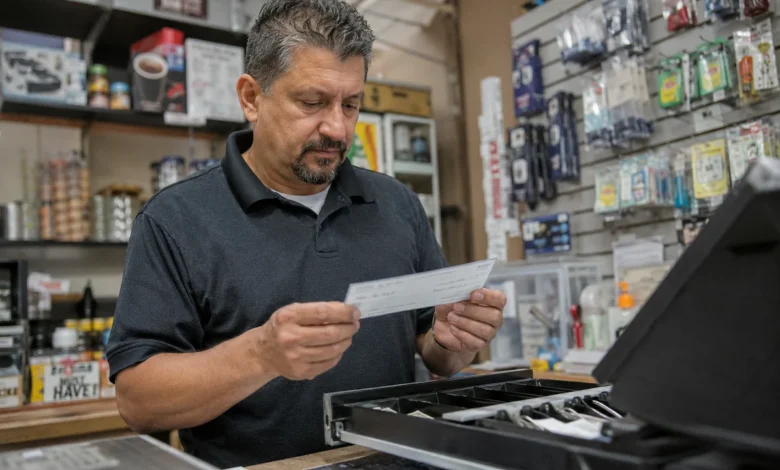
Any friction, delay, or complexity at the checkout counter can quickly erode consumer confidence and adoption. This means that customers should not have to navigate multiple screens to find a barcode, nor should cashiers be forced to toggle between disparate systems or memorize complex, unfamiliar procedures. The ideal outcome, as Kramer describes it, is "the sound of silence" – a process so intuitive and efficient that it goes unnoticed. "Nobody’s talking about it. Nobody’s complaining about it. It just kind of works," he elaborates. This seamless integration is paramount, as any hesitation or confusion on either side of the counter can deter future use and undermine the entire initiative.
Achieving this level of simplicity and efficiency necessitates a clear division of responsibilities across the financial ecosystem. Bryant-Minter outlines this collaborative framework: retailers should concentrate on delivering exceptional customer service within their physical spaces, leveraging their existing infrastructure and customer trust. Infrastructure providers, such as Green Dot, should manage the complex back-end operations, including compliance, robust fraud controls, intricate bank relationships, and secure money movement. FinTech providers, in turn, should focus on optimizing the customer-facing experience, designing intuitive interfaces, and innovating new financial products, rather than attempting to reconstruct heavily regulated banking infrastructure from scratch. This symbiotic relationship ensures that each party plays to its strengths, collectively delivering a superior and compliant financial service.
The Role of AI and Digital Wallets in Amplifying the Physical Touchpoint
Looking ahead, the integration of advanced technologies like artificial intelligence (AI) and sophisticated digital wallets is poised to further cement the role of physical stores in consumer finance. AI-powered wallets, for example, could proactively identify when a customer’s account balance is low, intelligently direct them to a nearby participating retailer, and even present relevant, personalized merchant offers before the visit even begins. This predictive capability transforms a reactive need into a proactive, guided experience, enhancing convenience and driving traffic.
Bryant-Minter envisions a future where loyalty programs extend beyond traditional purchases, treating financial activities such as bill payments or account funding as equally valuable, reward-earning events. This holistic approach integrates financial engagement directly into the existing loyalty framework, strengthening customer ties and incentivizing broader participation. Kramer adds that AI can effectively initiate the customer journey digitally – perhaps through a personalized notification or a pre-filled form – while the physical store remains the crucial location for completing the actual transaction, blending the best of both digital and physical worlds.
This technological synergy signifies that physical stores are acquiring an additional, powerful function rather than simply replacing an existing one. They remain vital retail locations for commerce, but they are concurrently evolving into sophisticated centers where consumers can manage their everyday financial activities with the same ease and familiarity they have come to expect from their shopping experiences. This dual functionality offers a compelling value proposition, ensuring the continued relevance and growth of brick-and-mortar retail in an increasingly digital world.
Broader Economic and Societal Implications
The transformation of physical stores into financial hubs carries significant broader implications. From an economic perspective, it represents a substantial new revenue stream for retailers, potentially revitalizing struggling sectors of the brick-and-mortar economy. It also fosters greater financial inclusion by making essential financial services more accessible to underserved populations, many of whom rely on local stores and cash transactions. By providing convenient "on-ramps" to the digital economy, retailers can empower individuals who might otherwise be marginalized from mainstream financial services.
Societally, this trend reinforces the role of local businesses as community anchors. When a store provides not just groceries but also a reliable place to pay bills or send money to family, it deepens its integration into the daily lives of its patrons, fostering trust and a sense of community. This shift also highlights the adaptability of the retail sector, demonstrating its capacity to innovate and respond to evolving consumer needs by leveraging technology and strategic partnerships.
Challenges and the Path Forward
Despite the clear benefits, the widespread adoption and seamless integration of financial services in retail environments are not without challenges. Regulatory compliance is a significant hurdle, as financial services are heavily regulated, and retailers entering this space must navigate complex legal frameworks concerning anti-money laundering (AML), Know Your Customer (KYC) requirements, and data privacy (e.g., GDPR, CCPA). Data security is another paramount concern; handling sensitive financial information requires robust cybersecurity measures to protect against fraud and data breaches, which could severely damage consumer trust and a retailer’s brand reputation.
Operational complexities also arise, including the need for adequate staff training to handle financial transactions confidently and accurately, as well as integrating new technologies with existing point-of-sale (POS) systems. Ensuring a consistent and reliable service across a vast network of stores demands sophisticated backend infrastructure and continuous support.
The path forward will involve continued collaboration between retailers, FinTech innovators, and traditional financial institutions. Standardized API integrations, robust regulatory frameworks that encourage innovation while ensuring consumer protection, and ongoing consumer education will be critical. As technology advances and consumer expectations continue to evolve, the physical store’s role in the financial ecosystem is set to become even more intertwined, making it a cornerstone of accessible, convenient, and inclusive money movement. The future of retail is undeniably financial, and the "front door" is wide open.
Related posts: