Consumer Spending Shows Resilience Amidst Growing Discretionary Scrutiny in June 2026

Retail sales continued their upward trajectory in June 2026, demonstrating an underlying resilience in consumer spending, yet a closer examination of the data reveals a significant shift in household priorities. Consumers are increasingly making deliberate choices, prioritizing essential purchases that are difficult to postpone while exhibiting heightened caution in discretionary categories. This nuanced pattern signals a more selective consumer environment, with profound implications for merchants, financial institutions, and the broader payments ecosystem, extending beyond mere percentage point changes in aggregate sales figures.
The latest figures, released Thursday, July 16, by the Census Bureau, indicated a 0.2% increase in retail and food services sales for June, reaching a total of $768.6 billion. This marks a 6.7% increase compared to the same period last year. Excluding volatile categories such as automobiles and gasoline, core retail sales saw a more robust 0.4% month-over-month rise. Furthermore, when gasoline stations were excluded, retail sales advanced 0.7% from May, suggesting that while fuel prices remain a factor, underlying consumer activity persists. This growth follows a 0.3% rise in May and a 0.1% increase in April, indicating a consistent, albeit modest, upward trend throughout the second quarter of 2026.
Detailed Sales Breakdown: A Tale of Two Consumers
The granular breakdown of sales categories offers a clearer picture of where consumer dollars are being allocated and where they are being held back. Categories demonstrating strength in June included motor vehicle dealers, which posted a healthy 1.9% monthly gain, reflecting continued demand for personal transportation, possibly driven by new model releases or incentives. Electronics and appliance stores also saw an increase of 0.8%, pointing to ongoing investment in home technology and durable goods. Nonstore retailers, primarily e-commerce platforms, advanced by 1.9%, underscoring the sustained momentum of digital shopping channels. This category has consistently outperformed traditional brick-and-mortar in recent years, with its share of overall retail sales now hovering around 18%, up from 15% pre-pandemic.
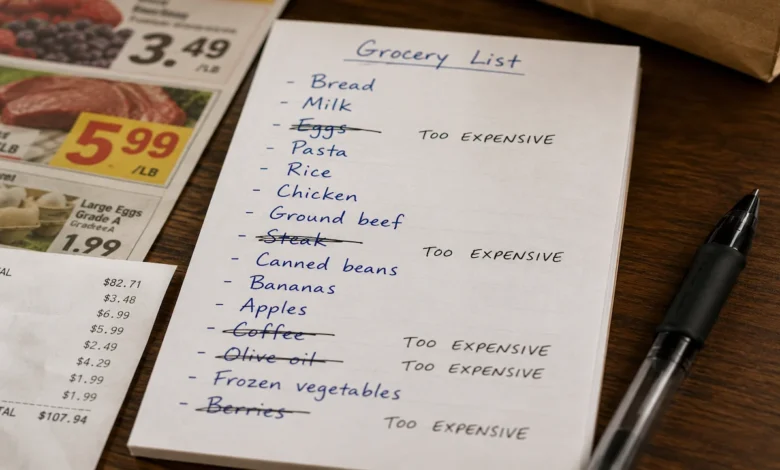
Conversely, several categories experienced declines, indicating areas where consumers are pulling back. Clothing and accessories stores saw a 0.3% dip, suggesting that fashion purchases are among the first to be curtailed when budgets tighten. Health and personal care stores declined 0.8%, a surprising figure given the essential nature of some items, but potentially reflecting a shift towards more affordable store brands or a reduction in non-essential personal care services. Grocery sales, typically a stable category, slipped 0.4% from May. This slight decline in grocery sales doesn’t necessarily mean consumers are eating less, but rather points to strategies like trading down to cheaper alternatives, purchasing fewer premium items, or increasing reliance on discount grocery chains and bulk purchasing. For instance, analysts from Agri-Food Insights noted a 3% increase in private-label food sales year-over-year in Q2 2026, directly correlating with this shift.
The "Three-Speed Consumer Economy": Financial Capacity as the Driver
This divergent spending pattern closely aligns with the findings of PYMNTS Intelligence, particularly their June installment of the Consumer Expectations Index titled "The Three-Speed Consumer Economy: How Financial Capacity Is Rewriting Spending Behavior." The research challenges traditional broad measures of consumer confidence, arguing that they obscure a more critical underlying reality: consumers no longer operate as a monolithic economic group. Instead, financial capacity, rather than sentiment alone, has emerged as the primary determinant of spending behavior.
PYMNTS Intelligence categorizes consumers into three distinct groups:
- Stable Households: Those not living paycheck to paycheck, representing approximately 35% of U.S. households, who have maintained comparatively stable spending patterns, largely unaffected by economic anxieties. Their composite financial capacity score remained robust at 62.1 in June.
- Maintaining Households: Consumers living paycheck to paycheck but generally keeping up with their bills, accounting for roughly 45% of households. This group has shown little significant movement in their spending habits, carefully managing their budgets but still participating in the economy. Their composite score held at 55.4.
- Struggling Households: The 20% of households living paycheck to paycheck and actively struggling to pay their bills. This segment experienced a noticeable deterioration, with their composite score falling to 40.6. This widening gap of roughly 21 points between the strongest and weakest financial groups highlights the increasing economic stratification.
This distinction provides crucial context for understanding why overall spending has remained resilient even as traditional confidence metrics, such as the Conference Board Consumer Confidence Index, have shown fluctuations or modest declines. Consumers with stable employment, manageable debt, and adequate savings continue to make purchases, albeit with increasing discernment. Conversely, households facing greater financial pressure have responded by narrowing their spending to absolute necessities, postponing or entirely foregoing discretionary items. This "three-speed" dynamic suggests that economic policy and business strategies must be tailored to address these divergent realities rather than assuming a uniform consumer response.
Federal Reserve’s Beige Book Echoes Selective Spending
Further corroborating these observations, the Federal Reserve’s July Beige Book, released Wednesday, July 15, reached similar conclusions through qualitative conversations with businesses across its twelve districts. The national summary noted that consumer spending edged higher overall, yet several Federal Reserve districts reported weaker demand for discretionary merchandise. This was often accompanied by an increase in shoppers "trading down" to lower-priced alternatives, seeking value in a persistent inflationary environment. The report also highlighted that higher fuel prices continued to weigh on spending in other retail categories, effectively reducing disposable income for non-essential goods. Moreover, contacts indicated a modest softening in consumer loan quality, a potential early warning sign of increasing financial strain among some segments.
Regional anecdotes within the Beige Book provided useful context. Businesses in the New York district, for instance, described a bifurcated market. Luxury retailers continued to perform well, catering to the stable, high-capacity segment, but other merchants reported consumers becoming more cautious. A coffee shop operator in Manhattan noted a decline in the average purchase amount, suggesting customers were opting for smaller items or fewer add-ons. A dental practice reported an increase in appointment cancellations, particularly for elective procedures, pointing to healthcare becoming a discretionary expense for some. Auto dealers cited persistent affordability concerns, particularly regarding interest rates and vehicle prices, continuing to restrain new vehicle demand despite the overall positive motor vehicle sales figure. Similarly, the Atlanta district reported slowing housing market activity impacting related retail sectors, while the Dallas Fed noted reduced manufacturing orders for non-essential consumer goods, reflecting a broader caution in the supply chain.
Economic Headwinds Shaping Consumer Behavior
The current consumer landscape is heavily influenced by a confluence of economic factors that have developed over the past 18-24 months. While inflation, which peaked at over 9% in mid-2022, has moderated significantly to an annual rate of approximately 3.2% by June 2026 (as per the latest CPI report), the cumulative effect of past price increases continues to erode purchasing power, particularly for necessities. Food inflation, though slowing, remains stubbornly elevated at around 5.5% year-over-year, and energy costs, while volatile, have seen periods of significant spikes, such as the 10% year-over-year increase observed in Q1 2026.
Interest rates, having undergone a series of aggressive hikes by the Federal Reserve to combat inflation, remain at a relatively high level (e.g., the federal funds rate hovering around 5.0-5.25% in mid-2026). This has translated into higher borrowing costs for mortgages, auto loans, and credit cards, directly impacting household budgets and the affordability of big-ticket purchases. The unemployment rate, while still historically low at 3.8% in June 2026, has shown early signs of softening in certain sectors, leading to a sense of job insecurity for some workers. Wage growth, while positive, has lagged behind cumulative inflation for many households, further squeezing real incomes. Consumer debt levels have also risen, with credit card debt surpassing $1.2 trillion by the end of Q1 2026, raising concerns about the long-term financial health of the "struggling" consumer segment.
Implications for Retailers and the Payments Ecosystem
For retailers, the "three-speed consumer" economy necessitates a strategic recalibration. Businesses must move beyond generalized marketing and pricing strategies to address the distinct needs and financial capacities of different consumer segments. This includes:
- Value Proposition: Emphasizing affordability, promotions, and private-label brands for budget-conscious consumers. Discount retailers and value-oriented segments are likely to continue outperforming.
- Inventory Management: Careful management of inventory, particularly for discretionary goods, to avoid overstocking in a cautious spending environment.
- Customer Loyalty: Investing in loyalty programs and personalized offers to retain existing customers across all segments.
- Digital Transformation: Continued enhancement of e-commerce platforms and omnichannel experiences, given the strong performance of nonstore retailers.
- Product Diversification: Offering a wider range of price points and product tiers to cater to varying financial capacities.
David Chen, Senior Retail Strategist at MarketWatch Analytics, commented, "Retailers can no longer afford a one-size-fits-all approach. The data clearly shows a market segmenting by financial health. Those who can pivot to offer both premium experiences and compelling value propositions will be the ones that thrive. This means leveraging data analytics to understand purchasing patterns at a granular level and tailoring everything from product assortment to promotional calendars accordingly."
The payments ecosystem also faces implications. The increased price sensitivity and trading down suggest a greater demand for budgeting tools, rewards programs that offer tangible savings, and flexible payment options like Buy Now, Pay Later (BNPL) for managing larger purchases. Payment providers will need to innovate to support these consumer behaviors, offering solutions that empower financial control and value.
The Banking Sector’s Vigilance: Credit Quality and Consumer Debt
The banking sector is paying close attention to these trends, particularly the softening in consumer loan quality noted in the Beige Book. While overall delinquency rates remain manageable, banks are monitoring specific loan portfolios, especially those tied to lower-income segments or unsecured credit. The rise in credit card debt, coupled with higher interest rates, poses a risk to household financial stability.
"We are seeing a clear divergence in consumer credit performance," stated Sarah Jenkins, Head of Consumer Lending at Horizon Bank. "While prime borrowers remain robust, there’s a discernible uptick in early-stage delinquencies among subprime and near-prime segments. This necessitates a vigilant approach to credit risk management and a renewed focus on financial literacy and support services for customers who may be struggling to keep up with their obligations." Banks are likely to tighten lending standards in certain areas and focus on proactive outreach to customers showing early signs of financial distress.
Looking Ahead: A Cautious Optimism
The June 2026 retail sales data paints a picture of an economy that is neither collapsing nor booming, but rather undergoing a significant re-prioritization driven by household finances. Policymakers at the Federal Reserve will likely interpret these figures as confirmation that their efforts to cool inflation are having the desired effect on demand, particularly for discretionary goods, without causing an outright contraction in overall economic activity. This could reinforce a cautious approach to future interest rate decisions, emphasizing a data-dependent stance.
Looking ahead, the trajectory of consumer spending will heavily depend on several factors: the continued moderation of inflation, the stability of the labor market, and the evolution of interest rates. Should inflation continue its downward trend and real wages begin to grow more consistently, it could alleviate some of the pressure on struggling households, potentially boosting broader discretionary spending. However, any significant deterioration in employment or a resurgence in energy prices could quickly tip the balance, pushing more households into the "struggling" category and further constricting non-essential purchases.
In conclusion, the June 2026 retail sales report highlights a resilient but deeply nuanced consumer landscape. While aggregate spending remains positive, it is increasingly driven by financial capacity rather than uniform confidence. This "three-speed consumer economy" demands sophisticated strategies from businesses and careful monitoring from policymakers, as the future of economic growth hinges on understanding and adapting to the diverse financial realities shaping household choices.
Related posts: