The Definitive Guide to Enterprise Rank-Tracking Software: Navigating the Complexities of Modern Search Visibility

Enterprise rank-tracking software has evolved far beyond simply monitoring keyword positions for a select few terms. In today’s complex digital landscape, it necessitates the oversight of millions of data points across diverse devices, granular geographic locations, and emerging search features like AI Overviews, featured snippets, and local packs. The intelligence gleaned from this data must then seamlessly integrate into dashboards, CRM workflows, and executive reports, empowering large organizations to drive strategic action. This comprehensive guide delves into the distinguishing features of enterprise-grade tools, outlines critical evaluation criteria for high-traffic websites, and identifies leading platforms poised for your shortlist.
The evolution of search engine optimization (SEO) has been marked by a continuous shift towards more sophisticated user experiences and, consequently, more intricate ranking factors. Gone are the days when a simple list of keywords and their corresponding positions offered sufficient insight. Modern search engines prioritize relevance, user intent, and a rich tapestry of content formats, making the task of maintaining visibility a monumental undertaking for businesses operating at scale. Enterprise rank-tracking software is the linchpin in this endeavor, providing the necessary infrastructure to not only monitor but also understand and optimize performance in this dynamic environment.
What Constitutes Enterprise Rank-Tracking Software?
At its core, enterprise rank-tracking software is a sophisticated platform designed for large-scale keyword position monitoring. For enterprises, this typically encompasses tracking across multiple:
- Search Engines: Beyond Google, tracking may be required for Bing, Yahoo, DuckDuckGo, and region-specific search engines.
- Devices: Differentiating between desktop and mobile rankings is crucial, as user experience and algorithm considerations vary significantly.
- Locations: Granular tracking from country-wide down to city or even postal code level is often essential for geographically diverse businesses.
- Languages: For global brands, monitoring rankings in multiple languages is paramount to understanding international market performance.
- SERP Features: Capturing visibility within featured snippets, knowledge panels, local packs, image carousels, video results, and increasingly, AI Overviews, is no longer optional.
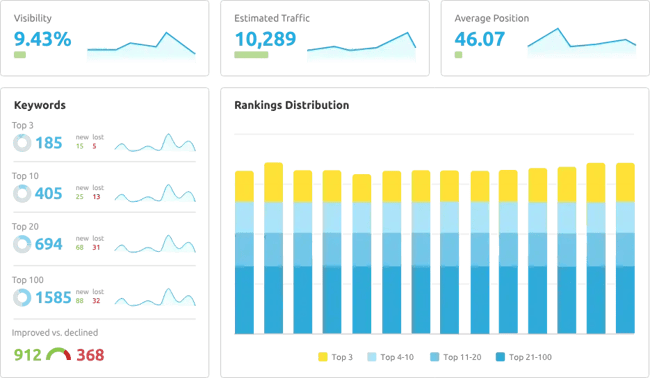
Crucially, the data collected by these platforms must be actionable for large, cross-functional teams. Unlike basic rank trackers designed for smaller websites and limited keyword sets, enterprise solutions are built to handle immense data volumes, sophisticated location targeting, near real-time refresh rates, and robust integrations that push ranking data into existing organizational systems.
The true power of enterprise keyword ranking lies in its integration within a broader data ecosystem. While ranking data alone provides valuable visibility metrics, its true potential is unlocked when paired with other business intelligence tools. When combined with Business Intelligence (BI) platforms, rank tracking reveals trends that can illuminate opportunities and risks. Integration with web analytics tools helps ascertain whether improved visibility is translating into increased traffic. Furthermore, connecting rank tracking to a Customer Relationship Management (CRM) system can draw a direct line between a rise in keyword rankings and a measurable increase in sales pipeline, demonstrating tangible business impact.
How to Evaluate Enterprise Rank-Tracking Software
Selecting the appropriate platform hinges on a deep understanding of a business’s unique needs and existing workflows. Engaging with various teams to identify their specific requirements is the foundational step. Enterprise teams demand tools that integrate seamlessly into their current processes, ensuring widespread adoption and efficacy. Key evaluation factors include:
Accuracy Methodology
Inquire about the data collection methodologies employed by vendors. Do they utilize dedicated datacenter IPs, residential proxies, or a hybrid approach? How do they account for personalization and localization to ensure the reported results accurately reflect what real users experience? Request detailed methodology documentation rather than relying solely on marketing claims. For instance, advanced platforms may employ a combination of proxy types to mimic diverse user behaviors and geographic locations, thereby enhancing accuracy.

Frequency Control
Assess the flexibility in crawl schedules. Can users customize refresh rates for specific keyword groups, campaigns, or markets? While daily tracking is standard, high-stakes periods like product launches, major sales events, or significant news cycles may necessitate hourly or on-demand refresh capabilities to capture rapid shifts in the search landscape.
Locations and Devices
Enterprise-level software must support multi-location and multi-device keyword tracking with granular precision. For businesses with a strong local or regional presence, the ability to track rankings at the city, zip code, or even coordinate level is vital. Independent tracking of desktop and mobile rankings is essential, as positions can diverge significantly. Some platforms offer sophisticated device emulation to further refine this data.
SERP Features
The traditional "ten blue links" are no longer the sole determinant of search visibility. Your chosen platform must track a comprehensive array of SERP features, including featured snippets, local packs, "People Also Ask" (PAA) boxes, image carousels, video results, and shopping units. Verify which features are covered and whether alerts can be configured for significant changes in keyword positions within these features. The ability to track the URL cited within an AI Overview is also becoming increasingly important.
AI Overviews and LLM Tracking
This capability is rapidly transitioning from a novelty to a necessity. Evaluate whether the platform can monitor AI Overview appearances, identify the URLs cited within them, and capture prompt-level data for generative search environments. Effective AI Overview tracking often requires robust prompt libraries and historical snapshots to provide meaningful trend analysis. Ensure the platform supports both. For example, understanding which specific prompts lead to your brand’s appearance in an AI Overview can inform content strategy and schema optimization.
APIs and Exports
Enterprise teams often require data to flow beyond the native user interface of a rank-tracking tool. Confirm the availability of a well-documented API with sufficient rate limits for your data volume, alongside flexible export options (e.g., CSV, JSON) or direct connectors to data warehouses and business intelligence tools. This interoperability is key to preventing data silos and enabling holistic analysis.
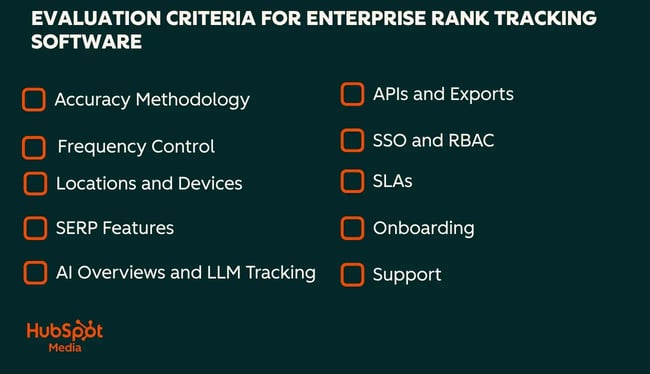
SSO and RBAC
Enterprise rank-tracking software must provide Single Sign-On (SSO), Role-Based Access Control (RBAC), Service Level Agreements (SLAs), and audit logs for robust governance. SSO integration with your organization’s identity provider and RBAC are critical security prerequisites. Permissions should be granular, allowing for scope at the team, market, or campaign level, ensuring that users only access data relevant to their roles.
SLAs
Thoroughly review the vendor’s Service Level Agreement (SLA). Understand guaranteed uptime, protocols for data handling during crawl failures, contractual commitments to data freshness, and remedies for missed SLAs. This ensures business continuity and data integrity.
Onboarding
Setting up large keyword sets, complex site architectures, and multi-market configurations demands comprehensive support. Evaluate the vendor’s provision of dedicated onboarding teams, structured implementation assistance, and realistic timelines for achieving full production use. The onboarding process should explicitly support all critical integrations.
Support
The quality of day-to-day support is paramount at scale. Look for a named account manager or customer success contact, clearly defined response time commitments, and access to technical support for API and integration issues, not just a general help desk.
Best Enterprise Rank-Tracking Software
The platforms highlighted below have been selected for their capacity to meet stringent enterprise demands, offering the depth of reporting and analytical capabilities that large organizations require:
HubSpot’s SEO Marketing Software (part of Marketing Hub)
HubSpot’s SEO Marketing Software, integrated within Marketing Hub, provides enterprise teams with a unified approach to managing and enhancing organic search performance. This solution aims to eliminate the operational silos that often plague large organizations. The software assists teams in planning their SEO strategy and optimizing content within the same integrated marketing platform used for all other initiatives.
A key advantage for enterprise teams with extensive content libraries is HubSpot’s prioritization of keyword recommendations. This ensures that optimization efforts are focused on those activities most likely to yield significant results. The content strategy tool facilitates the discovery and ranking for relevant topics, with suggestions informed by an analysis of relevance, competition, and popularity.
The practical benefit of integration is paramount for enterprise teams. Keyword data, content performance metrics, and lead attribution are consolidated within the same environment as the CRM, campaign management tools, and analytics. This eliminates the need for manual data bridging between disparate systems, a common pain point in enterprise SEO operations. The software also integrates with Google Search Console and HubSpot’s own CMS tools, further enhancing inbound marketing efforts. Furthermore, specific capabilities within HubSpot’s SEO Software are designed to address the evolving landscape of AI-driven search, helping teams structure content for AI Overviews and featured snippets, which are increasingly vital visibility layers for enterprise brands.
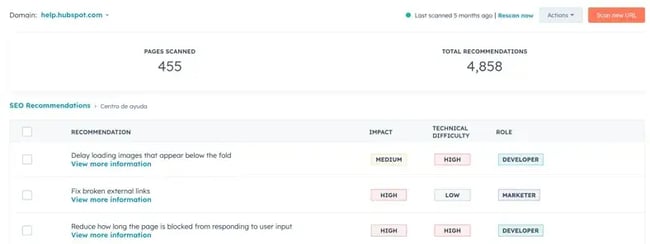
A notable feature is the SEO Recommendations tool, which allows teams to scan all live pages for SEO improvements, including those hosted outside of HubSpot. This is particularly significant for enterprise organizations managing content across multiple domains or platforms. Recommendations are prioritized, enabling teams to focus on high-impact improvements first – a critical capability for managing thousands of URLs. The tool also provides content readability metrics for blog posts and pages, such as estimated reading level and reading time, supporting content quality standards at scale. Recommendations extend to meta tags, internal linking opportunities, and content length.
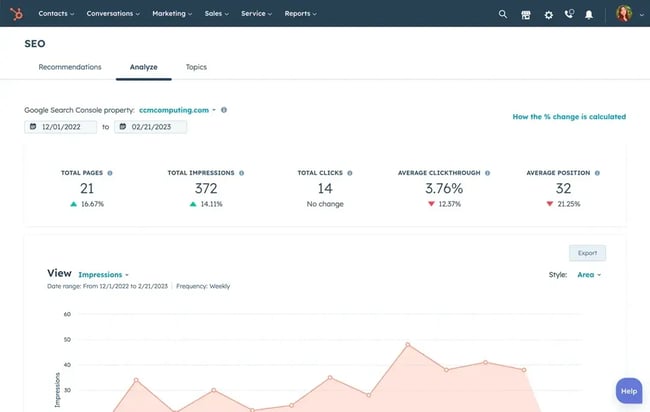
The HubSpot SEO Analyze tab tracks core search performance data pulled directly from Google Search Console, including total pages indexed, impressions, clicks, clickthrough rate, and average position. Marketers can customize date ranges, switch between metrics, and drill down into individual page performance. Side-by-side page comparisons and the ability to save data as dashboard reports further enhance analytical capabilities. Crucially, the tool reveals the search queries driving traffic to specific pages, offering insights into content discovery and informing topic and keyword strategy.
The HubSpot ecosystem’s value for enterprises lies in its unified customer platform, spanning marketing, sales, service, and operations. This integration means SEO data is not isolated. For enterprise SEO buyers, the elimination of data fragmentation is a significant advantage. When rank data, traffic, leads, and revenue reside in disparate systems, correlating SEO’s business impact requires substantial manual effort. HubSpot’s integrated design mitigates this friction. Its enterprise edition also includes SSO, advanced user permissions, and role-based access controls, ensuring data security and compliance with governance requirements. HubSpot’s extensive integration network further enhances its appeal, connecting natively with a wide array of third-party tools.
HubSpot’s Content Hub
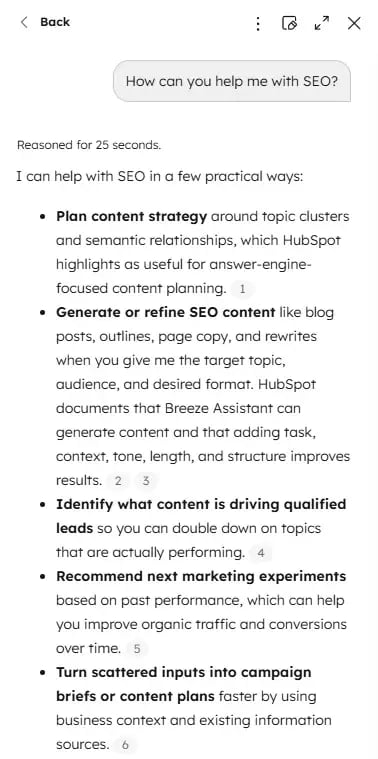
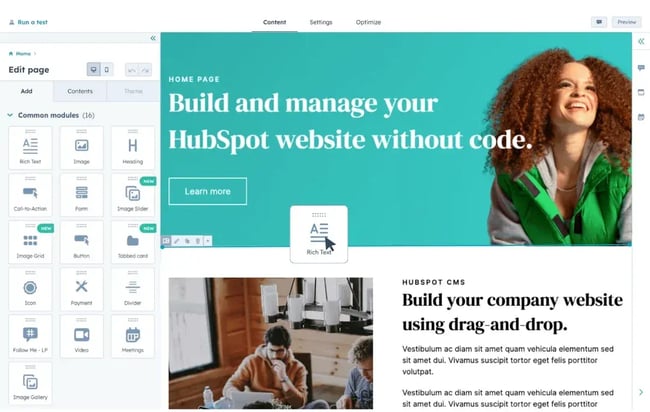
HubSpot’s Content Hub is a Content Management System (CMS) engineered for teams requiring high-volume content publication without compromising SEO discipline or structural consistency. It embeds SEO guidance directly into the authoring workflow, surfacing recommendations for internal linking and page structure during content creation. This proactive approach minimizes the gap between content production and SEO requirements, reducing the need for post-publication audits.
Content Hub’s schema capabilities are particularly relevant for enterprise teams looking to go beyond traditional search. It supports coded templates using HTML and HubL, alongside structured content via HubDB and custom modules, enabling centralized schema pattern management. This systematizes schema implementation rather than relying on individual contributors.
The Content Remix tool transforms single pieces of content into various formats for social media, email, and landing pages. The Brand Voice feature ensures consistent tone across AI-generated content, mitigating brand and messaging drift at scale. The AI Content Writer facilitates content creation directly within the CMS, integrating SEO recommendations, schema configuration, and performance data into a single workflow.
HubSpot AEO Grader
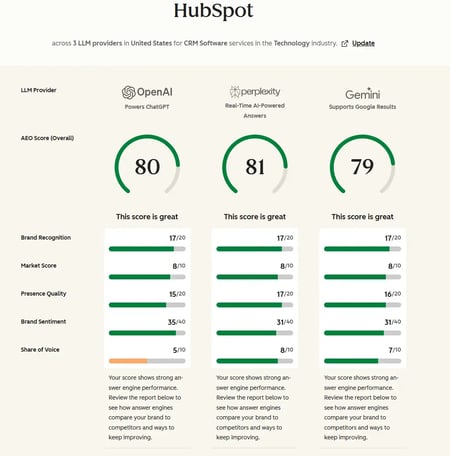
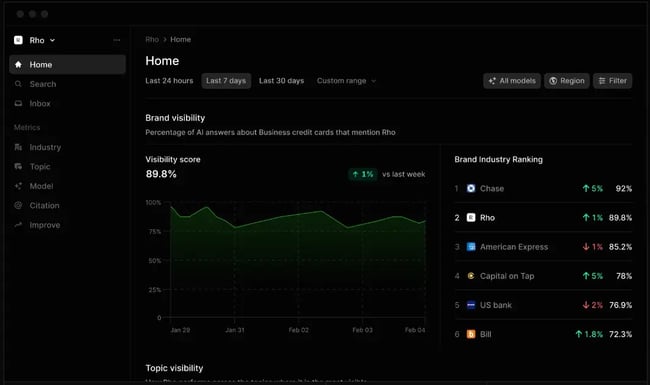
As search behavior increasingly leans towards AI-generated answers, enterprise teams require tools to measure brand presence in these responses. The HubSpot AEO Grader is a free tool designed for this purpose, offering an accessible entry point into Answer Engine Optimization (AEO) measurement. It evaluates brand presence across AI systems like ChatGPT, Perplexity, and Gemini, scoring performance across five dimensions: brand accuracy, sentiment, comprehensiveness, relevance, and authority. The tool highlights potential visibility gaps where a brand might rank well in traditional search but be absent in AI-generated responses.
Its competitive intelligence capability is a significant asset for enterprise benchmarking. The AEO Grader allows direct competitive analysis, enabling teams to understand how AI platforms characterize competitors, their market positions, sentiment patterns, and recognition depth. This facilitates comparison and identifies areas of strength and weakness in AI-driven search. The output includes narrative analysis, a composite score, and a breakdown of what the scores signify, providing actionable insights. Acknowledging its limitation as a free tool, it does not offer continuous automated monitoring. However, regular manual runs and internal reporting can establish a baseline for progress tracking.
Semrush One
Semrush One offers an integrated suite of SEO and AI visibility tools under a single subscription. This includes traditional enterprise-level rank tracking, covering keyword research, position tracking, technical audits, and on-page optimization, alongside GEO and prompt tracking capabilities. Semrush One combines its core SEO Toolkit with an AI Visibility Toolkit to help brands maintain prominence across traditional search and AI platforms like ChatGPT and Perplexity. Competitive intelligence is another core strength, with tools for tracking competitor rankings, share of voice, and domain health at scale.
Key features include comprehensive keyword tracking, on-page and technical SEO audits, competitive analysis, and AI visibility tracking. Semrush One’s pricing starts at $165.17 per month, billed annually. Its strength lies in its mature data infrastructure and consistent investment in data quality, which has enabled a credible expansion into AI and prompt tracking. The unified dashboard simplifies monitoring across traditional and emerging search surfaces.
Profound
Profound is an enterprise-grade AI visibility platform specifically built for teams needing to understand and optimize their brand’s presence across generative AI engines. Unlike platforms that have added AI tracking as an afterthought, Profound is designed from the ground up to manage brand narrative across the entire AI ecosystem. It tracks AI Overview citations, the URLs cited within them, and the sentiment and accuracy of AI-generated brand descriptions.

Key features include AI Overview tracking, sentiment analysis, prompt-level insights, and competitive AI visibility benchmarking. Pricing starts at $99 per month for the Starter plan, with custom enterprise pricing available for advanced features and broader coverage. Profound’s focus on AI-native tracking makes it a strong contender for organizations prioritizing this emerging search channel.
How to Choose the Right Enterprise Rank Tracking Software
Selecting an enterprise rank-tracking platform is a strategic decision that can significantly impact an SEO team’s efficiency and an organization’s overall digital performance. The wrong choice can lead to data silos, reporting inefficiencies, and adoption challenges that are difficult and time-consuming to rectify. The following criteria are essential for making an informed decision in a real-world enterprise environment:
-
Integration Fit Over Feature Count: While a comprehensive feature list can be appealing, a tool that integrates seamlessly with your existing technology stack is far more valuable. For enterprise teams, rank data gains its true utility when it flows into decision-making systems like BI platforms, data warehouses, CRMs, or executive dashboards. A platform requiring manual data exports will likely be underutilized. Prioritize tools with robust API support, webhook capabilities, and native connectors. As one industry expert noted, "It is easy to be impressed by a platform’s feature list in a demo environment. In practice, a tool with fewer features that connects cleanly to your existing stack will outperform a more capable platform that operates in isolation or does more than required."
-
Involve All Stakeholders Early: A common and costly mistake in software selection is excluding key stakeholders. The SEO team’s recommendation should be discussed with IT, legal, finance, sales, and any other department impacted by the new technology. Initiating security reviews and legal consultations early in the shortlisting process can prevent delays and the frustration of having a preferred tool blocked at the final stages.
-
Assess Pricing Tiers and Scalability: Enterprise rank-tracking pricing models vary widely, and the initial cost rarely reflects the total expenditure at scale. Models based on keywords, users, domains, or locations can have dramatically different cost implications as a program grows. A platform that appears affordable for 10,000 keywords might become prohibitively expensive for 500,000 keywords across 15 markets. Furthermore, understand what features are locked behind higher tiers, such as API access, historical data, or advanced user permissions. It is crucial to map anticipated business growth over a two-to-three-year horizon against each vendor’s pricing model to identify realistic tier requirements and upgrade triggers.
How to Track Competitor Rankings at an Enterprise Scale
At the enterprise level, competitor rank tracking extends beyond simply monitoring rival positions for a few keywords. It encompasses analyzing share of voice, pixel position, feature ownership, and brand variant tracking across affiliates and partners.
Share of Voice Tracking
Share of voice measures your domain’s presence in search results relative to competitors across a defined keyword set. For enterprises, this involves tracking share of voice across topic clusters, segmented by product line, market, or buyer stage. Setting up competitive keyword groups aligned with commercial priorities and tracking share of voice trends over time provides a more nuanced understanding of market dynamics than point-in-time snapshots.
Pixel Position Analysis
Ranking first does not guarantee placement at the top of the page due to paid ads, AI Overviews, local packs, and other SERP features. Pixel position tracking measures the vertical distance from the top of the page to the first organic result, offering a more accurate depiction of true visibility. Tracking pixel position alongside rank position for high-value commercial keywords reveals the actual SERP real estate captured by your brand versus competitors.
SERP Feature Ownership
SERP features, such as "People Also Ask" boxes, image packs, and video carousels, represent significant visibility opportunities not captured by rank position alone. Tracking feature ownership over time identifies when competitors gain or lose snippets, prompting a review and update of your own content strategy.
Brand Variant and Affiliate Tracking
Large enterprises often manage multiple brand variants, sub-brands, regional domains, and affiliate or reseller partners that appear in search results for branded queries. Tracking these entities provides a holistic view of the brand family’s search presence and helps identify instances where affiliates or resellers may be cannibalizing organic traffic or appearing for brand terms in competitive positions.
Tracking Across Affiliates and Partners
For authorized third parties appearing for specific queries, establishing a separate tracking segment is essential. This is particularly critical in sectors like retail, financial services, and technology. Understanding if a partner site ranks above your own domain for a high-intent commercial query provides actionable intelligence for both SEO strategy and partner management discussions.
Automation and Alerting
Manual competitor monitoring is unsustainable at enterprise scale. Implementing automated alerts for significant position changes, both gains and losses, across the competitor set, with thresholds to distinguish meaningful shifts, is vital. Integrating competitive rank data into regular reporting cadences ensures that changes are visible to content, product, and go-to-market teams, not just the SEO specialists.
Frequently Asked Questions About Enterprise Rank Tracking Software
-
How do we validate rank accuracy across thousands of locations?
Employ a combination of sampling and validation layers: define representative keyword-location cohorts, conduct scheduled spot checks, and compare against control datasets. Maintain audit logs to track discrepancies and ensure long-term consistency. -
How should we track AI Overviews when prompts change frequently?
Develop structured prompt libraries aligned with key topics and product lines. Capture regular snapshots, log cited sources, and review performance on a defined cadence (e.g., weekly or monthly) to track trends despite prompt variability. -
What is the best way to migrate from a legacy rank tracker?
Run both platforms in parallel during a transition period, validate data consistency, and map key metrics and integrations upfront. Prioritize API connections and reporting workflows before fully decommissioning the legacy system. -
When should you track hourly vs. daily rankings?
Utilize hourly tracking during high-volatility periods such as product launches, sales events, or significant news cycles. For steady-state performance monitoring, daily tracking is typically sufficient and more cost-efficient.
Rank Tracking Software is a Non-Negotiable for Enterprise Businesses
Enterprise rank tracking is fundamentally about understanding and owning one’s complete search presence, encompassing traditional rankings, SERP features, and AI-generated results, not merely monitoring positions. The right enterprise tracking platform must deliver accurate, scalable data while integrating seamlessly with the wider technology stack. This integration ensures that visibility translates directly into actionable insights, informed decisions, and ultimately, revenue generation. Whether the need is for unified SEO and CRM workflows through HubSpot, AI visibility benchmarking with the HubSpot AEO Grader, or scalable content operations via HubSpot Content Hub, the chosen tools must reflect the current realities of modern search behavior.