Beyond the checkout: Why the traditional Black Friday model is evolving into a month-long retail marathon

The concept of Black Friday, once defined by the singular intensity of a post-Thanksgiving shopping frenzy, has undergone a radical transformation. In the current retail landscape, the event has transitioned from a 24-hour sprint into a protracted, multi-week campaign that forces retailers to rethink the role of the physical store. By the time the official date of 27 November arrives, major high-street players like Superdrug will have been sustaining promotional activity for 23 days, having initiated their Black Friday programs as early as 4 November. This strategic shift highlights a fundamental change in consumer behavior, where the urgency of the "big day" is being replaced by a sustained period of deliberate, paced spending.
The shift toward long-term promotional calendars
For years, the retail industry operated under the assumption that Black Friday was the singular catalyst for holiday spending. However, data from the past decade suggests that the "window of opportunity" has widened significantly. Simon Comins, formerly the chief commercial officer at Superdrug, has frequently noted that consumers are increasingly tactical about their holiday budgets. By spreading out the cost of gifts over several months, households are mitigating the financial shock of December, a trend that has prompted retailers to move their opening salvos earlier into November.
The logistical challenge for retailers is no longer just about managing inventory for a single weekend; it is about maintaining momentum. When a brand like Superdrug launches online-exclusive fragrance deals three weeks before the main event, they are effectively conditioning the consumer to bypass the high street until the final push. This creates a complex dilemma: how do retailers incentivize in-store visits when the best deals have already been exhausted online?
The strategic importance of the middle aisle
Lidl serves as a prime example of how retailers are leveraging physical store layouts to create specific "micro-moments" of urgency. By positioning high-ticket technology and kitchen appliances in the "middle aisle"—a space historically reserved for impulse buys—the retailer creates a symbiotic relationship between grocery shopping and high-value purchases.
On 19 November, Lidl launched its primary Black Friday ranges, effectively forcing a decision upon the consumer: visit the store now to secure the item, or risk stock depletion. This strategy is reinforced by a secondary launch of a Christmas-specific kitchen range on the following Sunday. The implication is clear: the retailer is not just selling a product; they are selling a reason for a dedicated trip. If a consumer moves their entire weekly grocery shop to Lidl because they need to collect a discounted air fryer, the retailer gains significantly more than just the margin on the appliance.
Lidl’s experiment in April 2025 regarding loyalty-based reservations serves as a sophisticated attempt to bridge the gap between online browsing and offline fulfillment. By allowing loyalty members to secure items two weeks in advance, the company is effectively digitizing the "must-have" experience, ensuring that when the customer enters the store, the sale is already guaranteed.
Omnichannel integration and the death of the browse
The role of the physical branch is also changing for major electronics retailers like Currys. According to Chris Holyland, digital and omnichannel director at Currys, the modern shopper is rarely walking into a store "blind." Research cycles for high-value items like televisions now span three to four weeks. A customer arriving in-store on Black Friday is often a highly informed individual who has already narrowed their choice down to two models.
This evolution has forced a change in the role of the retail assistant. In the past, the employee’s job was to educate the customer on product specifications. Today, the employee’s primary role is to act as a facilitator of a pre-determined transaction. By integrating digital "save lists" with in-store barcode scanning, Currys allows staff to pick up exactly where the customer left off online. This reduction in friction is essential. Whether a customer is looking for a consultative experience or simply wants to collect a pre-paid order within 30 minutes, the store must now act as a seamless extension of the website.
The rise of the "Experience Economy" in retail
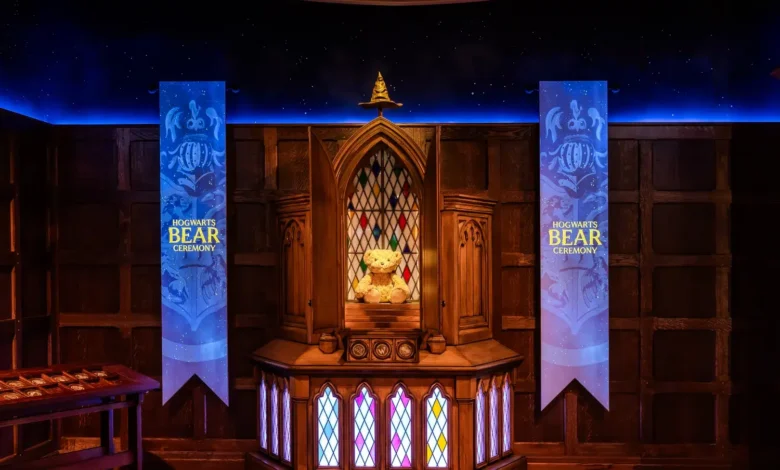
While digital integration is critical for electronics and cosmetics, the physical store is finding a new lease on life through experiential retail. The recent opening of the Harry Potter flagship store on Oxford Street demonstrates that some products cannot be digitized. The Hogwarts bear, which can only be acquired through an in-store ceremony, is an example of "destination retail."
By charging £75 for a ceremony that includes the product, the uniform, and the experience, the store ensures a high level of customer engagement. This is not merely a transaction; it is a time-bound event that requires a reservation. For the retailer, this provides a predictable revenue stream. An empty slot on a November Saturday represents lost potential that cannot be reclaimed in the quieter periods of early December. This model effectively bypasses the volatility of Black Friday discounts, focusing instead on the intrinsic value of the brand experience.
Quantitative and qualitative implications
Analyzing the success of these strategies requires looking beyond raw sales figures. Traditional footfall metrics are increasingly deceptive. A customer walking into a Currys store, scanning a barcode, picking up a television, and exiting without visiting a till is arguably the most successful outcome for an omnichannel retailer. It represents zero-friction service and a high-efficiency transaction.
Conversely, for supermarkets like Lidl, the basket analysis is key. The "halo effect"—the phenomenon where an advertised loss-leader or discounted item drives sales of higher-margin, non-discounted grocery items—is the real prize. The challenge for retailers is accurately attributing the "trip purpose." Was the customer there for the bread and milk, or did the Black Friday tech deal serve as the primary catalyst?
The future of the retail calendar
As we look toward the future of the retail sector, the traditional definition of "Black Friday" is likely to continue its dissolution. Retailers are moving toward a model of "continuous availability," where the calendar is filled with rolling promotions designed to keep foot traffic stable.
The primary lesson for the industry is that the physical store must now provide something the internet cannot: immediate gratification, professional human expertise, or a unique, immersive experience. The shops that thrive will be those that view the digital experience not as a competitor, but as a precursor to the physical interaction.
Ultimately, the goal of the modern retailer is to ensure that the "last question" a customer asks before buying a product is answered by a human being in an environment that justifies the trip. As the lines between online and offline commerce continue to blur, the brands that succeed will be those that treat the entire month of November not as a singular event, but as a sustained opportunity to build brand loyalty through service, convenience, and experiential value. The tills may tell part of the story, but the true measure of success in the new retail era is the ability to transform a digital search into a physical, loyal customer relationship.