Navigating AI Search Volatility: A Strategic Framework for Modern Marketing Performance

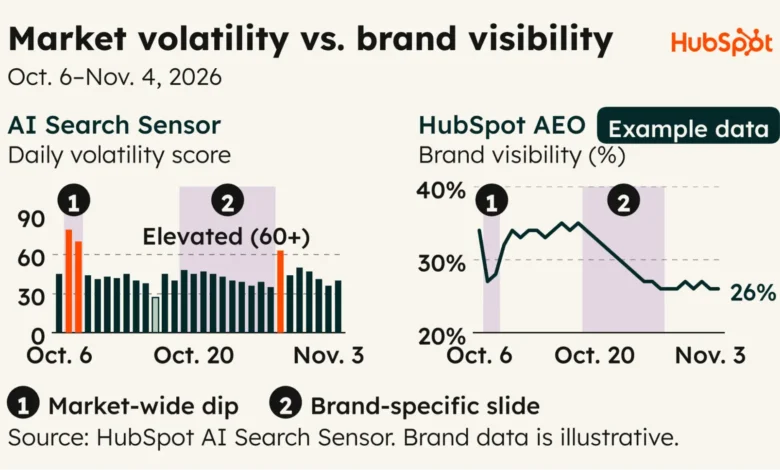
For SEO managers and digital marketing leaders, the landscape of search engine optimization has long been defined by the persistent, often unpredictable nature of algorithm updates. However, the rise of generative AI search—often categorized as Answer Engine Optimization (AEO)—has introduced a new, more complex dimension of volatility. Unlike traditional search results, where a rank tracker provides a definitive position for a URL, AI-generated answers are dynamic, non-deterministic, and frequently opaque. Data from the HubSpot State of AEO report highlights the urgency of this transition, revealing that 58% of marketing organizations were actively optimizing content specifically for answer engines by the first quarter of 2026. As these systems become the primary interface for information retrieval, understanding the mechanics of AI search volatility is no longer optional; it is a prerequisite for maintaining digital market share.
Defining AI Search Volatility and Its Origins
AI search volatility is defined as the rapid fluctuation in how large language models (LLMs) such as ChatGPT, Gemini, and Perplexity select, mention, and cite brands across different queries. While traditional SEO volatility typically stems from Google core updates or seasonal shifts in consumer intent, AI volatility is baked into the architecture of the underlying models. These systems are non-deterministic, meaning they are designed to generate original responses rather than retrieving static pages. Consequently, the same prompt can yield different results when executed at different times.
Research conducted by SparkToro and Gumshoe.ai in late 2025 demonstrated that these inconsistencies are not merely peripheral; they are fundamental. In repeated trials, these models exhibited less than a 1-in-100 chance of providing an identical brand list for the same recommendation prompt. For marketing teams, this creates a significant attribution challenge. When a brand’s visibility dips, it is often unclear whether the drop is the result of a degraded content strategy, a technical SEO failure, or simply a transient "hallucination" or re-weighting event within the AI model itself.
The Divergence Between Traditional Ranking and AI Visibility

To diagnose performance, it is essential to distinguish between traditional SERP (Search Engine Results Page) volatility and AI-driven volatility. Traditional ranking volatility measures the movement of specific webpages within Google’s index. Tools like the Semrush Sensor have long provided a reliable baseline for this, scoring movement on a 0-10 scale. AI search volatility, by contrast, focuses on brand mention frequency, citation rates, and the specific nature of the summaries generated by AI.
The two metrics are correlated but distinct. The 2026 State of AEO report established that high-ranking pages in traditional search results possess a higher probability of being cited in AI Overviews. However, a high rank does not guarantee an AI citation. Furthermore, the presence of an AI summary often negatively impacts traditional click-through rates. Pew Research Center analysis from March 2025 found that when an AI summary is present, users click through to traditional search results in only 8% of visits, compared to 15% when no summary is shown. This indicates that even if a brand maintains its traditional ranking, it may still suffer a decline in total traffic, rendering rank-based KPIs insufficient for measuring total digital health.
Establishing a Methodology for Measurement
Measuring AI volatility requires a departure from static tracking. Because AI responses change, teams must implement a structured, scheduled approach to prompting. The most effective methodology involves three distinct components: a market-wide benchmark, a brand-specific performance report, and a cross-referenced traffic analysis.
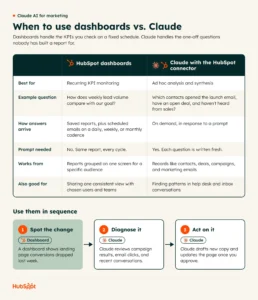
HubSpot’s AI Search Sensor provides an industry-level view, offering a daily volatility score based on four key signals: mention rate, citation rate, citation type, and AI-referred traffic. When analyzing these metrics, marketing teams should compare their internal data against this market benchmark. If a brand’s visibility drops while the market-wide score remains stable, the issue is likely internal—pointing to potential issues with page structure, site health, or outdated content. Conversely, if the brand’s drop coincides with a spike in market-wide volatility, it indicates an external shift in the engine’s algorithm.
It is critical to avoid reacting to daily fluctuations. Because of the non-deterministic nature of these engines, a single day’s reading is often "noisy." Experts recommend allowing at least three days for data to settle before initiating any corrective actions. This patience prevents unnecessary over-optimization, which can often be more damaging to a site’s long-term performance than a temporary dip in visibility.

Chronology of Recent Industry Shifts
The industry has seen significant tremors following major model updates. For instance, the release of GPT-6 Astra in late 2026 caused a noticeable shift in how AI-referred traffic flowed across platforms. During such periods of "Elevated" or "Extreme" volatility (scores of 60 or higher on the volatility index), the consensus among analysts is that the engines are undergoing significant re-weighting. During these phases, the distribution of citations often changes format—moving, for example, from blog posts to comparison tables or product-specific landing pages. Marketing teams that track these changes chronologically against known model release dates are better positioned to differentiate between systemic engine updates and individual performance failures.
Reporting to Leadership and Demonstrating Business Impact
One of the most persistent challenges for SEO managers is reporting these fluctuations to executive leadership. In the 2026 State of AEO report, 23% of B2B marketers and 26% of B2C marketers identified "measuring success" as their primary challenge. To address this, reporting must move beyond vanity metrics like "visibility score" and focus on the business impact of AI-referred traffic.
A professional reporting structure should encompass five core elements:
- Business Impact: Total AI-referred leads, pipeline, and revenue generated during the period.
- Market Context: The AI Search Sensor benchmark, illustrating whether shifts were industry-wide.
- Performance Trends: Brand visibility and citation growth compared to previous periods.
- Attribution Attribution: A clear breakdown of how AI-referred traffic is mapped to the CRM (e.g., using "How did you hear about us?" forms).
- Strategic Outlook: Recommendations for content refinement based on observed shifts in citation format.
By filtering traffic source properties in CRM systems, teams can now more accurately attribute revenue to AI channels. This is vital for proving that AI search is not just a visibility game, but a tangible driver of the sales funnel.

Strategic Responses to Volatility Spikes
When an AI search volatility spike occurs, the diagnostic process should follow a strict order of operations. First, verify the scope of the issue. If the drop is confined to a single engine (e.g., only ChatGPT), check the specific citation types that have been deprioritized. Second, cross-reference with the market benchmark. If the market is stable but your brand is not, audit the specific pages that were previously cited. Common culprits include broken metadata, shifts in schema markup, or the emergence of a more authoritative competitor in the LLM’s training set.
Finally, communicate the findings to leadership with a focus on stability. When volatility is high, the worst course of action is to make radical, knee-jerk changes to the content strategy. As HubSpot’s documentation advises, "reacting too quickly to engine-level changes often creates more disruption than the change itself."
The Future of AI Search Performance
As answer engines continue to evolve, the distinction between SEO and AEO will continue to blur. The ability to measure and manage volatility will become a defining skill for digital marketers. By pairing proprietary brand data with objective, market-wide benchmarks, organizations can navigate the inherent randomness of AI search. While the volatility of these systems is a departure from the predictability of the past, it also offers a new opportunity for those who can decipher the patterns beneath the noise. Moving forward, success will be defined by those who prioritize high-quality, citation-ready content that provides value to the user, regardless of how the underlying model chooses to package that information.