Canada Goose Navigates Tariff Volatility and Strategic Expansion as CFO Neil Bowden Balances Operational Resilience with Long-Term Brand Growth

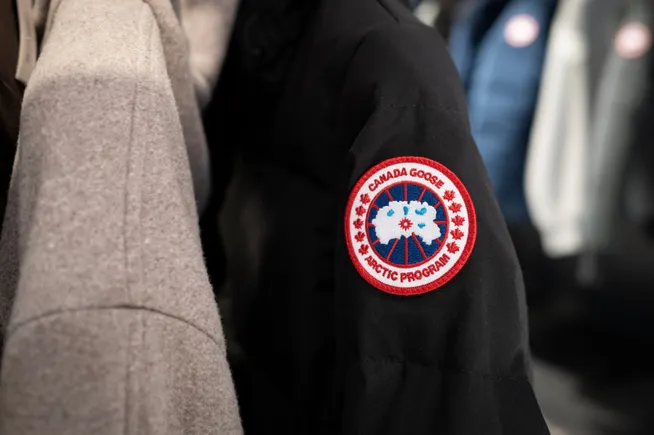
When the United States implemented a sweeping 50% tariff on a wide array of imports from Canada in July, the luxury apparel sector faced an immediate and significant logistical shock. For Canada Goose, the Toronto-based manufacturer synonymous with high-end parkas, the policy shift necessitated a rapid, high-stakes operational pivot. CFO Neil Bowden, who has been instrumental in the company’s financial strategy since stepping into his role in 2024, described a period of intense coordination between the company’s logistics and supply chain teams to mitigate the potential financial damage of the new trade barriers.
By accelerating shipments to clear customs before the August implementation deadline, Canada Goose successfully secured a duty-free window for a substantial portion of its inventory. This tactical agility, according to Bowden, was a critical factor in limiting the projected impact on the company’s EBIT (earnings before interest and taxes) margin to approximately 100 basis points, or roughly 15 million Canadian dollars ($10.6 million). Initial internal estimates had projected a more severe impact, potentially exceeding 200 basis points, making the successful mitigation a highlight of the company’s recent fiscal performance.
A Chronology of Trade Turbulence
The implementation of the 50% tariffs represents a significant escalation in North American trade tensions, impacting industries ranging from manufacturing and raw materials to consumer goods. For Canada Goose, the tariff announcement in July triggered a "race against the clock."
The timeline of the company’s response unfolded as follows:
- July: The United States announces a 50% tariff on specific Canadian imports, creating an immediate hurdle for cross-border retail supply chains.
- July – August: Canada Goose logistics teams execute an aggressive inventory acceleration strategy, ensuring that key seasonal stock crossed the border before the mid-August duty implementation date.
- October: The company reports its fiscal second-quarter results, confirming that while the mitigation strategy was successful, broader macroeconomic pressures—including unseasonably warm weather—continued to weigh on performance.
- November: Management continues to monitor the political landscape, specifically looking toward midterm election outcomes as a potential indicator of future trade policy shifts.
The Pricing Dilemma in a Luxury Context
Despite the financial strain introduced by the tariffs, Canada Goose has opted to maintain its current price structure. The company typically executes a singular annual pricing adjustment at the beginning of its fiscal year in April, a strategy that provides predictability for both the brand and its high-end consumer base.
"We are not quite ready to make a determination about what that pricing will look like," Bowden noted during the company’s recent earnings call, emphasizing that the decision will be data-driven. "Certainly a factor is what the consumer environment looks like and how much of these tariffs are really going to stick."
This caution is well-founded. With some of the brand’s premium women’s down coats retailing between $950 and $1,700 on major e-commerce platforms like Nordstrom, the brand is already at the upper echelon of the market. Increasing prices to offset import duties carries the risk of alienating a consumer base that is increasingly sensitive to the broader inflationary environment. For now, the company has chosen to absorb the tariff costs, prioritizing market share and brand consistency over short-term margin recovery.
Diversification Beyond the Parka
The tariff challenge serves as a backdrop to a larger, multi-year transformation for Canada Goose. Since joining the firm over a decade ago, Bowden has played a central role in evolving the company from a niche, wholesale-dependent manufacturer of cold-weather gear into a diversified luxury lifestyle brand.
Historically, Canada Goose relied almost exclusively on a wholesale model, distributing parkas through a limited network of retailers in North America. Today, the company has fundamentally altered its go-to-market strategy. By investing heavily in its own retail footprint and expanding its direct-to-consumer (DTC) e-commerce channels, the company has gained greater control over its brand narrative and customer data.
Furthermore, the product portfolio has undergone a radical expansion. The brand now offers a comprehensive range of apparel, including lightweight down jackets, vests, knitwear, rain gear, and T-shirts. This "year-round" strategy is designed to decouple the brand’s revenue from the volatility of winter weather patterns—a necessary move given that unseasonably warm autumns, such as the one experienced in October, can significantly suppress sales of heavy-duty parkas.
Financial Performance and Market Sentiment
The company’s fiscal second quarter, which concluded on September 27, paints a picture of a business in transition. Canada Goose reported revenue of 274 million Canadian dollars, a 5.9% increase over the previous year. However, this growth was tempered by an operating loss of 21.6 million Canadian dollars, an increase from the 17.6 million dollar loss recorded in the same period last year. Management attributed this widening loss to higher selling, general, and administrative (SG&A) expenses, partially offset by improvements in gross profit.
Market analysts, including the team at Wells Fargo led by Ike Boruchow, have characterized the results as mixed. While management has reiterated its full-year financial plan, analysts warn that continued sales softness into October, driven by climate-related delays in seasonal buying, places significant pressure on the upcoming holiday quarter. The consensus among financial observers is that while gross margin improvements are a positive sign, the "flow-through" of these gains remains threatened by potential further tariff exposure and a softening consumer appetite for luxury goods.
Future Outlook and Political Uncertainty
Looking ahead, Bowden acknowledges that tariffs have become a permanent fixture of the global trade environment that management must learn to navigate. While there is a sliver of hope that shifting political tides in Washington could lead to a softening of these duties, the company is not banking on regulatory relief.
"I don’t think we really can control that," Bowden stated, emphasizing the internal focus of the executive team. "Our focus is on what we can control, which is inside the walls of our business with our people. We need to run the best business possible, and the politicians will do their thing and we’ll respond to that as they impact us."
This pragmatic approach—leading with a combination of data-driven financial discipline and a focus on operational agility—defines the current iteration of Canada Goose. By diversifying its product line, strengthening its DTC channels, and preparing for the long-term reality of trade friction, the company is positioning itself to withstand the immediate shock of tariffs while continuing its evolution into a year-round global luxury powerhouse. The success of this strategy, however, will ultimately depend on the brand’s ability to maintain its aspirational status in a global market that remains increasingly sensitive to both price and political instability.