The global pharmaceutical industry is navigating an era of unprecedented supply chain complexity, necessitating a shift toward highly specialized, temperature-controlled logistics infrastructure. DHL, a global leader in logistics and transportation, is actively reinforcing its Health Logistics Cold Chain Network to address the growing demand for secure, compliant, and reliable connectivity between major pharmaceutical manufacturing hubs and consumer markets. By deploying advanced air freight capabilities, state-of-the-art temperature-controlled facilities, and strategic infrastructure investments at key gateways like the Cincinnati/Northern Kentucky International Airport (CVG), the company is positioning itself to handle the transport of sensitive biologics, vaccines, and clinical trial materials with enhanced precision.
The Strategic Evolution of Cold Chain Logistics
The logistics of life sciences represent a significant challenge for the global supply chain, where even a minor deviation in temperature—known as a temperature excursion—can render high-value pharmaceuticals ineffective or hazardous. DHL’s current strategy focuses on mitigating these risks through the Health Logistics Cold Chain Network. This global infrastructure is specifically designed to maintain the integrity of pharmaceutical shipments from origin to destination.
The network’s recent expansion is not merely a reactionary measure to current trade flows but a proactive strategy to accommodate the rising complexity of pharmaceutical products. Modern medicines, particularly those derived from biotechnology, are increasingly temperature-sensitive, requiring stable environments ranging from deep-freeze conditions for mRNA vaccines to strictly controlled room temperatures for standard biologics.
According to DHL Freight spokesperson Laura Lehnen, these dedicated healthcare corridors are designed to satisfy the specific connectivity requirements of pharmaceutical companies that rely on predictable, GDP-compliant (Good Distribution Practice) transport. As manufacturing patterns shift, DHL has observed a distinct increase in inbound demand from Asia to North America and Europe, prompting the company to weight its air freight capacity accordingly.
Chronology of Network Enhancements
The development of DHL’s cold chain capabilities has been a multi-year project involving significant capital expenditure and fleet optimization. The timeline of these strategic moves highlights a commitment to long-term infrastructure:
- Mid-2024: The company expands its focus on high-traffic healthcare corridors, aligning its Boeing 777 fleet—which features tri-compartment temperature settings—with the specific needs of the life sciences sector.
- Early 2025: DHL Group launches a direct Brussels (BRU) to Cincinnati (CVG) route, specifically tailored to move temperature-sensitive goods across the Atlantic, bridging two of the world’s most critical pharmaceutical hubs.
- Late 2025 and Beyond: The organization initiates a roadmap for facility upgrades at the CVG hub, focusing on climate-controlled dollies and airside infrastructure to bridge the gap between aircraft and storage facilities during extreme weather events.
- 2027 Projections: Construction and operational activation of a new airside facility at CVG, designed to manage the storage and handling of Unit Load Devices (ULDs) in a climate-controlled environment, ensuring no thermal break occurs during the transfer process.
Supporting Data and Technical Infrastructure
The effectiveness of this logistics network relies on a sophisticated blend of hardware and process-driven compliance. The use of Boeing 777 aircraft is central to the operation, as these planes allow for the segregation of cargo into three distinct temperature zones. This capability is essential for carriers moving diverse medical payloads, such as insulin, blood derivatives, and complex oncology treatments, on a single flight path.
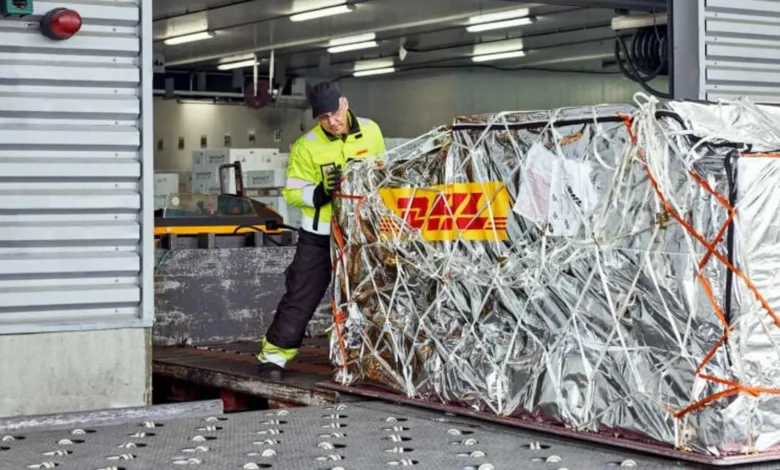
Furthermore, the integration of temperature-controlled dollies represents a technical solution to one of the most vulnerable points in the air cargo supply chain: the tarmac. Exposure to extreme heat or cold during the loading and unloading process is a frequent cause of temperature excursions. By deploying five new temperature-controlled dollies in the near future, DHL aims to maintain a continuous cold chain even during the most challenging meteorological conditions at the CVG hub.
The investment in CVG as a primary gateway is supported by the facility’s existing GDP-compliant certifications. Alongside its Cincinnati operations, DHL maintains a dedicated life sciences and healthcare facility in Indianapolis, creating a robust ecosystem in the U.S. Midwest that acts as a central distribution node for North American pharmaceutical markets.
Competitive Landscape and Industry Pressures
DHL is not operating in a vacuum. The global cold chain logistics market has become highly competitive, with major integrators vying for dominance in the high-margin life sciences sector. FedEx, for instance, has aggressively pursued a similar strategy, recently launching a specialized "Life Sciences Suite" to provide end-to-end monitoring and priority handling for medical cargo.
The entry of these logistics giants into the dedicated life sciences space follows the lessons learned during the global pandemic, which underscored the fragility of pharmaceutical supply chains. The shift toward regionalization—where pharmaceutical companies attempt to move production closer to the point of consumption—is forcing logistics providers to rethink their network designs. DHL’s emphasis on "both directions of trade" suggests that the company is preparing for a future where manufacturing centers in Asia and consumption centers in the West remain deeply intertwined, requiring a flexible, bidirectional network.
Analysis of Implications for the Healthcare Sector
The implications of these investments extend beyond mere shipping capacity; they represent a fundamental shift in how pharmaceutical companies approach risk management. By outsourcing the cold chain to specialized providers like DHL, manufacturers can focus on core research and development while delegating the complexities of global distribution to firms that possess the required infrastructure and regulatory compliance expertise.
From a regulatory perspective, the transition toward more rigorous cold chain standards is expected to continue. Authorities such as the U.S. Food and Drug Administration (FDA) and the European Medicines Agency (EMA) have increasingly tightened requirements for the "chain of custody" and "chain of condition." Logistics networks that can provide real-time, validated temperature data are no longer just a competitive advantage; they are becoming a baseline requirement for pharmaceutical market entry.
The investment in off-airport facilities for ULD build-up and break-down is particularly significant. Traditionally, ULDs—the pallets and containers used to load aircraft—are broken down in ambient environments. By moving these processes into temperature-controlled facilities, DHL is essentially extending the "sterile" environment of the laboratory or factory all the way to the aircraft door. This reduces the risk of product degradation during the final mile of the air cargo journey, a critical factor for high-value biologics that cannot be salvaged if a temperature excursion occurs.
Broader Impact on Global Trade
The expansion of these corridors also reflects broader geopolitical and economic trends. As pharmaceutical manufacturing hubs in Southeast Asia and India continue to expand, the demand for sophisticated logistics channels to reach North American and European healthcare systems will only increase. DHL’s ability to pivot its available air freight capacity to match these trade flows provides a level of agility that smaller, less specialized logistics firms cannot match.
Furthermore, the reliance on the Boeing 777 fleet underscores a preference for long-haul, high-capacity routes. This choice optimizes the ratio of energy consumption to volume, which is increasingly important as logistics firms face pressure to reduce their carbon footprint while simultaneously increasing the frequency and speed of their cold chain services.
As DHL continues to execute its infrastructure roadmap through 2027, the industry can expect a further hardening of these healthcare corridors. The integration of new airside facilities and the implementation of advanced temperature-controlled handling equipment at CVG signal that the company views the life sciences sector as a long-term growth engine. By mitigating the risks associated with global transport, DHL is not only facilitating the movement of goods but is also acting as a crucial component of the global healthcare infrastructure, ensuring that life-saving treatments remain viable from the moment they leave the manufacturing floor until they are administered to the patient.
In conclusion, the strategic investment by DHL in its cold chain network serves as a case study for the modernization of pharmaceutical logistics. Through a combination of dedicated fleet management, capital-intensive infrastructure upgrades, and a proactive response to shifting trade patterns, the organization is strengthening the backbone of the global life sciences supply chain, ultimately contributing to the stability and safety of the international healthcare market.