Williams-Sonoma Inc. Sustains Growth Momentum With Fourth Consecutive Quarter of Ecommerce Expansion in Fiscal Q3 2026

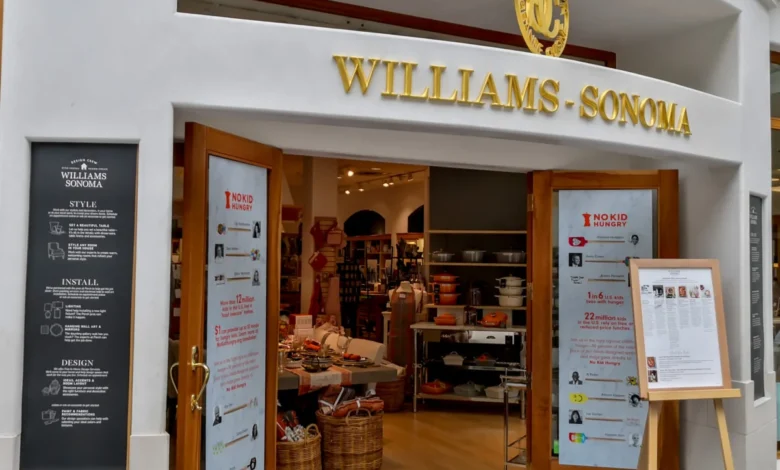
Williams-Sonoma Inc., the prominent home furnishings retailer and a mainstay of the North American retail landscape, has reported a resilient financial performance for its third quarter of fiscal year 2026. The company achieved its fourth consecutive quarter of ecommerce sales growth, demonstrating a robust ability to navigate a challenging macroeconomic environment characterized by volatile fuel costs, supply chain complexities, and a cooling housing market. For the quarter ending November 1, the firm posted net revenue of $1.99 billion, representing a 5.8% increase compared to the same period in the prior year. This growth was underpinned by positive comparable sales across all brands and channels, reinforcing the company’s strategic shift toward full-price selling and digital innovation.
A Chronology of Strategic Execution
The fiscal year 2026 has been marked by a deliberate recalibration of Williams-Sonoma’s retail strategy. Earlier in the year, during the second quarter, the company signaled a departure from heavy discounting in favor of margin protection. By the end of August 2026, the company reported ecommerce comparable sales growth of 6.5%. The third quarter results demonstrate that this momentum has not only held but accelerated, with ecommerce comparable sales reaching 6.8%.
The strategic pivot to emphasize full-price selling—particularly within the Pottery Barn brand—has been a defining characteristic of this fiscal period. While management acknowledged that this policy has exerted downward pressure on short-term sales volume, the trade-off has been a measurable improvement in operational efficiency and profitability. This phased approach to market positioning suggests that Williams-Sonoma is prioritizing long-term brand equity over the short-term volume spikes often associated with aggressive promotional cycles.
Financial Performance and Operational Metrics
The financial health of Williams-Sonoma remains anchored by its multi-channel distribution strategy. Comparable brand revenue, which aggregates performance across ecommerce, physical retail locations, and business-to-business (B2B) divisions, grew by 5.1% in the third quarter. Notably, the company’s retail channel—often viewed as a bellwether for consumer sentiment in brick-and-mortar furniture shopping—posted a 1.5% increase in comparable sales. This performance is particularly impressive when contextualized against the 8.5% growth recorded in the same channel during the prior year, indicating a sustained, albeit moderated, demand for in-person shopping experiences.
Profitability metrics further underscore the efficacy of the company’s current direction. The non-GAAP operating margin expanded by 40 basis points to reach 17.4%. Consequently, non-GAAP earnings per share (EPS) climbed to $2.19, an 11.7% increase year-over-year. These figures provide a sharp contrast to the broader furniture retail sector, where many competitors have been forced to implement deep discounts—some exceeding 70% of their total assortments—to clear inventory. Williams-Sonoma’s management has signaled its intent to maintain this disciplined, full-price approach through the critical fourth-quarter holiday season.
The Role of Artificial Intelligence in Retail Transformation
A cornerstone of Williams-Sonoma’s competitive advantage is its aggressive integration of artificial intelligence into the customer journey. Ranked No. 306 in Digital Commerce 360 and ReFiBuy’s AI Commerce Rankings, the company has effectively deployed AI to solve friction points in the furniture buying process.
CEO Laura Alber highlighted that the company’s proprietary AI assistants, specifically "Olive" for the Williams Sonoma brand and "Otto" for Pottery Barn, have now facilitated over 1 million customer chat interactions. Data suggests that these interactions are not merely operational conveniences; they are revenue drivers. Shoppers who engage with these personalized AI experiences exhibit significantly higher revenue per visit compared to the broader site average.
The technical sophistication of these tools is evolving rapidly. Chief Digital Officer Sameer Hassan detailed a proprietary design tool that utilizes a customer’s 3D room scan to generate photorealistic renderings in seconds. Unlike generic visualization tools, this system uses the actual dimensions and product specifications of the items selected by the customer. By removing the guesswork from interior design, the retailer is effectively lowering the barrier to purchase for high-ticket items. Looking toward the holiday season, the company is further leveraging these assets by deploying AI-generated gifting imagery and personalized reminders derived from historical purchase data.
Navigating Macroeconomic Headwinds
Despite the positive trajectory, Williams-Sonoma is not immune to the pressures affecting the global supply chain. CFO Jeff Howie noted that rising fuel costs, particularly for diesel, have created a significant financial burden. With diesel prices surging more than 60% year-over-year in the third quarter and rising 20% since August, the company anticipates an additional $60 million in expenses for the fiscal year.
Supply chain disruptions remain a secondary, yet persistent, challenge. The ongoing conflict in the Middle East has necessitated longer transit times, while congestion at key ports and rail terminals has complicated logistics. In response, Williams-Sonoma has implemented a strategy of expediting critical shipments and providing more granular delivery estimates to customers via its digital platforms to manage expectations.
Furthermore, the domestic housing market—a critical driver for home furnishings demand—has shown signs of contraction. CEO Laura Alber described the housing market as having "gotten worse," yet emphasized that Williams-Sonoma has successfully increased its market share despite these conditions. On the regulatory front, the company continues to benefit from the resolution of historical tariff disputes, recognizing $29.3 million in IEEPA tariff refunds during the quarter. To date, the company has successfully recovered nearly all of its $197.8 million claim, providing a useful tailwind to its cash flow.
Broader Market Implications
The performance of Williams-Sonoma serves as a case study for the "premium-at-scale" model in the digital age. By refusing to engage in the "race to the bottom" regarding pricing, the company is reinforcing the perceived value of its brands. Analysts suggest that this strategy is particularly effective in an era where consumers are increasingly selective with discretionary spending.
The successful implementation of AI as a consultative sales tool rather than just a customer service chatbot represents a significant evolution in ecommerce. By bridging the gap between digital discovery and physical placement, Williams-Sonoma is effectively reducing return rates—a perennial pain point for furniture retailers—and increasing customer lifetime value.
Looking ahead, the company’s ability to sustain its margins during the fourth quarter will be the ultimate litmus test for its full-price strategy. If the current trajectory continues, Williams-Sonoma is well-positioned to maintain its status as a leader in the Top 1000 database of North American retailers. The combination of high-touch digital tools, a disciplined approach to inventory management, and a robust balance sheet provides a defensive moat against the volatility of the current economic cycle.
Conclusion
Williams-Sonoma’s fiscal third quarter reflects a company in transition—moving away from the pandemic-era reliance on volume and toward a more sustainable, high-margin future. While external factors such as fuel costs and a depressed housing market present tangible risks, the firm’s reliance on data-driven customer experiences and a clear brand identity appears to be paying dividends. As the retail sector enters the final phase of the fiscal year, the focus will remain on whether this premium positioning can withstand the intensifying promotional activity of the holiday period. For now, however, the data suggests that Williams-Sonoma’s strategy of prioritizing profit over participation in the discount wars is yielding consistent, measurable growth.