Office Depot parent company The ODP Group rebrands as Office Depot Group to unify retail and B2B operations under a single legacy identity

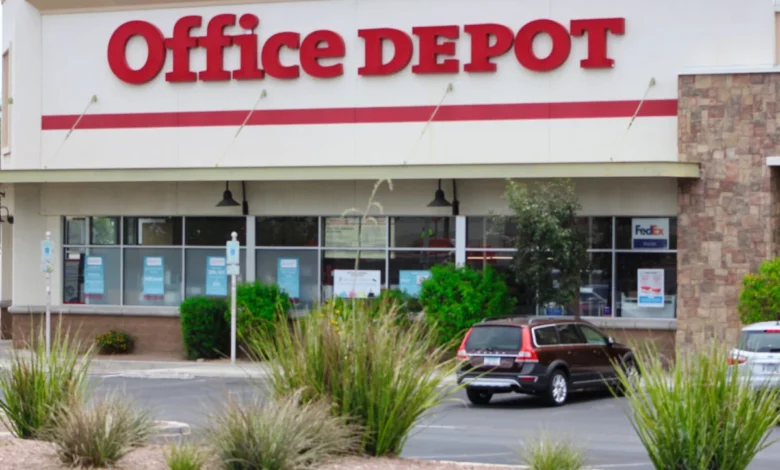
In a strategic shift aimed at reclaiming decades of brand equity, The ODP Group has officially rebranded as Office Depot Group. This transition involves the retirement of its B2B distribution name, ODP Business Solutions, in favor of a unified moniker: Office Depot Business. By aligning its retail and business-to-business divisions under one banner, the company is attempting to streamline its market presence and leverage the widespread consumer recognition associated with the 40-year-old Office Depot name.
The move marks a significant pivot in the company’s long-term restructuring efforts. As the organization transitions its digital presence, physical signage, and internal communications to reflect the new nomenclature, industry analysts are closely watching whether this return to a traditional brand identity can effectively signal a modernized approach to business operations.
A Chronology of Corporate Evolution
The path to the current rebranding is deeply rooted in the company’s complex corporate history. Founded in 1986, Office Depot rapidly expanded into a global powerhouse, becoming a staple of the American retail landscape throughout the 1990s and 2000s. However, the rise of e-commerce and the decline of brick-and-mortar office supply retailers necessitated a series of structural changes.
In 2013, Office Depot merged with its primary rival, OfficeMax, in a move intended to consolidate their market share against the encroaching dominance of digital competitors like Amazon. By 2022, the company underwent a major transformation, separating its retail and B2B operations into distinct units under the holding company name "The ODP Group." This structure allowed the B2B arm, ODP Business Solutions, to operate with greater autonomy.
The latest announcement to revert to "Office Depot Group" serves as a reversal of this fragmentation. By consolidating these units, the leadership team aims to eliminate customer confusion and present a singular, coherent face to the market. Company officials expect the rollout to be completed across all digital platforms, social channels, and corporate communications within the coming weeks.
Market Positioning and Competitive Landscape
Office Depot currently holds a significant position in the North American retail sector, ranking No. 24 in the Digital Commerce 360 Top 2000 Database. This database, which tracks the performance of the largest online retailers, highlights the company’s resilience despite intense competition. Within the office supplies category, Office Depot remains the second-largest retailer, trailing only Staples.
The competition for the B2B market is particularly fierce. As traditional office supply needs have shifted toward integrated digital services, logistics, and facility management, legacy retailers have struggled to prove their relevance to modern corporate procurement officers. The decision to move away from the "ODP Business Solutions" branding suggests that leadership believes the "Office Depot" name—despite its retail-heavy connotations—carries a weight of trust and reliability that the newer, more generic "ODP" acronym lacked.
Executive Perspective on the Rebrand
Craig Gunckel, the CEO of Office Depot, has framed the rebranding as a necessary step in honoring the company’s heritage while preparing for future growth. In a public statement via LinkedIn, Gunckel emphasized that brand recognition is an asset earned over decades of service to communities and business partners.
"Office Depot is a brand with more than 40 years of history behind it — the kind of recognition that can’t be built overnight, only earned over decades by showing up for our customers, our partners and the communities we serve," Gunckel noted. He further expressed optimism that returning to the legacy name will have a positive, tangible impact on the company’s workforce and its customer base, which has relied on the brand for generations.
The Strategic Risks of Legacy Branding
While the consolidation promises internal efficiencies, branding experts caution that the move is not without risks. A primary concern is the potential for brand dilution. For four decades, the Office Depot name has been inextricably linked to the consumer experience of walking into a retail store to purchase pens, paper, and printers. Procurement officers in the B2B space often operate with different priorities, focusing on supply chain reliability, bulk pricing, and specialized service contracts.
Alys Reynders, chief marketing officer at the operations platform Quickbase, notes that the shift could be a double-edged sword. "One big concern is that procurement officers have already built four decades of connotations to the Office Depot brand as a brick-and-mortar entity, which could dilute the identity of the company and its perceived areas of expertise," she observed.
There is also the risk of "brand limitation." If a client perceives the company strictly as a retail office supply store, they may not naturally associate the brand with the high-level, sophisticated B2B services that the company now provides, such as managed print services, facility supplies, or custom procurement software. If the new branding is not supported by a robust marketing campaign that clarifies the scope of these services, the company risks being pigeonholed by its own legacy.
However, Reynders also highlights the potential for success. "Overall, this stronger alignment means that Office Depot has the opportunity to unify its identities beyond the barriers created by operating under different names. When managed effectively, operating under a single entity can stamp out customer confusion about who the brand is and its heritage," she added.
The Challenge of Modernization
The ultimate test for the Office Depot Group will be its ability to redefine its value proposition in the eyes of business clients. Shailendra Pratap Jain, a professor of marketing at the University of Washington’s Foster School of Business, argues that while the name change offers immediate legitimacy, it does not solve the underlying business challenge of remaining competitive in a digital-first world.
"Renaming ODP Business Solutions as Office Depot Business gives the company immediate familiarity and legitimacy," Jain stated. "It also creates a strategic challenge: can a brand strongly associated with retail office supplies stretch credibly into a broader B2B solutions and distribution identity?"
According to Jain, the name change is merely a signal of intent; it is not a substitute for a comprehensive turnaround strategy. For the transition to be successful, the company must effectively pivot from being viewed as "the place where businesses buy office supplies" to "the company that helps businesses operate." This transformation requires careful attention to:
- Product Mix Evolution: Expanding offerings beyond traditional paper and ink into technology-enabled workplace solutions.
- Strategic Targeting: Refining the B2B sales approach to reach decision-makers who require more than just retail-grade supplies.
- Operational Integration: Ensuring that the customer experience is seamless, whether the client is a small business owner visiting a retail location or a large enterprise ordering supplies via a digital B2B portal.
- Pricing and Promotion: Aligning promotional efforts with the needs of a diverse B2B client base rather than relying solely on retail-focused discounts.
Looking Toward the Future
The rebrand is taking place against a backdrop of wider economic shifts. Inflation, supply chain volatility, and the hybrid work revolution have fundamentally altered how businesses consume office products. While the demand for traditional office items has stabilized, the demand for integrated digital tools and remote work support has surged.
The Office Depot Group faces the dual challenge of maintaining its retail footprint—which continues to provide significant revenue and brand visibility—while aggressively capturing market share in the B2B digital space. If the unified branding succeeds, the company will have successfully leveraged its history as a "trusted advisor" to compete with more tech-native distributors.
Whether this move marks a true resurgence or merely a cosmetic change will be determined by the company’s fiscal performance over the next several quarters. Investors and stakeholders will be looking for signs that the simplified brand structure leads to reduced operational costs, higher customer retention, and a clearer market identity.
Ultimately, as Professor Jain noted, the success of this transition will depend on whether Office Depot can convince the market that its legacy is an asset rather than a constraint. By consolidating under a single, well-known name, the company has cleared the path for a unified narrative. Now, the burden of proof rests on its ability to execute a business model that reflects the needs of the modern, digitized workplace.
As the company proceeds with this rebranding, the industry will be watching to see how successfully it navigates the friction between its established past and its digital future. For a brand that has survived four decades of retail upheaval, this latest chapter represents a bold attempt to ensure its relevance for the next generation of business.