Amazon is revolutionizing the streaming experience by turning Prime Video into a seamless digital storefront for viewers

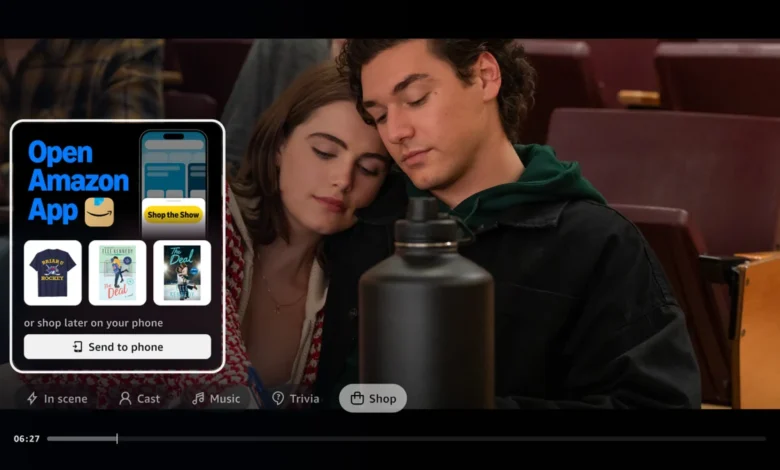
The intersection of entertainment and e-commerce has reached a new milestone as Amazon unveils a comprehensive suite of features designed to transform how consumers interact with their favorite media. By leveraging its proprietary X-Ray technology and integrating sophisticated visual search capabilities, the retail giant is effectively collapsing the distance between a viewer’s television screen and the Amazon marketplace. This strategic pivot aims to capture consumer interest at the exact moment of inspiration, turning passive viewing into an active, frictionless shopping journey.
The Evolution of Shoppable Entertainment
For years, the "second-screen" experience—where viewers scroll through their phones while watching television—has been a challenge for retailers to monetize. Amazon’s latest update seeks to formalize this behavior. The core of this initiative is an expansion of the "Shop the Show" concept, which debuted last year. Originally, the feature was somewhat cumbersome, requiring users to manually navigate the Amazon mobile application and input specific search queries to find products related to a show.
The new iteration eliminates these barriers. By integrating shopping directly into the Prime Video interface, Amazon is removing the friction that previously hampered conversion rates. With thousands of titles now supported, the company is betting that viewers will appreciate the convenience of identifying a product—whether it be a piece of furniture, a specific garment, or a tech gadget—and purchasing it without ever leaving the Amazon ecosystem.
A Chronology of Integration
Amazon’s journey toward "shoppable TV" has been methodical, reflecting a broader industry trend toward merging media consumption with retail.
- Pre-2022: Amazon established its X-Ray service, primarily as a tool for trivia, actor biographies, and soundtrack identification. This provided the technical foundation for real-time, context-aware information overlays.
- 2023: The company launched "Shop the Show," an experimental second-screen experience. Simultaneously, competitors such as Peacock introduced "Must ShopTV," and Roku integrated Shopify partnerships into its platform, signaling a market-wide push toward commerce-enabled streaming.
- 2024: Disney began experimenting with interactive ads across Hulu and ESPN, testing the appetite for direct-to-consumer purchases during live sports and scripted content.
- Late 2025/2026: Amazon announced the latest iteration of these features, moving from manual search-based shopping to "Shop the Scene," utilizing AI-powered visual recognition to offer product suggestions even when exact brand matches are unavailable.
The Technology Behind the Scenes: Amazon Lens
The most innovative component of this rollout is the "Shop the Scene" feature, powered by Amazon Lens. This visual search technology acts as an intelligent assistant that analyzes the frame of a video. When a viewer expresses interest in a scene, the system processes the visual data to identify items such as home decor, fashion, or lifestyle accessories.
While the system is designed to identify products accurately, Amazon has been transparent about its limitations. In many instances, the specific items worn by actors in high-budget productions are either bespoke, designer, or out-of-stock. In these cases, Amazon Lens provides curated alternatives—products that capture the "aesthetic" or "look" of the scene. This approach is strategic; it acknowledges that consumers are often driven by the vibe of a film or series rather than the requirement for an exact product match. By providing accessible alternatives, Amazon maintains the sales funnel even when the original item is unavailable.
Industry Context and Competitive Landscape
Amazon’s aggressive expansion into shoppable media does not exist in a vacuum. The streaming wars have evolved from a competition for subscriber numbers to a battle for consumer engagement time. As streaming services face saturation, the ability to generate secondary revenue streams through e-commerce has become a critical differentiator.
YouTube, for instance, has successfully utilized its creator economy to turn video content into a merchandising engine. By allowing creators to feature products directly under their videos, YouTube has mastered the conversion of influence into revenue. Similarly, Roku’s integration with Shopify has turned the television remote into a point-of-sale device. Amazon, however, holds a unique advantage: the vertical integration of its retail supply chain. Unlike competitors that must partner with third-party marketplaces, Amazon controls the entire experience from discovery to delivery.

Official Positioning and Strategic Objectives
While Amazon has not released specific internal sales projections, the scale of the rollout is indicative of its high expectations. The "Shop the Show" library has grown from 1,300 titles to over 8,000, encompassing Prime Originals, licensed content, and live sporting events.
"Our goal is to make the shopping experience as intuitive as the viewing experience," an Amazon spokesperson noted in a recent brief. By making the "Shop" tab accessible via the Fire TV remote—simply by pressing ‘up’ during a broadcast—the company is positioning shopping as a native function of the remote control, rather than an afterthought. This seamless transition is essential for modern consumers who prioritize convenience above all else.
Analyzing the Economic Implications
The economic implications for Amazon are significant. By diversifying its revenue streams, the company is effectively lowering the customer acquisition cost for its retail division. When a user is already within the Amazon environment—watching a movie on a Fire-enabled device—the cost to convert them into a shopper is near zero.
Furthermore, this move provides Amazon with invaluable data regarding viewer preferences. By tracking which scenes or items generate the most "clicks," the company can refine its advertising strategies and improve the effectiveness of its recommendation algorithms. For content creators and brands, this creates a new frontier for product placement. If a brand knows that its product can be easily purchased by a viewer in real-time, the value of that placement increases exponentially.
Challenges and Future Considerations
Despite the technological prowess, the model faces potential challenges. Critics often point to the "interruption factor." If a viewer is deeply engrossed in a dramatic narrative, an intrusive shopping prompt could diminish the quality of the experience. Amazon appears to have considered this by keeping the shopping experience largely optional, tucked away in the X-Ray interface, or accessible via a secondary device.
Additionally, the reliance on visual search technology means that the accuracy of the system will be under constant scrutiny. If users are consistently presented with irrelevant or low-quality product matches, the utility of the feature will degrade. The success of "Shop the Scene" will ultimately depend on the machine learning models’ ability to interpret style, color, and context accurately.
Conclusion: A New Era of Television
The integration of commerce into streaming content is no longer a futuristic concept; it is the current standard. Amazon’s latest updates represent the most sophisticated effort to date to marry the entertainment and retail industries. As these features become more deeply embedded in the consumer psyche, the boundary between "watching" and "buying" will likely vanish entirely.
For the average consumer, this means a more convenient way to find the products they see on screen. For the broader industry, it marks a pivotal shift toward a future where every frame of content is a potential storefront. As Amazon continues to refine its Lens technology and expand its supported catalog, the company is well-positioned to dominate this new, highly lucrative segment of the digital economy. The integration is not merely a convenience feature; it is a fundamental shift in the business model of digital television, ensuring that the next time a viewer admires a character’s wardrobe or home, the solution is only a click away.