China leads global industrial IoT cloud native adoption as AI infrastructure reaches a critical inflection point

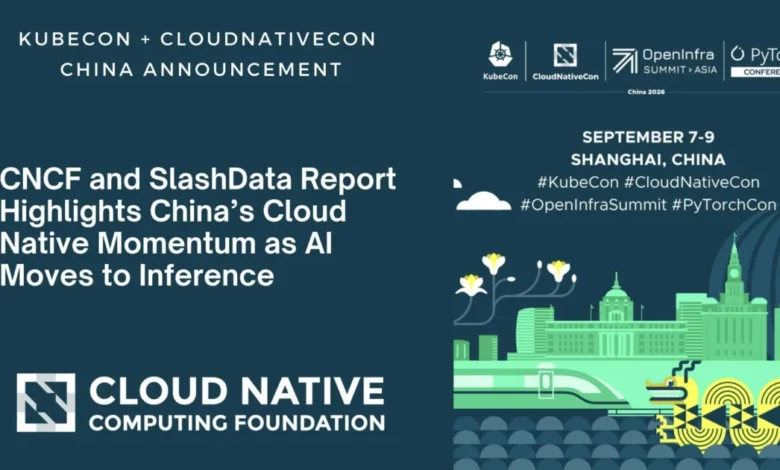
SHANGHAI — The landscape of modern software development is undergoing a seismic shift, particularly within the industrial centers of China, where the integration of cloud native technologies and artificial intelligence is outpacing global benchmarks. According to the latest State of Cloud Native Development in China report, released during the combined KubeCon, CloudNativeCon, OpenInfra Summit, and PyTorch Conference in Shanghai, 48% of Industrial Internet of Things (IIoT) developers in China have fully embraced cloud native methodologies. This figure stands in stark contrast to the global average of 42%, signaling that Chinese engineering teams are moving with greater velocity to containerize and orchestrate their industrial workloads.
This data, published by the Cloud Native Computing Foundation (CNCF) in partnership with the research firm SlashData, highlights a broader trend: as AI transitions from the hype cycle of experimental R&D into the rigorous demands of production inference, cloud native infrastructure is no longer an optional layer—it is the bedrock of the AI-native era.
A Chronology of the Cloud Native Explosion in China
The rapid maturation of China’s cloud native ecosystem did not occur in a vacuum. Over the past decade, the country has strategically invested in open source participation, moving from being a primary consumer of global projects like Kubernetes and Prometheus to becoming a top-tier contributor.
In early 2024, industry analysts noted a pivot in Chinese enterprise spending, moving away from monolithic, legacy IT systems toward microservices-based architectures. By late 2025, the focus had shifted toward AI-specific infrastructure, specifically the need for high-performance networking and GPU scheduling. The Q1 2026 findings confirm that this shift has culminated in a developer base of approximately 1.75 million cloud native professionals within China. This population represents a significant portion of the global workforce capable of managing distributed systems, a critical skill set as enterprises look to scale large language models (LLMs) and predictive maintenance algorithms across industrial sectors.
The Generational Shift and Backend Dominance
One of the most compelling insights from the report is the demographic breakdown of cloud native adoption. The "next generation" of developers in China—those under the age of 45—are driving the transition. Data indicates that 58% of backend developers under the age of 25 identify as cloud native practitioners. This generational adoption rate suggests that cloud native is not merely a toolset for established firms, but the fundamental language of software development for new entrants into the workforce.
This demographic shift is reshaping corporate culture. Unlike the global trend where cloud native adoption is often a top-down mandate, in China, it is increasingly a bottom-up movement. Younger developers, familiar with modern CI/CD pipelines and container orchestration from the start of their careers, are pushing these technologies into the heart of legacy manufacturing and logistics industries. This influx of talent is providing Chinese firms with a distinct competitive advantage in time-to-market for AI-powered applications.
Bridging the Gap: From Experimentation to Production AI
As AI systems move toward production, the requirements for infrastructure become significantly more stringent. The report delineates a clear path for developers: moving from simple experimentation to robust, production-ready inference requires a specialized set of cloud native tools.
"AI is moving quickly, but cloud native is defining the open source infrastructure that will support it in production at scale," said Chris Aniszczyk, CTO of the CNCF. "China has a strong open source developer community that can play an important role in that work. As inference scales, many of the challenges look familiar to cloud native—scheduling, isolation, networking, observability, and operating distributed systems reliably."
The industry has observed that while AI models are often trained on high-compute clusters, the real challenge lies in the "inference phase"—the point at which a model is deployed to make real-time decisions in an industrial environment. This requires the same reliability and scalability that Kubernetes has provided for standard web applications. Developers are now leveraging service meshes and multicluster management to ensure that AI models remain available and responsive under fluctuating industrial workloads.
Infrastructure Standardization and Platform Engineering
The rise of platform engineering serves as the catalyst for this maturity. The research reveals that 88% of Chinese backend developers now work within an environment characterized by infrastructure standardization, a sharp increase from 80% just six months ago.
This trend toward standardization is vital. By abstracting the complexities of Kubernetes and container networking, platform engineers allow product developers to focus on model performance and application logic rather than the underlying hardware. However, this abstraction makes the underlying infrastructure more critical than ever. When the platform is the product, any instability in the underlying cluster can lead to catastrophic failures in production AI.
The data also highlights an "elite cluster" of technological adoption. Developers who successfully scale their infrastructure are increasingly pairing immutable infrastructure with chaos engineering. This combination—where systems are designed to be replaced rather than patched, and then tested for resiliency by intentionally introducing failures—is becoming the hallmark of mature, sophisticated Chinese tech organizations.
Implications for Global Tech Strategy
The data from the 2026 report has significant implications for global technology firms and stakeholders. First, the intensity of cloud native adoption in China’s industrial sector suggests that Western firms may face increasing pressure to modernize their own infrastructure at a faster rate to remain competitive in global supply chains.
Second, the findings emphasize the importance of international open source collaboration. Because the challenges of scaling AI—such as networking and distributed observability—are universal, the solutions developed within China’s ecosystem are likely to be of immense value to the global community. The bridge between the Chinese developer community and the international CNCF project maintainers is not just a gesture of goodwill; it is a strategic necessity for the advancement of the open AI stack.
Third, the report indicates that the "AI-native" label is evolving. It is no longer enough to have a model; one must have an infrastructure capable of supporting the model’s lifecycle. For enterprises, this means investing heavily in the "plumbing" of the cloud—the observability tools, the service meshes, and the container orchestration platforms that keep AI systems running 24/7 without human intervention.
Looking Toward the Future
As the industry looks past the current year, the trajectory is clear. The convergence of cloud native and AI is the defining challenge of the decade. China’s leadership in IIoT adoption provides a unique case study in how to bridge the gap between abstract machine learning research and concrete, industrial-scale application.
Liam Bollmann-Dodd, principal market research consultant at SlashData, summarized the significance of these findings: "The strong adoption among younger backend developers points to cloud native becoming an increasingly established part of modern software development, while our global AI findings show how these infrastructure practices evolve as teams progress toward increasingly sophisticated production AI systems."
For organizations worldwide, the directive is clear: the maturation of AI is inextricably linked to the maturation of the infrastructure that supports it. Whether it is through the adoption of immutable infrastructure or the rigorous implementation of chaos engineering, the path forward is paved with cloud native principles. As the community continues to share its findings and contribute to the open source ecosystem, the promise of an open, interoperable, and scalable AI infrastructure moves one step closer to reality.
The complete State of Cloud Native Development in China report is now available for download through the CNCF website, providing further granular detail for enterprises looking to align their technical strategies with the rapid pace of change in the world’s most dynamic software development hub. With nearly 800 members and a deep commitment to sustainable, open source innovation, the CNCF continues to act as the primary curator of this global infrastructure transition, ensuring that as the world builds for the AI era, it does so on a foundation of reliability and shared knowledge.
Related posts: