Walmart Deepens Strategic Automation Commitment with $6 Billion Expansion of Symbotic Partnership

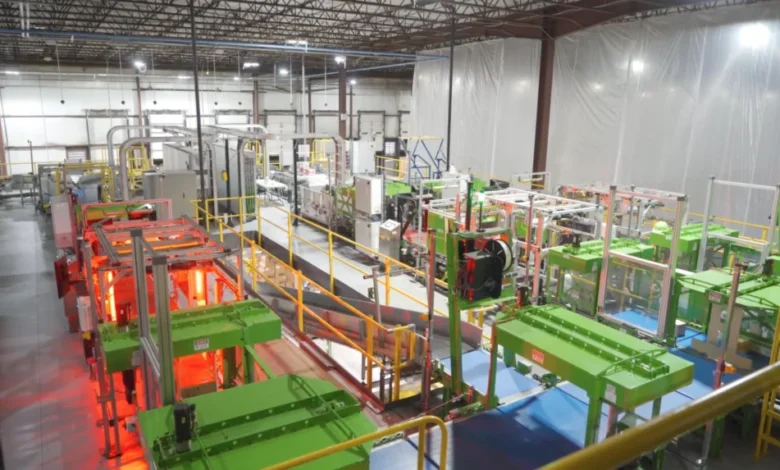
Walmart Inc. has announced a massive $6 billion expansion of its strategic partnership with robotics firm Symbotic Inc., a move that underscores the retail giant’s aggressive pursuit of end-to-end supply chain automation. This financial commitment, revealed on October 29, serves as a cornerstone of Walmart’s long-term strategy to optimize inventory management, accelerate order fulfillment, and mitigate rising operational costs. The expanded agreement will see the deployment of advanced robotics technology across 25 of Walmart’s U.S. regional distribution centers, effectively supercharging the retailer’s ability to manage complex upstream inventory and improve the physical flow of products from warehouses to storefronts and residential doorsteps.
The announcement follows a decade-long collaborative trajectory that has evolved from experimental pilot programs into a critical infrastructure pillar for the world’s largest retailer. By integrating Symbotic’s AI-driven software and high-speed robotic systems, Walmart is positioning itself to handle the growing demands of an omnichannel retail environment where consumers expect seamless transitions between online shopping, in-store pickup, and home delivery.
A Decade of Technological Integration: A Chronology
The relationship between Walmart and Symbotic did not emerge overnight; it is the culmination of years of iterative testing and operational integration.
- Early Stages (Circa 2014-2017): The partnership began with small-scale testing of automated solutions within a single facility. During this period, the focus was on proving that robotic picking and storage could match or exceed human efficiency without compromising inventory accuracy.
- The Scaling Phase (2018-2022): Following successful proof-of-concept trials, Walmart began integrating Symbotic’s platform into its regional distribution network. This era saw the introduction of proprietary systems like "BreakPack," which specializes in deconstructing bulk shipments into smaller units suitable for ecommerce orders.
- Deepening Ties (2023-2024): The relationship shifted from vendor-client to a strategic alliance. During this time, discussions began regarding deeper financial and operational alignment, leading to the recent acquisition-related investment news.
- The Present Expansion (2025 and Beyond): With the latest $6 billion commitment, the focus has shifted toward nationwide scale. The scope now includes research and development initiatives, such as the $125 million program dedicated to next-generation racking and process-flow technologies.
The Technological Edge: How Symbotic Empowers Walmart
At the heart of this expansion are two primary technological pillars: the BreakPack system and the SymMicro platform. The BreakPack solution is designed to handle the "last mile" of warehouse operations—the breakdown of pallets into individual products for retail replenishment or direct-to-consumer shipping. This is notoriously difficult to automate due to the variance in product sizes, shapes, and weights.
The SymMicro platform, meanwhile, is designed for the high-density requirements of micro-fulfillment centers. As Walmart pushes to turn its physical retail stores into fulfillment hubs, the ability to store more inventory in a smaller footprint has become an economic imperative. By utilizing vertical space more effectively and relying on autonomous mobile robots (AMRs) to navigate the floor, Walmart can reduce the "dwell time" of products within the supply chain.
According to industry analysts, the integration of these systems allows Walmart to realize significant gains in "inventory velocity." By automating the sorting process, the company can replenish store shelves faster, reducing out-of-stock events that plague many retailers during peak shopping seasons.
Official Perspectives and Strategic Intent
Rob Montgomery, executive vice president for Walmart U.S. supply chain operations, emphasized that the investment is ultimately about the customer experience. "At Walmart, we’re focused on bringing more items to more customers and members, faster than ever," Montgomery stated following the announcement. He noted that the company’s dual-focus on physical and digital supply chain infrastructure is designed to provide flexibility, allowing customers to choose their preferred shopping modality with the confidence that the back-end logistics will support it.
Rick Cohen, chairman and CEO of Symbotic, characterized the expanded agreement as a testament to the trust established over the last decade. "Our partnership with Walmart started with a single product over a decade ago, and now we offer a full end-to-end solution to help power Walmart’s growth across its supply chain for years to come," Cohen remarked.
Beyond the deployment of existing technology, the $125 million R&D commitment signals that both companies are looking toward the future of logistics. The development program is expected to yield innovations in "process flow" and "inventory management capabilities," potentially utilizing predictive AI to anticipate demand surges before they occur, allowing the robotics to pre-position inventory closer to the point of sale.
Market Implications and Competitive Analysis
Walmart’s aggressive investment in automation is not occurring in a vacuum. The retail sector is currently undergoing a massive shift as companies contend with rising labor costs and the volatility of global supply chains. By locking in a long-term partnership with Symbotic, Walmart is effectively insulating itself from some of the uncertainties of the labor market while simultaneously creating a significant "moat" around its logistics operations.
For competitors, the scale of this investment serves as a benchmark. As the No. 2 player in the Digital Commerce 360 Top 1000 Database, Walmart’s ability to optimize its logistics chain directly impacts its profit margins. Every cent saved in the supply chain translates into lower prices for consumers, which remains Walmart’s primary competitive advantage.
Furthermore, the integration of AI-driven commerce—where Walmart is currently ranked No. 37 in the joint Digital Commerce 360 and ReFiBuy AI Commerce Rankings—is increasingly dependent on the physical reality of warehouse automation. Without the ability to move products physically at the speed of digital data, even the most advanced AI algorithms would be rendered useless. The $6 billion investment ensures that Walmart’s physical capabilities keep pace with its digital ambitions.
Future-Proofing the Supply Chain
The implications of this deal extend beyond simple efficiency gains. As global trade routes face periodic disruptions, the ability to manage inventory upstream with high precision allows Walmart to react more nimbly to supply shocks. The new deployments across 25 regional distribution centers represent a massive increase in throughput capacity, positioning the retailer to handle higher volumes of ecommerce traffic without a linear increase in headcount.
Moreover, the automation of repetitive tasks—such as palletizing and depalletizing—improves workplace safety and allows human associates to focus on higher-value tasks, such as quality control, inventory management, and customer interaction. This shift in the labor model is expected to improve retention rates among warehouse staff, a critical factor in a tight labor market.
As the retail industry continues to consolidate around companies that can effectively leverage technology to scale, the Walmart-Symbotic alliance stands as a primary example of how legacy retailers can successfully transform into tech-forward logistics powerhouses. The next several years will be a testing ground for this massive deployment, as Walmart works to prove that a $6 billion investment can deliver the operational agility required to dominate the next era of global commerce.
While the scale of the investment is significant, the shared ambition between the two companies suggests that this is only the beginning. With the R&D pipeline now fully funded, the focus will soon shift to the next generation of robotic innovation, ensuring that the infrastructure installed today does not become obsolete in the face of tomorrow’s retail demands. As Walmart continues to monitor the impact of these deployments on its bottom line, the success or failure of this rollout will likely dictate the future path of automation for the entire retail industry.
Related posts: