Trump Administration Moves to Reshore Fertilizer Production and Reduce Foreign Reliance to Stabilize Domestic Agricultural Supply Chains

The United States government is undertaking a significant strategic pivot aimed at bolstering domestic fertilizer production, seeking to diminish the nation’s longstanding vulnerability to volatile international commodity markets. By funneling hundreds of millions of dollars into infrastructure projects through the Fertilizer Production Expansion Program (or FIELDS funding), the Trump administration is attempting to decentralize an industry currently defined by heavy corporate consolidation and a reliance on foreign imports. This initiative comes at a critical juncture for American agriculture, as farmers grapple with fluctuating input costs that directly impact the affordability and viability of the U.S. food supply.
The Strategic Imperative for Domestic Autonomy
While the United States remains the world’s fifth-largest producer of fertilizer, it is paradoxically one of the largest importers of specific nutrients, most notably potassium—often referred to as potash—and various nitrogen-based compounds. This reliance on external markets has historically left American producers exposed to geopolitical tensions, supply chain disruptions, and global price shocks.
Recent data underscores the scale of this dependency. As of October 2024, more than 25 million tons of fertilizer had entered the United States. Between April 2025 and March 2026, the U.S. imported approximately 8.7 million tons of potassium fertilizer alone, with a staggering 90% of that volume sourced from Canada. Simultaneously, the nation imported 6.1 million tons of nitrogen fertilizer, with Russia and Canada accounting for half of those shipments. These figures highlight a structural vulnerability: when trade routes are threatened or foreign export policies shift, American farm input costs become subject to external volatility.
Breaking the Monopoly: Addressing Market Consolidation
A core component of the administration’s rationale for this intervention is the intense concentration of the fertilizer industry. According to the United States Department of Agriculture (USDA), the market is heavily skewed, with a handful of firms wielding significant control over the domestic supply. Specifically, four companies control 77% of nitrogen fertilizer production capacity in North America. The concentration is even more pronounced in the production of other essential nutrients: two firms account for 90% of phosphate production, and another two control 90% of potash production.
Economists and agricultural policy experts argue that this level of consolidation limits competition, creating a "take it or leave it" pricing environment for farmers. The USDA estimates that by increasing domestic capacity through these newly funded projects, the industry could see nitrogen prices drop by approximately 4.4% and potash prices decline by 5.3% once the facilities reach full operational capacity. The initiative aims to support the production of nearly 1.1 million tons of annual domestic fertilizer, effectively diversifying the supply base and theoretically curbing the pricing power of the current oligopolies.
Chronology of the Initiative
The push toward domestic fertilizer independence has gained momentum over the last two fiscal years. Recognizing the danger of supply chain fragility exposed during global geopolitical instability, the administration accelerated the vetting process for the Fertilizer Production Expansion Program.
- Early 2024: Preliminary USDA assessments identify significant bottlenecks in fertilizer supply chains, specifically highlighting the lack of small-to-medium-scale modular production facilities.
- Mid-2024: Federal agencies finalize the selection process for the FIELDS funding, prioritizing projects that utilize innovative manufacturing technologies or recycled agricultural byproducts.
- October 2024: USDA releases updated import data confirming the sustained reliance on foreign potash and nitrogen, reinforcing the urgency of the funding announcements.
- Late 2024/Early 2025: Official rollout of the funding allocations for the eight selected companies, marking the beginning of the construction and expansion phase.
Profiles in Expansion: The Funded Projects
The USDA’s investment strategy focuses on a mix of technological innovation and facility expansion across several states. By spreading these projects geographically, the administration hopes to reduce transportation costs and ensure that rural farmers have easier access to necessary inputs.
TalusAG, headquartered in Austin, Texas, serves as a primary example of this modular strategy. With a $99.8 million allocation toward a $270.2 million project, the company is tasked with deploying 20 modular ammonia manufacturing units across seven states, including Nebraska, Illinois, and Kentucky. This decentralized model is intended to produce 130,000 tons of anhydrous ammonia annually, bringing production closer to the end-user.
Other significant allocations include:
- Intrepid Potash: Received $139 million to develop a $265 million facility near Carlsbad, New Mexico, targeting a capacity of 220,000 tons of potash and sulfate annually.
- PCI Nitrogen: Granted $100 million to expand its Texas and Oregon operations, aiming for 148,280 tons of urea and ammonium sulfate capacity.
- Agriculture Project Holdco: Secured $116.9 million for an innovative $360 million project in Kansas and Indiana that converts dairy manure into liquid ammonium nitrate, showcasing a move toward sustainable, circular-economy fertilizer production.
- Peace Valley, AdvanSix, Sul4r-Plus Illinois, and True Organic Products: These entities received varying levels of funding to modernize infrastructure, expand existing capacity, and incorporate agricultural byproducts into the supply chain.
Political Rhetoric and Public Reaction
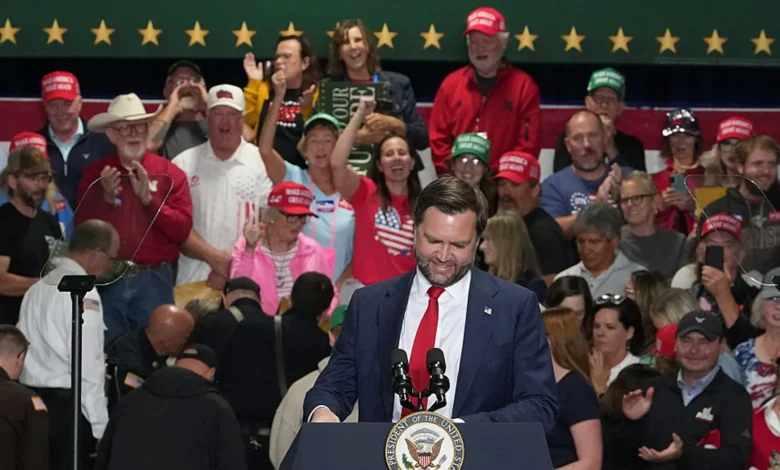
The initiative has drawn strong support from administration figures who emphasize a "homegrown" approach to national security. During a political rally in North Platte, Nebraska, officials underscored the strategic necessity of the move, stating, "I am sick of relying on everybody else to make our stuff and grow our food. We got to do it right here at home."
This sentiment resonates deeply with the American agricultural sector. Industry groups, such as the Fertilizer Institute, have long advocated for policies that promote domestic production, though they have historically cautioned against over-regulation. The current strategy, which emphasizes grants and public-private partnerships, appears to be an effort to incentivize the private sector to expand without the heavy-handed oversight that can sometimes stifle industrial growth.
Broader Economic and Global Implications
The move to reshore fertilizer production is not merely an agricultural policy; it is a defensive economic measure. As global populations continue to grow, the demand for high-yield crop production will necessitate a consistent and affordable supply of fertilizers. If the U.S. can stabilize its own input costs, it strengthens its position as a global food exporter.
However, the transition will not be without challenges. The capital-intensive nature of fertilizer manufacturing means that these projects will face significant hurdles regarding regulatory compliance, environmental permitting, and the integration of new technologies into legacy systems. Furthermore, the global fertilizer market is highly reactive; major global suppliers like Russia and Canada may adjust their own pricing strategies to maintain their market share, potentially creating a "price war" that could complicate the return on investment for the new U.S. facilities.
There is also the question of long-term sustainability. As the industry shifts toward utilizing agricultural byproducts—such as the manure-to-fertilizer processes proposed by Agriculture Project Holdco—the regulatory landscape regarding environmental runoff and emissions will remain a critical focal point for local communities and environmental advocacy groups.
Ultimately, the administration’s strategy represents a fundamental shift in how the United States views agricultural inputs. By treating fertilizer not just as a commodity, but as a critical component of national security, the government is signaling a long-term commitment to self-sufficiency. Whether these investments will succeed in breaking the grip of industry giants and shielding farmers from the turbulence of the global market remains to be seen, but the scale of the investment confirms that the era of relying on foreign supply chains for the backbone of American agriculture is under direct and deliberate challenge.
Related posts: