Geopolitical Shifts and Pending Trade Policy Changes
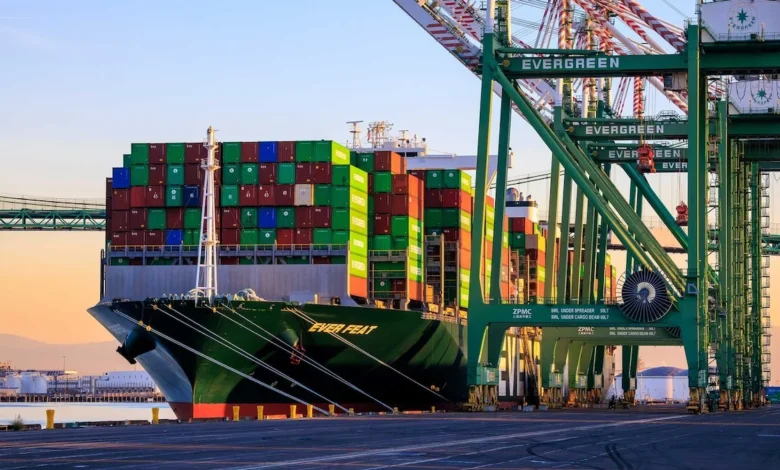
After months of stubbornly elevated pricing that strained supply chains and squeezed profit margins for retailers and manufacturers alike, container spot freight rates from Asia to the United States are finally showing signs of easing. According to the latest market data provided by SONAR contributor Freightos (NASDAQ: CRGO), spot pricing for forty-foot equivalent units (FEUs) traveling from Asia to the U.S. West Coast dipped 6% over a recent tracking week to settle at $7,985. Meanwhile, pricing for shipments bound for the U.S. East Coast held relatively flat, hovering around $9,854 per FEU.
Despite this recent downward trajectory, the respite may prove to be short-lived. Industry analysts warn that a combination of proactive capacity management by ocean carriers, looming geopolitical deadlines, and the impending surge in demand ahead of the Lunar New Year could quickly reverse these modest gains. Even with the recent slide, current trans-Pacific shipping costs remain roughly three times higher than they were during the same period last year, underscoring the persistent fragility of global maritime logistics.
Shifting Spot Rates and Regional Divergence
Recent daily tracking figures highlight the accelerating nature of the rate correction across major U.S. gateway ports. West Coast spot rates have slid further down to approximately $7,500 per FEU, marking their lowest price point since the end of August. On the East Coast, prices have experienced a comparable decline, falling to roughly $9,000 per FEU—levels not seen since July.
This cooling trend is not entirely unexpected following an unusually prolonged and robust peak shipping season. Trans-Pacific volumes remained anomalously strong through the autumn months, driven largely by shippers rushing to move cargo ahead of anticipated tariff increases and policy shifts. Furthermore, severe weather-driven port congestion and deliberate capacity management strategies by ocean carriers helped insulate freight rates from the typical post-summer demand drop-off.
However, as cargo volumes soften, carriers are actively stepping in to curb oversupply by implementing "blanked" (canceled) sailings. With pre-Lunar New Year cargo rushes only a few weeks away, logistics experts project that pricing floors will soon be reestablished, keeping container costs artificially high well into the new year.
Labor Stability at Major Gateways Averts Disruption
The fragile balance of West Coast port operations received a critical boost following a last-minute labor agreement reached on November 22. Port employers and watchmen belonging to the International Longshore and Warehouse Union (ILWU) Local 26 successfully averted what could have been a catastrophic disruption at the nation’s busiest maritime complex, the ports of Los Angeles and Long Beach.
While the tentative deal successfully prevents immediate strike action, industry stakeholders remain cautious. The agreement is considered strictly provisional until it undergoes full union ratification. In the interim, union members are continuing their daily operations under the terms of their recently expired contract while organizing the upcoming ratification vote. Maintaining labor harmony at these vital Southern California gateways is paramount, particularly as the supply chain braces for subsequent waves of seasonal cargo.
Geopolitical Realities: The Trump-Xi Summit and Trade Truce Dynamics
Macroeconomic and geopolitical factors continue to cast a long shadow over trans-Pacific trade routes. The recent bilateral summit between U.S. President Donald Trump and Chinese President Xi Jinping concluded with mutual rhetoric emphasizing stability and open communication in the world’s most critical bilateral trade relationship.
In the wake of the summit, Beijing has enacted several conciliatory measures. Most notably, Chinese authorities suspended certain critical-material export restrictions directed at the United States—a temporary reprieve slated to last until January. Despite these diplomatic gestures, both superpowers are actively preparing strategic policy options ahead of the high-stakes expiration of the current trade truce on January 10.
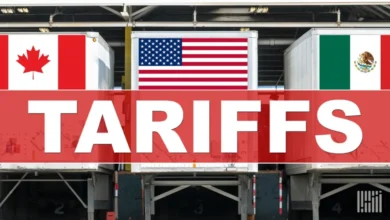
Compounding the uncertainty, the Trump administration has signaled aggressive new trade enforcement mechanisms. Plans are currently underway to levy an additional 20% tariff on a broad spectrum of goods imported from China. Simultaneously, the administration is eyeing hiked import duties on merchandise originating from the European Union, Japan, South Korea, Taiwan, and nine other major global trading partners. These prospective trade penalties are widely expected to be finalized following the release of a comprehensive federal investigation into global excess manufacturing capacity, with findings anticipated as early as next week.
International Pushback and Regulatory Timelines
The aggressive tariff proposals have already drawn sharp rebukes from several targeted nations, many of which have formally rejected accusations of market manipulation or industrial overcapacity. According to Freightos analysts, the implementation of these new tariffs may primarily serve to restore import duties to the baseline levels established under the International Emergency Economic Powers Act (IEEPA), which the U.S. and its core allies had previously negotiated last year. However, it remains a central concern among foreign trade ministers whether these measures will be interpreted as an escalation, potentially triggering retaliatory economic countermeasures.
Even if the administration moves forward with the proposed duties, procedural safeguards and regulatory requirements will introduce significant lag times. Standard administrative protocols dictate a mandatory public comment period followed by formal trade hearings, a process that typically spans a couple of months. For context, during the most recent Section 301 investigation concerning forced labor concerns, the Office of the United States Trade Representative (USTR) enacted formal tariffs approximately eight weeks after the public release of its investigative findings.
European and Mediterranean Shipping Trends
While trans-Pacific routes command the lion’s share of market attention, European and Mediterranean trade lanes are also experiencing noteworthy pricing fluctuations. Spot rates for voyages originating in Asia and terminating in North Europe dipped 1% last week to $3,374 per FEU. However, this dip was short-lived; ocean carriers quickly intervened by implementing general rate increases (GRIs), pushing pricing back up by roughly $200 to $3,500 per FEU, defying the traditional post-peak, pre-holiday market lull.
Meanwhile, the Asia-to-Mediterranean trade lane exhibited extreme volatility, with spot prices surging an impressive 20% to reach $5,162 per FEU. Daily tracking data indicates that rates have continued to climb by an additional $300, though market analysts caution that these elevated levels may face a near-term correction if regional demand softens.
Forwarding agents warn that as demand inevitably accelerates for the Lunar New Year, pre-existing vessel congestion across North European container terminals is poised to deteriorate further. Such bottlenecks would inject renewed upward pressure into freight rates, potentially forcing carriers to resume the practice of rolling cargo—delaying or forcibly shifting booked shipments to subsequent voyages due to lack of vessel capacity.
Broader Economic Implications for Importers and Consumers
The convergence of easing spot rates, looming labor vulnerabilities, and impending trade policy overhauls creates a uniquely complex operational environment for supply chain directors. While the recent relief in trans-Pacific freight pricing offers a welcome cushion for companies recovering from peak holiday expenditures, the underlying structural costs remain historically high.
Logistics executives must navigate a narrow window of opportunity. The convergence of anticipated blanked sailings, the seasonal surge tied to the Lunar New Year, and the ticking clock toward the January 10 trade truce expiration means that freight expenditures could easily pivot upward with little advance warning. Businesses dependent on trans-Pacific and Asia-Europe maritime corridors are advised to maintain flexible inventory strategies, closely monitor regulatory developments in Washington and Beijing, and prepare for continued cost volatility throughout the coming quarter.