Poundland enters administration as festive trading risks collide with supply chain volatility

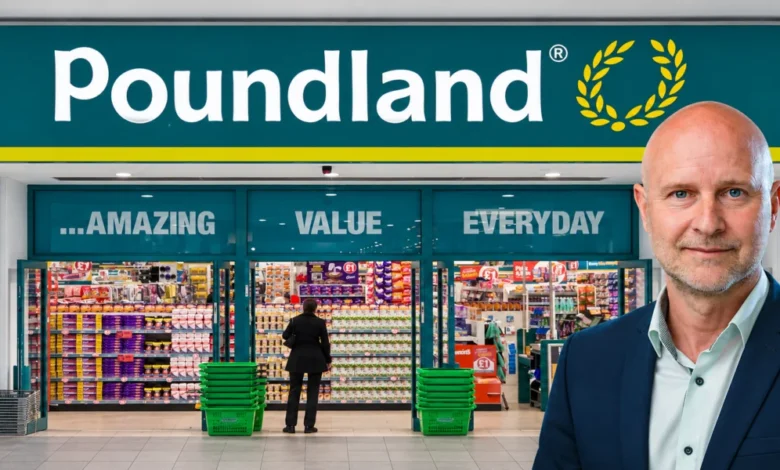
The collapse of Poundland into administration—occurring mere weeks before the critical Christmas trading window—represents one of the most high-profile retail failures in recent British history. The retailer, once the flagship of the UK’s discount sector, has succumbed to insurmountable financial pressures despite recent efforts to streamline operations and reduce overheads. As insolvency practitioners take the helm, the focus shifts to the immediate survival of the store estate, the stability of the supply chain, and the grim reality facing thousands of employees during the industry’s most vital quarter.
A Timeline of Decline and Structural Pressure
Poundland’s journey to administration did not happen overnight. The retailer’s financial health has been under intense scrutiny for the past 18 months, characterized by a complex interplay of debt, shifting consumer habits, and inflationary cost pressures.
In late 2023, the investment firm Gordon Brothers acquired the company for a nominal sum of £1, with the intent of stabilizing the balance sheet and executing a turnaround strategy. Over the subsequent 12 months, management reported significant operational successes, including the achievement of £100 million in cost savings. However, these efficiency gains proved insufficient to address the fundamental lack of working capital required to replenish stock effectively.
The chronology of the collapse accelerated in November, following unsuccessful negotiations with lenders to restructure the company’s debt. By late November, with the festive season looming, the inability to secure fresh credit lines rendered the business untenable. The decision to enter administration on November 25 marks the start of a complex legal and commercial process that will likely extend well into the new year.
The Operational Challenge: Keeping Doors Open
The immediate priority for administrators is the preservation of value. In the retail sector, inventory is the primary asset, and its value is inextricably linked to its liquidity. Maintaining store operations through the Christmas period is essential for generating the cash flow needed to pay creditors, but this objective is fraught with logistical hurdles.
Ben Wright, managing partner at consultancy Argon & Co, notes that the timing is unprecedented. "Right before Christmas in the retail world is usually about the biggest no-no," Wright observes. "The immediate task is to keep the lights on and the shelves stocked, but that relies entirely on the confidence of the supply chain."
If manufacturers and logistics providers lose confidence in the administrator’s ability to settle outstanding or future invoices, the flow of goods will cease. This would lead to rapid stock depletion, store closures, and the loss of the "seasonal" premium that defines December trading. Legal experts, including Katie James of Howes Percival, suggest that the public should not expect clarity on store closures or mass redundancies until early January, as administrators must balance the need for short-term revenue against the long-term goal of selling the business.
Supply Chain Contagion
The impact of Poundland’s administration extends far beyond its corporate headquarters. The retailer relies on a vast, multi-tiered supply chain, ranging from multinational manufacturers to smaller, niche wholesalers. For many of these partners, Poundland represents a significant portion of their annual turnover.
The administration creates an immediate "pay-or-stop" dilemma. Suppliers must decide whether to continue delivering goods without the guarantee of payment for previous invoices or to halt shipments and risk losing their place in the supply chain permanently. Smaller suppliers, operating on thin margins, are particularly vulnerable. The loss of a major account, combined with the potential for unpaid invoices to become "bad debt" in the insolvency process, could lead to a secondary wave of financial distress among the retailer’s support network.
While some larger entities may hold trade credit insurance, the administrative costs and the sheer scale of the disruption caused by the loss of Christmas volumes are difficult to offset. There is currently no government-backed financial support mechanism comparable to the schemes deployed during the COVID-19 pandemic, meaning the financial fallout will be absorbed entirely by the private sector.
The Paradox of the Discount Model
The collapse of Poundland is particularly confounding when viewed against the success of other value-led retailers. Competitors such as Home Bargains, B&M, and TK Maxx have continued to thrive, demonstrating that the consumer demand for discount, broad-assortment shopping remains robust.
Analysts point to three critical factors that differentiate these successful models from Poundland’s recent performance:
- Assortment Strategy: Successful competitors have cultivated a "treasure hunt" experience, similar to the "middle aisle" strategy employed by Lidl. This encourages repeat footfall regardless of specific purchasing intent.
- Buying Expertise: The ability to source goods at competitive price points while maintaining consistent availability is paramount. Poundland’s recent issues with inventory replenishment suggest a breakdown in this core competency.
- Operational Agility: Retailers in this space must be able to pivot quickly to consumer trends. Poundland’s reliance on historical price-point branding may have limited its flexibility in a highly inflationary environment.
The fact that Poundland struggled while its peers flourished suggests that its failure was not due to a lack of demand, but rather a failure of execution and capitalization. The business model, while sound in theory, lacked the structural agility required to compete in a market where operational efficiency is the thin line between profit and insolvency.
Future Outlook: A Potential "Yard Sale"
As the administration process moves forward, the likelihood of a single buyer acquiring Poundland as a going concern is being weighed against the prospect of a piecemeal sale. Industry experts suggest that the "yard sale" scenario—where the brand, the store estate, and the inventory are sold to different entities—is a distinct possibility.
A buyer looking to acquire parts of the business through an administration process would benefit from the "clean slate" provided by the insolvency, allowing them to cherry-pick profitable locations and shed historical liabilities. However, this would inevitably lead to a significant reduction in the number of high street stores, potentially leaving "retail deserts" in communities that rely on discount options for everyday essentials.
The broader implications for the British high street are significant. With hundreds of stores potentially at risk, local authorities and landlords face the prospect of increased vacancy rates in town centers that are already grappling with a transition away from traditional bricks-and-mortar retail. While the high street is not "dead," the loss of a major anchor tenant like Poundland accelerates the need for local economies to diversify their offerings to attract footfall.
Conclusion: A Lesson in Infrastructure
Poundland’s collapse serves as a stark reminder that even the most recognizable brand names are susceptible to the mechanics of modern finance. A strong brand and a loyal customer base are not substitutes for liquidity and supply chain stability.
As the administrators navigate the next few months, the focus will remain on mitigating the damage to the thousands of employees and the wider network of suppliers caught in the crossfire. Whatever the outcome—whether a phoenix-style emergence or a total liquidation—the demise of Poundland will be studied for years to come as a cautionary tale of how quickly a retail giant can unravel when the fundamentals of its operational infrastructure fail. The ultimate test will be whether the brand can be rehabilitated, or if it will be dismantled to serve the growth of more agile competitors in the discount sector. For now, the focus is squarely on the festive period, as the administrators attempt to navigate the most precarious four weeks in the retailer’s history.