The Silent Collapse: How China’s Bursted AI Bubble and Market Crash Threaten Xi Jinping’s Economic Vision

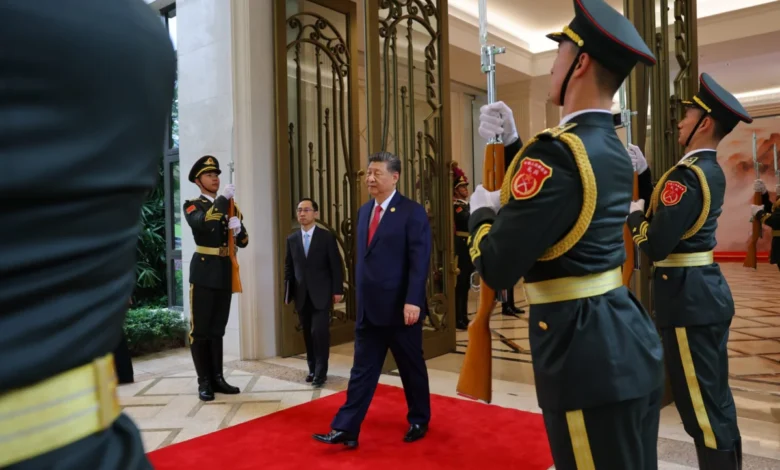
While Wall Street and American investors grapple with a punishing meltdown in domestic technology shares and the mounting skepticism surrounding the long-term viability of the artificial intelligence boom, a far more severe financial crisis has quietly materialized on the other side of the Pacific. According to a comprehensive market analysis published by Yardeni Research, the speculative bubble in Chinese equities has already burst, leaving behind a deepening market crash that poses a direct and escalating threat to the broader domestic economy and the overarching political authority of President Xi Jinping.
The magnitude of the downturn in Asian markets eclipses the recent turbulence felt in Western financial centers. China’s premier technology-focused benchmark, the STAR 50 index, has suffered a staggering 44% collapse from its peak achieved earlier this summer. In comparison, the technology-heavy U.S. Nasdaq composite has retraced roughly 18% from its all-time high, even after American equities endured their most punishing trading week since the preliminary onset of the global COVID-19 pandemic. This severe divergence highlights systemic vulnerabilities within the Chinese financial ecosystem, complicating Beijing’s grand strategy to restructure its economy away from an over-reliance on a defunct real estate model and toward high-tech innovation.
The Broken Blueprint: Replacing Property with Equities
For decades, the engine of Chinese household wealth generation was inextricably linked to the bricks and mortar of the real estate sector. Historically, property accounted for approximately 70% of total household wealth in China, serving as the primary repository for family savings, retirement planning, and generational investment. However, the catastrophic unraveling of the Chinese housing market—highlighted by the high-profile defaults of massive developers like Evergrande and Country Garden—has fundamentally shattered this paradigm.
The ensuing property crash has exerted a persistent, deflationary drag on consumer demand and domestic confidence. Business investment has similarly plummeted; official macroeconomic data released for October revealed that property investment sank by nearly 22% year-over-year. With the domestic consumer remaining deeply risk-averse and industrial demand stagnant, Beijing has increasingly turned outward, relying on a tidal wave of subsidized, cheap exports to maintain artificial GDP growth while simultaneously deploying the financial muscle of the state—often referred to by market participants as the "national team" of state-backed banks—to directly intervene in and prop up the domestic stock market.
Despite these aggressive state interventions, Chinese equities have experienced a brutal sell-off throughout the year. Financial analysts at Yardeni Research point to a confluence of structural pressures driving the collapse, including cutthroat domestic price wars, heightened corporate tax burdens, escalating energy costs, aggressive international tariffs, and the looming threat that major foreign trading partners will implement strict trade barriers to block ultra-cheap Chinese exports from flooding their domestic markets.
Furthermore, President Xi faces a critical strategic dilemma regarding the financing of the nation’s ambitious artificial intelligence sector. "To keep AI funding flowing, Xi needs a buoyant stock market," Yardeni noted in their briefing. "Otherwise, AI risks being folded into the state-owned enterprise (SOE) universe that his team has pledged to shrink since 2013, further crowding out the private sector."
A Legacy of Skepticism and Financial PTSD
The reluctance of Chinese retail investors to step into the breach and support the plunging market is rooted in a history of regulatory crackdowns and historical precedent. In late 2020, Beijing initiated a sweeping, highly publicized regulatory crackdown across the nation’s most prominent technology conglomerates, wiping out billions of dollars in market capitalization and signaling to investors that political ideology and state control would consistently supersede shareholder value.
Compounding this structural hesitancy is the persistent perception among ordinary citizens that the Chinese stock market functions less like a transparent capitalist exchange and more like a rigged casino designed to favor politically connected insiders. This sentiment is underscored by a sobering statistical reality: despite China’s nominal Gross Domestic Product exploding nearly sixfold over the past two decades, the benchmark Shanghai Composite Index remains stubbornly trapped well below its historic peak achieved in October 2007.
Consequently, a significant portion of the Chinese populace suffers from what financial analysts describe as "financial PTSD." Repeated, abrupt market busts—most notably the catastrophic summer crash of 2015 that necessitated unprecedented, heavy-handed state intervention and currency devaluation—have left retail investors deeply skittish. While mom-and-pop investors still account for the vast majority of trading volume in Chinese equities, their participation is increasingly characterized by high-stakes speculation and short-term gambling rather than long-term capital accumulation for retirement.
Official Alarm and Emergency Stabilization Measures
The severity of the current market downturn has not gone unnoticed at the highest levels of the Chinese Communist Party. Recognizing the profound political and economic stakes, Premier Li Qiang convened a critical State Council executive meeting earlier this month, explicitly declaring that the stabilization of the nation’s capital markets constitutes the absolute top priority for the remainder of the fiscal year.
In direct response to the directives issued by the executive council, domestic securities regulators moved swiftly to implement aggressive supportive measures. Authorities sharply eased regulatory requirements governing corporate share buybacks—a corporate finance tool historically underutilized in China that helps artificially inflate stock prices. Simultaneously, regulators actively discouraged initial public offerings (IPOs) and large-scale secondary share sales to prevent further stock dilution, which traditionally triggers cascading sell-offs in fragile market conditions.
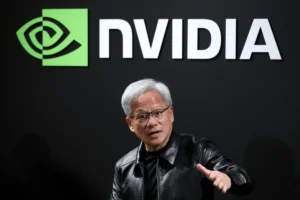
However, these domestic maneuvers unfold against a backdrop of escalating geopolitical friction. A recent high-profile intelligence and security scandal involving Nvidia and the access points to advanced U.S. semiconductors has introduced an entirely new category of risk to China’s long-term artificial intelligence ambitions. The subsequent political backlash in Washington regarding the advanced computing capacity that had previously leaked or been funneled into the Chinese market has prompted the Trump administration to formulate and enforce stringent, broad-reaching technology restrictions.
Geopolitical Headwinds and the Global Tech Race
The tightening technological chokehold imposed by Western governments threatens to severely handicap China’s technological trajectory. Analysts at Capital Economics outlined the gravity of the situation in a recent research note, emphasizing that "by targeting both indirect chip shipments to China and its access to overseas computing power, the new controls threaten to slow the catch-up of China’s leading AI models and to slow China’s AI rollout."
This international pressure compounds domestic economic woes, creating a multi-front crisis for Beijing. China undoubtedly retains its status as a global powerhouse in artificial intelligence research, boasting millions of highly trained engineering graduates and immense state-directed capital reserves capable of funding massive semiconductor fabrication facilities and data centers. Yet, the foundational bottleneck is no longer merely technological or physical; it is structural and psychological.
Market strategists warn that the ultimate success of Xi Jinping’s economic transformation hinges entirely on bridging the profound trust deficit between the state and the citizenry. "Yet this is a moment of real danger for Xi," Yardeni cautioned in their market assessment. "A bursting AI bubble would not merely erase wealth or dent China’s technological prestige. It would weaken Beijing’s attempt to replace a broken property model with a stock-market-led one."
Ultimately, the grand ambition of establishing a functional, dynamic equivalent to Wall Street in Beijing faces an existential test. As analysts note, China possesses the institutional capability to construct world-class neural networks, train elite researchers, and allocate billions of dollars toward sovereign silicon manufacturing. However, until ordinary Chinese households are convinced that the trading floors of Shanghai and Shenzhen are genuine engines of wealth creation rather than politically manipulated houses of chance, President Xi’s vision of a modern, market-driven financial superpower may remain an unrealized ambition.