The Rise and Fall of the ShinyHunters Franchise: From Teenager to FBI Informant

The detention of a teenage cybercriminal in Amman, Jordan, marks a pivotal shift in the ongoing investigation into the notorious hacking collective known as ShinyHunters. Identified as Saif Al-din Khader, the suspect—who operated under the alias "Rey"—is reportedly cooperating with the Federal Bureau of Investigation (FBI). This cooperation follows his apprehension by Jordanian authorities, a development that occurred while the group was actively attempting to extort a subsidiary of the aerospace giant Boeing. The arrest represents a significant blow to a criminal enterprise that has spent years terrorizing global corporations, government agencies, and healthcare providers through sophisticated data theft and high-pressure extortion tactics.
A Chronology of Escalating Cyber Aggression
The trajectory of the ShinyHunters group has been marked by a transition from a centralized hacking collective to a fragmented, franchise-like organization. Initially emerging around 2019, the group gained notoriety for breaching high-profile companies and leaking massive datasets. By 2025, however, the original core members—many of whom were French nationals—had largely been neutralized by international law enforcement efforts.
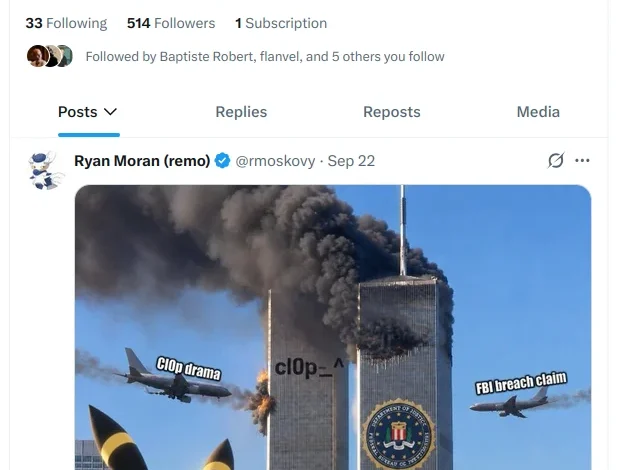
In the vacuum left by the original members, opportunistic actors, including Khader, co-opted the ShinyHunters name to lend credibility to their own smaller-scale extortion efforts. Khader’s activity surged in late 2025 and reached a crescendo in mid-2026. On September 15, 2026, Dutch police executed a dramatic raid in Amsterdam, arresting 24-year-old Pepijn van der Stap. Following this arrest, Khader attempted to consolidate control over the brand, even going as far as to publicly taunt the FBI and the notorious ransomware group Cl0p via social media. His attempt to frame Van der Stap for his own activities by using the Dutchman’s former handle, "Umbreon," ultimately failed to divert the attention of federal investigators.

Technical Exploitation and the PeopleSoft Vulnerability
The group’s recent wave of attacks relied heavily on the exploitation of CVE-2026-35273, a critical vulnerability within Oracle’s PeopleSoft software-as-a-service (SaaS) platform. This platform is ubiquitous in the corporate world, used extensively for human resources, payroll, and recruitment management.
Beginning in June 2026, ShinyHunters utilized this zero-day exploit to gain unauthorized access to dozens of sensitive systems across various sectors, including education, healthcare, and government. Despite swift remediation efforts by Oracle and the issuance of web application firewall (WAF) rules by Mandiant, the attackers demonstrated agility. They successfully bypassed these security measures using URL-encoding techniques, allowing them to continue their data harvesting operations. A joint report by Mandiant and the Google Threat Intelligence Group (GTIG) in late September confirmed that the group had successfully compromised dozens of organizations, resulting in the theft of massive volumes of PII (Personally Identifiable Information).
The Boeing and Jeppesen ForeFlight Extortion
The scope of Khader’s operations reached a critical threshold when he targeted Jeppesen ForeFlight, a navigation and digital aviation data provider previously divested by Boeing. The FBI’s investigation gained significant momentum when it was discovered that the stolen data included information that could potentially impact operational safety and security within the aerospace sector.
Boeing, in an official statement, acknowledged the extortion attempt, clarifying that the incident involved a former subsidiary, Jeppesen ForeFlight, which had been sold to private equity firm Thoma Bravo for $10.55 billion in November 2025. While Jeppesen ForeFlight maintains that there was no impact on their core operations or product integrity, the attempt highlights the extreme risks posed by modern extortion groups that no longer limit themselves to simple data theft, but rather target the operational backbone of critical industries.

The Human Element and Internal Complications
The investigation into Khader has unearthed a complex web of personal and digital associations. Evidence recovered from a compromised family computer in Jordan suggests that Khader’s father, an employee of Royal Jordanian Airlines, had his credentials harvested by password-stealing malware. The connection between the son’s criminal activity and the father’s employment at an airline—which utilizes Boeing aircraft—added a layer of irony and urgency to the case.
Furthermore, the "Rey" persona was not operating in a vacuum. He was actively monitored by other actors in the cybercrime underground. A Telegram-based collective known as "The Battle" engaged in a persistent campaign of doxing and harassment against Khader, accusing him of being an amateur who was "larping" as a member of the original, more sophisticated ShinyHunters group. These reports suggest that Khader had established a decentralized network, acting as a broker who allowed smaller groups to use the ShinyHunters name in exchange for a 25% to 30% cut of any successful ransom payments.
Broader Implications for Cybersecurity
The arrest of Khader and the ongoing legal proceedings against Van der Stap in the Netherlands illustrate the profound shift in how cybercrime is organized. The "franchise model" of ransomware and extortion, where brand names like ShinyHunters or Lapsus$ are bought, sold, and repurposed, makes it increasingly difficult for law enforcement to track individual perpetrators.
The fallout from these attacks has been severe. The FBI’s own recruitment portal was compromised, leading to the exposure of sensitive records belonging to over 5,000 personnel, including medical and psychiatric evaluations. This failure, attributed in part to a contractor at Accenture who did not apply necessary security patches, resulted in the termination of that contract and a broader re-evaluation of third-party security protocols for government agencies.

Analysis of the "Reformed" Hacker Narrative
The case of Pepijn van der Stap, who had been lauded as a "reformed" hacker turned security researcher, serves as a cautionary tale. His subsequent arrest on charges of allegedly orchestrating contract murders—while purportedly employed by the security firm Neo Security—has sparked a fierce debate regarding the ethics of hiring former cybercriminals.
The Dutch legal proceedings against Van der Stap, combined with the apprehension of Khader, suggest that the "reformed hacker" narrative is often a veneer for ongoing illicit activity. The professional cybersecurity community is now facing pressure to implement more stringent background checks and long-term monitoring for individuals transitioning from the black hat to the white hat sector.
Conclusion: A Fragile Victory
The neutralization of the "Rey" persona and the disruption of the ShinyHunters brand marks a tactical success for the FBI and international partners. However, the ease with which individuals like Khader were able to hijack a defunct criminal brand and weaponize it against global infrastructure underscores a persistent systemic vulnerability.
As the digital landscape continues to rely on legacy SaaS platforms like PeopleSoft, the ability of relatively low-level actors to cause high-level damage remains a significant threat. The collaboration of these arrested individuals with law enforcement may provide short-term intelligence, but the underlying economic incentives for cyber-extortion remain largely intact. For organizations, the lesson remains clear: the era of relying on brand recognition to avoid targeting is over. Security now requires a granular focus on patch management, rigorous third-party auditing, and a deep skepticism of individuals who claim to have left their criminal pasts behind without robust, verifiable proof of rehabilitation. The "ShinyHunters" brand may have been burned, but the actors who mimic its methods remain a clear and present danger to the global digital economy.
Related posts: