The Emergence of Tangential Filmmaking and the AI Challenge to Traditional Hollywood Spectacle

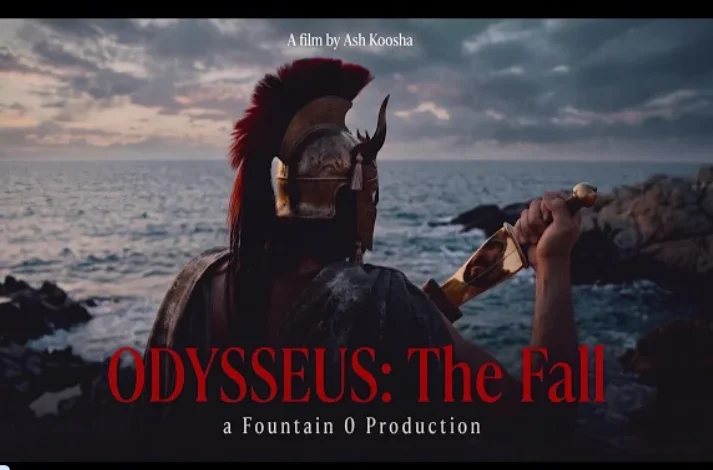
The announcement of a 135-minute feature film titled Odysseus: The Fall, generated entirely through artificial intelligence, has sent shockwaves through the global film industry, igniting a fierce debate over the future of cinematic storytelling and the preservation of traditional filmmaking. Directed by Ash Koosha, an Iranian-born, British-raised engineer and multidisciplinary artist, the project arrives at a moment of heightened tension in Hollywood. The film is a direct, albeit low-budget, reimagining of Homer’s The Odyssey—the same source material currently being adapted by Christopher Nolan for a $250 million blockbuster slated for release in the summer of 2026. This juxtaposition between a multi-million-dollar analogue epic and a project produced for a few thousand dollars without a physical set or human actors represents a pivotal inflection point in the evolution of media.
The Collision of Two Cinematic Philosophies
The controversy surrounding Odysseus: The Fall is rooted in more than just a shared subject matter; it highlights a fundamental divergence in how cinema is defined in the 21st century. On one side stands Christopher Nolan, a staunch advocate for the physical medium of film, practical effects, and the communal experience of the theater. Nolan’s upcoming Odyssey project, featuring a star-studded cast including Matt Damon, represents the pinnacle of "Old World" cinema—a high-stakes, capital-intensive endeavor that relies on the star power of actors and the technical mastery of thousands of crew members.
In contrast, Ash Koosha’s project is the product of generative AI tools, synthesized by a small team under the newly formed production banner Fountain 0. While Nolan’s production budget is estimated at a quarter of a billion dollars, Koosha’s film has been produced for a fraction of a percent of that cost. The backlash against Koosha has been swift, with critics accusing the filmmaker of "provocation" and "opportunism." However, Koosha maintains that his intention is not to compete with Nolan but to exist alongside him in what he describes as a "New World" of filmmaking.
The tension is further exacerbated by recent public disagreements between Nolan and his lead actor, Matt Damon. During the promotional cycle for their collaborations, Damon suggested that the era of large-scale, analogue filmmaking might be nearing its end, stating, "I knew that this was the last chance I was going to have to do something like this." Nolan responded by calling Damon’s outlook "defeatist," asserting that the traditional model of cinema remains resilient. Koosha’s AI-generated Odysseus effectively serves as a real-time test case for Damon’s prediction, threatening to disrupt the very industry Nolan seeks to protect.
A Chronology of Disruption: From Tehran to Troy
The path to Odysseus: The Fall began not with Greek mythology, but with contemporary political struggle. In June 2024, Ash Koosha debuted Dreams of Violet at the Tribeca Film Festival. The film utilized AI to depict the recent Iranian democracy protests, a subject Koosha could not have filmed on location due to safety concerns and government restrictions. At the time, the use of AI was largely viewed as a humanitarian necessity—a way to tell a story that would otherwise be impossible to capture.
The reception of Dreams of Violet was relatively sympathetic, as the technology served as a bridge for a marginalized voice. However, the shift toward The Odyssey has changed the narrative. By moving into the realm of high-fantasy and classical adaptation—territory usually reserved for major studios—Koosha has moved from "necessity-based" AI use to "choice-based" AI disruption.
Timeline of Key Events:
- June 2024: Dreams of Violet premieres at Tribeca, establishing Koosha as a pioneer in AI-assisted narrative features.
- Early 2025: Reports surface of Christopher Nolan’s $250 million Odyssey adaptation, starring Matt Damon.
- Mid-2025: Koosha announces Odysseus: The Fall, a 135-minute AI-generated feature, sparking industry-wide debate.
- Late Summer 2025: The scheduled release window for Odysseus: The Fall, strategically delayed by Koosha to avoid "overloading" the audience and to allow for a clearer comparison with traditional media.
Defining Tangential Filmmaking
At the heart of Koosha’s strategy is a concept he calls "tangential filmmaking." This philosophy posits that AI does not necessarily replace the "main" cinematic event but offers a parallel, discourse-driven alternative. Koosha likens the current state of film to the early days of the internet and the rise of blogging. Just as Substacks and independent blogs allowed individuals to provide commentary and alternative perspectives to major news outlets, AI allows independent creators to offer "visual opinions" on major cultural narratives.
"Before these AI tools, if I had a theory about Odysseus, I could write a Substack about him," Koosha explained in a recent interview. "Now, I can paint my opinion with images and sound and light."
This approach suggests a future where every major studio release is accompanied by dozens of "tangential" AI films produced by independent creators, each offering a different thematic focus, aesthetic style, or cultural perspective. For Koosha, whose background as an Iranian immigrant informs his view of Odysseus as a displaced figure rather than a traditional hero, AI provides a platform to explore nuances that a $250 million commercial epic might overlook in favor of broad-market appeal.
Economic and Technical Data: The Scale of Change
The economic implications of Koosha’s work are profound. The traditional Hollywood model is built on a high-barrier-to-entry system where revenue concentration is essential to offset massive production and marketing costs.
Supporting Data and Industry Trends:
- Production Cost Disparity: A traditional tentpole film like Nolan’s Odyssey costs approximately $2,000 to $5,000 per second of screen time. Generative AI models currently allow for the production of high-fidelity video at a cost of less than $1 per second, a figure that continues to drop as processing power increases.
- Labor Dynamics: The 2023 SAG-AFTRA and WGA strikes were largely driven by fears of AI displacement. While Koosha’s project uses no human actors, his producer, Tom Rogers (founder of CNBC), argues that this will actually increase the value of "real" human performance. He suggests that as "synthetic" content becomes ubiquitous, the premium on live theater and physical filmmaking will rise.
- Speed of Content: Traditional feature films require 2 to 5 years from conception to release. Koosha’s team suggests that AI-driven features can be produced in months, allowing cinema to respond to global news and cultural trends with the speed of journalism.
Industry Reactions and Broader Implications
The reaction from the filmmaking community has been polarized. While some see Koosha as a "provocateur" threatening the livelihoods of craftspeople, others see him as a democratizing force. Tom Rogers, Koosha’s producer and collaborator at Fountain 0, emphasizes that their goal is to showcase that AI filmmaking is not merely "slop"—a derogatory term used for low-quality, automated content—but a legitimate medium for high-art.
Critics, however, raise significant concerns regarding the training data used by AI models. Most generative video tools are trained on vast datasets of existing films, many of which are copyrighted. While The Odyssey itself is in the public domain, the visual styles and "cinematic language" synthesized by the AI are often derived from the work of living directors and cinematographers. This raises ethical and legal questions that have yet to be fully resolved in the courts.
Furthermore, the "actor-less" nature of Odysseus: The Fall presents a existential challenge to the Screen Actors Guild. If a 135-minute movie can hold an audience’s attention without a single human performance, the leverage of movie stars in contract negotiations may be significantly diminished. Rogers counters this by suggesting that AI and human-led cinema will coexist, much like photography and painting.
The Future of the Motion Picture
As the industry looks toward the 2026 release of Nolan’s Odyssey, the presence of Koosha’s Odysseus: The Fall serves as a persistent reminder of the shifting landscape. The "Summer of Our Damon-ian Lord," as some have dubbed the upcoming blockbuster season, will be the first major test of whether high-budget analogue filmmaking can maintain its dominance in an era of infinite, low-cost digital creativity.
Ash and Pooya Koosha, along with Tom Rogers, are positioned as the vanguard of this transition. By choosing to delay the release of their film until late summer, they are attempting to foster a "clean" comparison between the two methods of creation. Their vision is one of a "broad and democratic" cinema where the ability to tell a story is no longer tethered to the ability to raise hundreds of millions of dollars.
Whether Odysseus: The Fall is remembered as a gimmick or the first masterpiece of a new era remains to be seen. However, the discourse it has triggered confirms one reality: the barrier to entry in Hollywood has been breached, and the definition of a "filmmaker" is being rewritten in real-time by algorithms and engineers. In this new world, the epic journey of Odysseus is no longer just a story of a hero returning home; it is a metaphor for an industry navigating the uncharted and often turbulent waters of technological revolution.