The Continuous Evolution of Agentic AI: Post-Training as the Engine of Intelligence Per Dollar

The landscape of artificial intelligence is undergoing a profound transformation, moving beyond static models to dynamic, adaptive agents that learn and evolve in real-time. This shift, akin to the rigorous training regimen of a professional athlete, hinges on a critical, often overlooked phase: continuous post-training. Unlike traditional AI models that undergo a one-time refinement after initial data training, agentic AI demands an ongoing process of adaptation, driven by an ever-changing operational environment, the emergence of novel challenges, and the constant evolution of available tools. This continuous refinement is emerging as the central workload of the agentic era, fundamentally reshaping compute patterns and becoming the primary driver of intelligence per dollar.
At its core, agentic AI operates not by simply answering a prompt, but by being assigned a goal and then actively adapting its strategies and actions as its environment shifts. This necessitates a sophisticated internal process of planning, tool utilization, and problem-solving, even when encountering unexpected obstacles mid-execution. This inherent need for continuous adaptation means that the post-training phase, once considered a final polish, has become an ongoing cycle. The digital ecosystems in which these agents operate are in constant flux; the software libraries they rely on can be updated weekly, unforeseen edge cases surface in real-world deployments that were never accounted for in training datasets, and each new integration introduces unique codebases, policy frameworks, and environmental parameters.
This dynamic reality compels a feedback loop where problems encountered during production are systematically fed back into the post-training process. The resulting increase in compute footprint isn’t due to larger individual training runs, but rather the relentless nature of these continuous cycles. This marks a significant departure from previous AI paradigms, establishing post-training as the linchpin of agentic intelligence and the most impactful factor in achieving efficiency and cost-effectiveness. The ultimate objective of this intensified post-training is to maximize intelligence per dollar by optimizing the output of every computational step within this perpetual learning cycle. The forward pass, which represents inference – the AI model performing its tasks – is measured by its cost per token. Consequently, any enhancement in cost-per-token efficiency directly translates into a proportional increase in intelligence per dollar.
Demystifying Agentic Post-Training: The Crucible of Intelligence
The distinction between pre-training and post-training is crucial to understanding the development of truly intelligent AI. Pre-training, often involving vast datasets, imbues models with fluency and the ability to predict the next token in a sequence. However, this process alone does not confer genuine intelligence. It is in the post-training phase that models acquire the critical skills necessary for complex problem-solving: the ability to write code, devise multi-step plans, effectively utilize external tools, and, perhaps most importantly, recover gracefully from errors. Inference, the stage where the model is deployed and performs its functions, is then measured by its operational cost, typically expressed as cost per token.
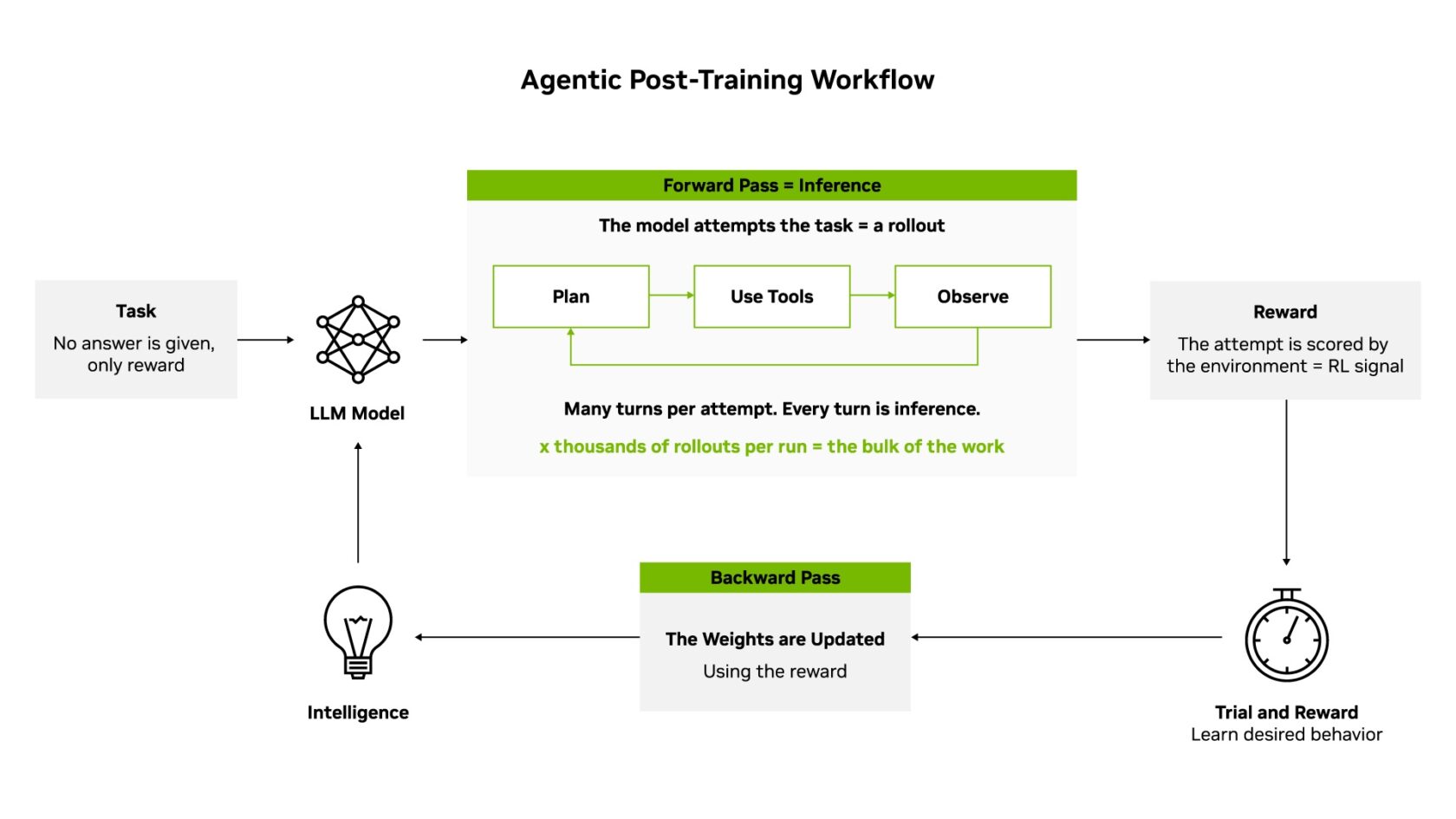
Since there is no single "correct" answer to memorize in post-training, models learn through a process driven by rewards, often employing reinforcement learning (RL) techniques. When presented with a task, the agent undertakes a forward pass, analogous to its operational inference work. This attempt is then evaluated, and the feedback—the reward or penalty—is used to update the model’s internal parameters, a process known as the backward pass. Over millions of such iterative attempts, the model’s intelligence progressively sharpens.
This iterative learning loop is computationally intensive. Scaling it to a production level presents significant orchestration challenges: managing thousands of parallel environments generating diverse "rollouts" (attempts), meticulously verifying rewards, and efficiently updating model weights, all while ensuring maximum utilization of computational accelerators. NVIDIA’s NeMo open libraries, specifically NeMo Gym for crafting training environments and NeMo RL for distributed post-training, are instrumental in transforming this complex research endeavor into a standardized, repeatable infrastructure. This enables organizations to move beyond bespoke, experimental code to robust, scalable AI development pipelines.
The Interplay Between Intelligence per Dollar and Cost per Token
In the economic calculus of AI deployment, inference serves as the revenue-generating engine, while post-training acts as the multiplier. The more capable and intelligent a model becomes through rigorous post-training, the greater the value derived from each token it processes. The metric of cost per token quantifies the all-in expense associated with delivering a million tokens, representing the operational efficiency of the "inference factory." Intelligence per dollar, however, operates at a higher strategic level, addressing the fundamental question of the cost associated with building and maintaining a model that is not only capable but also remains so as its operational context evolves.
These two metrics are not mutually exclusive but are intrinsically linked and nested. Advancements in AI infrastructure that lead to a reduction in cost per token also contribute to lowering the cost of developing each unit of intelligence embedded within the model. Conversely, every increment of intelligence gained through effective post-training enhances the value proposition of the tokens served by the inference factory. In essence, cost per token measures the operational yield, while intelligence per dollar assesses the return on investment in a model’s cognitive capabilities and its sustained relevance.
Strategic Pillars of Agentic AI Advancement: NVIDIA’s Role
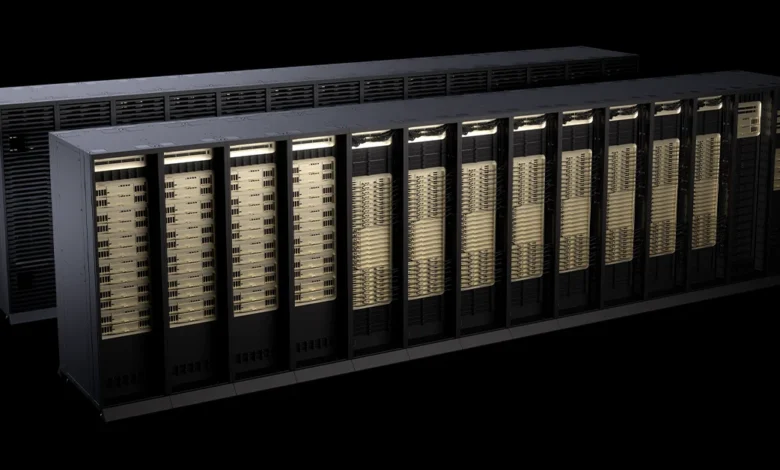
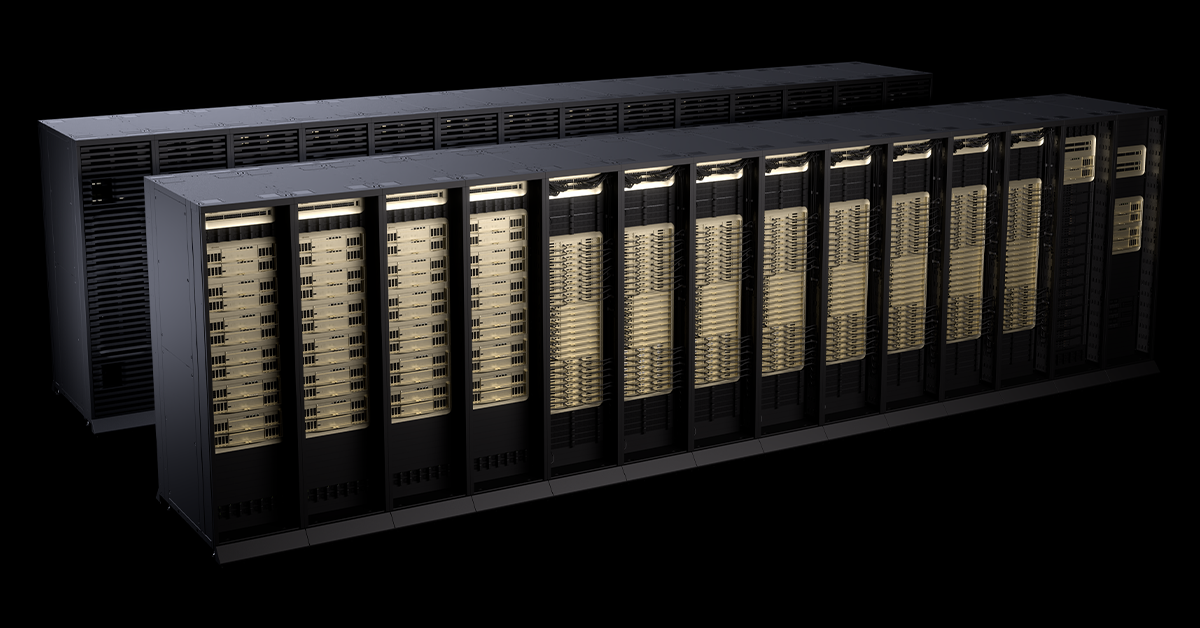
The computational demands of continuous post-training for agentic AI necessitate robust and scalable infrastructure. NVIDIA’s Blackwell platform, for instance, aims to reduce the cost per training run, making the continuous post-training cycles required by the agentic era economically feasible. The intelligence gained through these cycles is then realized across every token processed during inference. Extending this trajectory, the NVIDIA Vera Rubin platform is designed to train the largest AI models with significantly reduced GPU requirements, reportedly one-fourth that of the Blackwell generation. This platform has been meticulously engineered from the ground up to maximize intelligence per dollar specifically for the demanding workloads of agentic post-training, facilitating more extensive rollouts per run, a greater number of concurrent environments, and uninterrupted post-training cycles.
The Nemotron 3 Ultra, an open-weight, 550-billion-parameter mixture-of-experts (MoE) model, exemplifies the tangible results of these advancements. It offers verifiable benchmarks and a transparent post-training methodology executed on NeMo RL. Notably, Nemotron 3 Ultra achieved a 71.7% score on the SWE-bench benchmark, a standard measure of real-world coding capabilities. This means it successfully generated working fixes for approximately seven out of every ten real software bugs sourced from open-source projects, with each fix rigorously validated against the project’s own testing protocols. This level of performance underscores the efficacy of advanced post-training in equipping AI models with practical, problem-solving skills.
Real-World Implementations: Accelerating Intelligence
Several industry players are leveraging these evolving AI infrastructure and methodologies to drive innovation. Prime Intellect’s Lab, for example, is continuously post-training frontier open models on NVIDIA Blackwell and employing NVIDIA Dynamo for inference orchestration. With the advent of Vera Rubin, Prime Intellect plans to expand its reinforcement learning environments, increase the volume of rollouts generated per run, and significantly shorten the iteration loops between training and inference. This strategic approach is designed to maximize intelligence per dollar for their business clients.

Prime Intellect has also optimized its sandbox infrastructure to integrate with NVIDIA Vera CPUs, achieving low-latency and energy-efficient reinforcement learning. Their integration of open-source tools and models, including NVIDIA Nemotron and NVIDIA NeMo Gym, into their software stack has yielded compelling performance metrics. When comparing realistic RL sandbox workloads against alternative x86 architectures, Prime Intellect reported that Vera CPUs deliver, on average, a 30% increase in throughput per CPU, highlighting the efficiency gains of specialized hardware for AI workloads.
Perplexity AI’s approach to RL post-training is characterized by its asynchronous execution across hundreds of NVIDIA GPUs. Their system features an RDMA-based weight transfer engine capable of synchronizing trillion-parameter models in under two seconds between training and inference compute nodes. The resulting post-trained Qwen3 235B models are then efficiently served on NVIDIA GB200 NVL72 systems. This demonstrates a sophisticated pipeline for rapid deployment of highly capable, continuously refined models.
Together AI offers post-training as a comprehensive service, encompassing supervised fine-tuning, reinforcement learning, and direct preference optimization. This service is accessible through a feature-rich API and SDK, supporting the full spectrum of post-training capabilities on their AI Native Cloud platform. Having already operated on NVIDIA’s platform and optimized kernel libraries, they are poised to leverage the capabilities of the Vera Rubin platform to further enhance their offerings.
The collective impact of these advancements signifies a paradigm shift in AI development. The focus is moving from building static, monolithic models to cultivating dynamic, adaptive agents that continuously improve through persistent learning. This evolution, fueled by specialized infrastructure and refined methodologies like agentic post-training, promises to unlock new levels of AI performance and efficiency, driving greater value and intelligence per dollar across a widening array of applications. As AI systems become more integrated into critical infrastructure and decision-making processes, the ability for them to adapt, learn, and self-correct in real-time will be paramount. The continuous post-training cycle, therefore, is not merely a technical optimization but a foundational requirement for the future of intelligent systems.
Related posts: