
The modern supply chain ecosystem has long tolerated an antiquated, error-prone financial mechanism at the tail end of its operational lifecycle: freight auditing. For decades, traditional freight audit and pay processes have resembled archaeological digs. Teams of human auditors hunch over massive spreadsheets or sift through physical boxes of invoices weeks—sometimes months—after shipments have already reached their final destinations. This retrospective reconciliation approach leaves massive room for financial leakage, billing disputes, and strained carrier-shipper relationships.
Recognizing that this legacy model is fundamentally incompatible with the speed and precision of contemporary commerce, Seattle-based shipping platform Shipium has introduced a transformative countermeasure. The company recently launched Always On Audit, an advanced artificial intelligence-driven system designed to discard month-old invoice reconciliation in favor of continuous, real-time monitoring of every individual shipment processed by a customer.
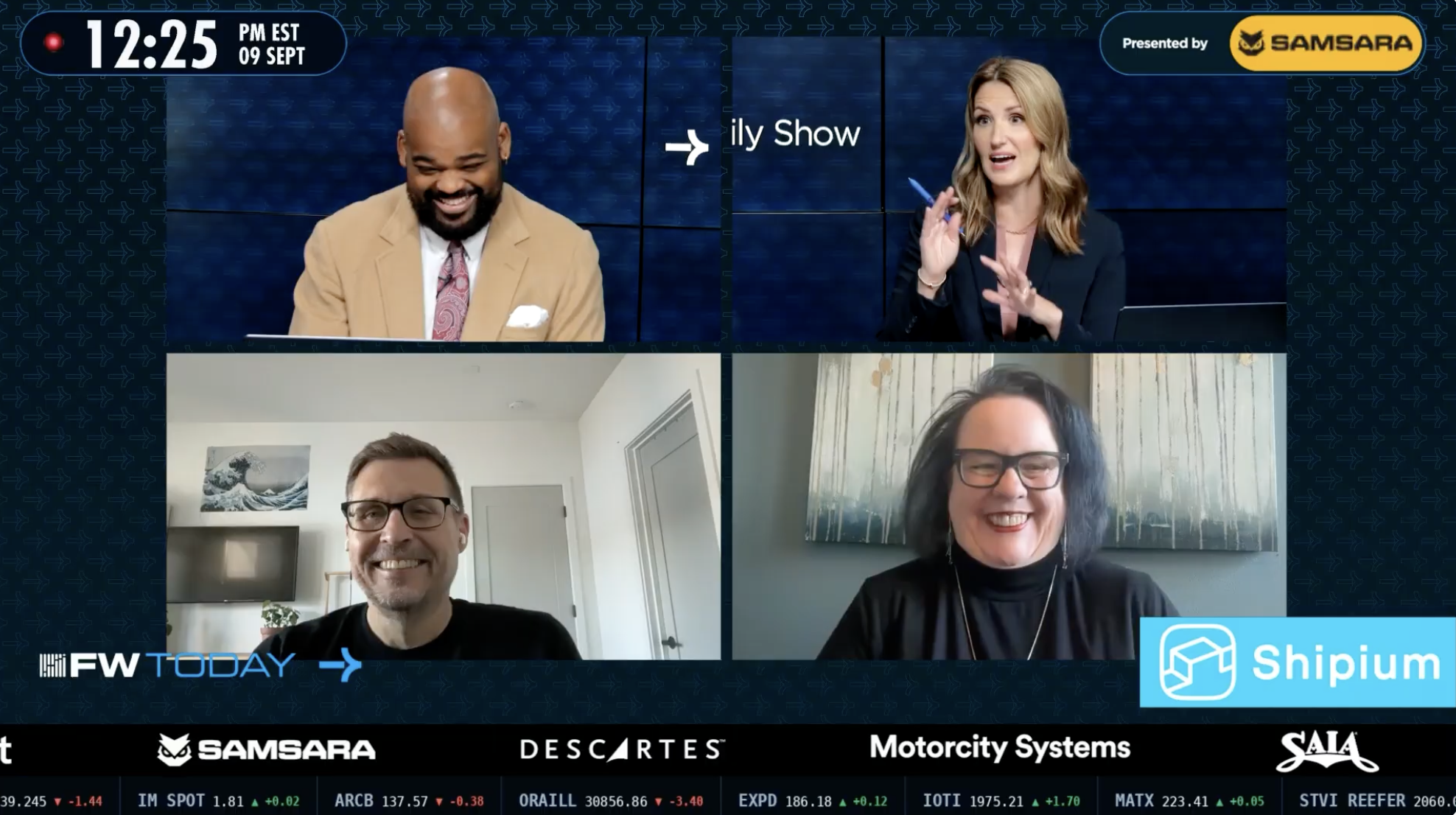
To shed light on this technological leap, Shipium CEO and co-founder Jason Murray and Senior Vice President of AI Product and Engineering Penny Allen recently appeared on FreightWaves Today. During their discussion, the executives unpacked the structural flaws of traditional auditing and detailed how real-time AI is laying the groundwork for a new era of financial controllership within the logistics sector.
The Evolution of Supply Chain Infrastructure: From Promise to Payment
Jason Murray’s perspective on freight technology is rooted in nearly two decades of firsthand industry experience. Before founding Shipium in 2019, Murray spent years helping construct legacy supply chain technology stacks that still serve as the backbone for many modern enterprise organizations. However, as e-commerce volumes surged and customer expectations shifted toward hyper-fast delivery, Murray recognized that existing software architecture could not keep pace with the dynamic realities of modern logistics.
"We think of ourselves as the rails for shipping," Murray explained during his appearance on FreightWaves Today. "We handle everything from promise to payment when it comes to shipping. We’ve traditionally been focused on the parcel space, but we do all of the routing and decision-making through that whole chain."
According to Murray, freight auditing represents the critical final step that ties the entire logistics lifecycle together. For years, however, that final step operated in a silo, completely detached from the initial operational decisions made when a package was first rated, routed, and labeled. Always On Audit was engineered to close this loop by permanently tethering financial records to physical shipments in real time.
Archaeology Versus Forensics: Redefining the Audit Paradigm
Penny Allen elaborated on the profound conceptual difference between legacy monthly audits and Shipium’s continuous AI-driven framework. She emphasized that speeding up a broken process is not enough; the fundamental object of the audit must change.
"Monthly audit and continuous audit are not the same job at different speeds," Allen stated. "They audit different objects. Monthly audit is a batch job over one artifact: the invoice. It’s archaeology. Continuous audit’s object is the shipment itself from the moment it comes into existence to the moment it’s delivered and an invoice occurs. It’s forensics."
Shifting from retrospective archaeology to active forensics required Shipium’s engineering team to completely rethink database and software architecture from scratch. Traditional systems were never designed to hold an open, continuously updating ledger that tracks a package’s financial and physical evolution step by step.
"What I need is a record that opens at the start and is continually updated when it’s created, rated, carrier selected, label printed," Allen explained, outlining the core architectural bet behind the product. "Every step needs to write to the same record in real time."
Achieving this level of continuous data integration demanded immense computing power, sophisticated data engineering, and a specialized machine learning layer capable of interpreting complex logistics data. Historical carrier contracts, billing codes, and exception handlings vary wildly across the transportation sector—variations that previously required years of manual mapping.
"It used to be years of hand-built mappings," Allen noted. "With AI, I can do it in the span of a heartbeat. It takes an intelligence layer that’s trained on nuance, knowing that this code on one carrier’s bill matches that code on a different one."
The result is a relentless oversight mechanism that evaluates every transactional decision against established benchmarks, flagging anomalies instantly rather than weeks down the road.
The Digital Twin: Bridging Execution and Accounting
At the heart of Shipium’s technology is the concept of the "digital twin"—an internal computational model that mirrors the exact cost, physical specifications, and operational constraints of a shipment at the precise moment it is rated and routed.
"When we’re rating and costing a shipment, we have effectively a digital twin of what we believe the carrier contract is, what we believe the physical dimensions of this item are, and all of the constraints around this," Murray explained, tracing the lineage of the concept back to his earlier career roles.
This digital twin acts as a gold standard against which all subsequent billing data is measured. Crucially, Shipium’s research indicates that a significant portion of freight billing discrepancies do not originate with the carriers, but rather within the shipper’s own internal infrastructure.
"This is the half that nobody wants to talk about," Allen remarked. "Many of the problems are somewhere inside the shipper’s infrastructure: declared weight, a dimension problem, something that doesn’t match what was actually shipped."
Because Always On Audit retains the comprehensive lifecycle record of a package rather than just the final summary invoice, Shipium’s system can trace billing errors back to their exact root cause.
"We can forensically recreate what actually happened," Allen said. "Not just that it happened on Wednesday at 2:00, but we can say it happened on this lane, on this dimensioner, at this station, with this operator, or it came in on this data stream from your tenant."
Human-in-the-Loop Efficiency and Early Beta Success
While artificial intelligence automates the vast majority of monitoring and discrepancy detection, Shipium designed Always On Audit with a vital safety net: human expertise. Rather than eliminating human oversight entirely, the platform routes only the most complex and ambiguous exceptions to human operators.
"We do have humans to backstop some of this, right? You can think of them as being hyper-efficient, in terms of they’re only going to get the nastiest of exceptions," Murray explained. "Once the human does it one time or a couple times to make it all tie out, then the next time through, the system is going to know what to do with it."
This feedback loop ensures that the underlying AI model continuously learns from human decision-making, steadily reducing the volume of manual interventions required over time.
Early beta results for Always On Audit have demonstrated immediate financial impact for early adopters. According to Allen, the system begins uncovering hidden discrepancies the moment a customer’s digital twin goes live.
In one instance, Shipium’s platform discovered that a major carrier was incorrectly charging a customer base shipping rates instead of heavily discounted contracted rates, amounting to thousands of dollars in potential overcharges. Because the system operated in real time, the shipper was able to intervene and rectify the billing error immediately. In another case, the platform caught a carrier attempting to apply seasonal surcharges two days ahead of the agreed-upon contractual start date.
These immediate interventions complement Shipium’s broader platform capabilities, which historically have yielded an average 12% cost reduction for parcel shipping customers through optimized routing and carrier selection.
Moving From Punishment to Prevention
Murray’s drive to transform freight auditing is heavily influenced by his professional background in vendor management and chargeback optimization during the early 2010s. In those roles, retailers attempted to enforce compliance by issuing financial penalties to vendors for operational errors, such as shipping on the wrong day or using improper labeling.
However, Murray quickly realized that punitive chargebacks rarely solved systemic root causes because vendors lacked the active tools necessary to identify and correct errors before they cascaded through the supply chain. Always On Audit is designed to flip that script by focusing on active prevention rather than retrospective punishment.
"It’s much easier for the shipper to put the correct dimensions in, hand it off to the carrier at the correct time, and expect it to be delivered at the correct time, rather than the carrier having to check if what you said or the dimensions were correct to verify if it’s the right thing," Murray noted.
By catching mistakes while packages are still physically on-site at the fulfillment center, Shipium’s automated agents can take corrective action before a bad charge or noncompliant shipment ever enters transit. This includes dynamically switching to an alternative carrier, adjusting service levels, or halting the package entirely until warehouse personnel can resolve the discrepancy.
Broader Implications and Future Expansion
The integration of execution data and financial audit data into a single, seamless software environment creates a formidable competitive moat. As Allen pointed out, traditional third-party audit firms and legacy enterprise resource planning (ERP) systems struggle to replicate this level of synchronization because their architectures are built on disconnected data silos.
"It comes down to this: one system, one record, one evidence chain, no integration seam, no emailing spreadsheets, no waiting for a report to run, and no trying to use archaeology to figure out what happened," Allen summarized.
Looking ahead, Shipium plans an aggressive rollout of Always On Audit across its existing customer base while laying the groundwork to expand the technology beyond the parcel sector into heavier freight modes and international markets.
"We started at parcel because I firmly believe it’s the hardest one," Murray concluded. "As we expand this out, it will cover other modes, other countries, etc. This is going to be a total rocket ship to attack this space once and for all."
As the logistics industry navigates persistent margin pressures, labor constraints, and complex rate structures, the shift from retrospective invoice auditing to real-time, AI-driven financial control may well represent the next great leap forward in supply chain efficiency.