Obamas’ Netflix drama ‘The Altruists’ turns Sam Bankman-Fried’s fraud into a love story, critics say | Fortune

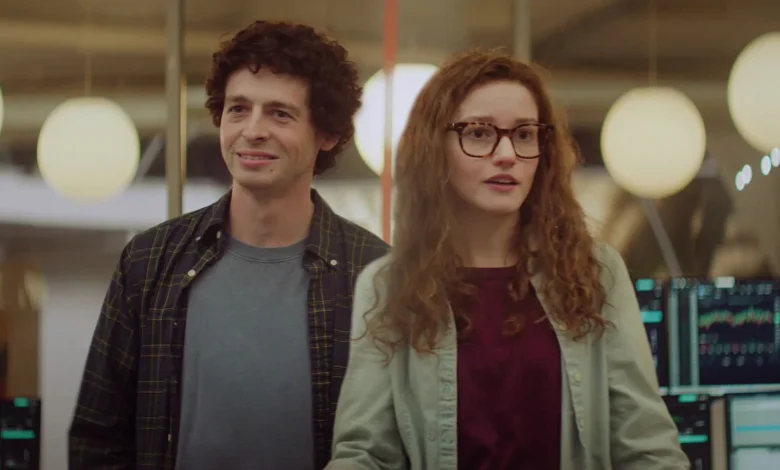
The streaming giant Netflix has found itself at the center of a burgeoning controversy following the release of its eight-part biographical drama series, The Altruists. Chronicling the meteoric rise and catastrophic fall of disgraced cryptocurrency prodigy Sam Bankman-Fried and his digital asset exchange, FTX, the series has garnered favorable reviews from mainstream television critics and casual viewers alike. However, the reception within the global cryptocurrency industry has been markedly different. Prominent digital asset executives, legal experts, and investigative journalists have taken to social media and industry forums to heavily criticize the production, accusing its creators of rewriting history, humanizing convicted felons, minimizing massive financial fraud, and employing questionable tropes regarding foreign industry figures.
The series, which lists former U.S. President Barack Obama and former First Lady Michelle Obama among its executive producers, dramatizes the events leading up to the shocking November 2022 collapse of FTX and its sister trading firm, Alameda Research. While dramatic license is a standard and expected tool in narrative television, critics argue that The Altruists crosses the line from creative interpretation into deliberate falsehood. Specifically, industry veterans point to the show’s sympathetic portrayal of Bankman-Fried and his on-again, off-again romantic partner, former Alameda Research CEO Caroline Ellison, as well as its controversial villainization of Binance founder Changpeng Zhao.
The Anatomy of a Collapse: Background and Chronology of the FTX Fraud
To understand the friction between Hollywood’s storytelling and the reality perceived by crypto insiders, one must examine the actual timeline of events that decimated the digital asset ecosystem in late 2022.
The crisis began to unfold publicly in November 2022 when crypto industry publication CoinDesk reported on a leaked balance sheet from Alameda Research, revealing that a significant portion of its multi-billion-dollar asset base consisted of FTT—an illiquid utility token issued by FTX itself. This revelation prompted Binance CEO Changpeng Zhao to announce that his firm would liquidate its remaining holdings of FTT, triggering a massive bank run on FTX as panicked customers rushed to withdraw billions of dollars in assets.
Within days, FTX was forced to halt withdrawals, exposing a massive financial black hole. Investigations by bankruptcy restructuring experts and federal law enforcement revealed that Bankman-Fried had surreptitiously diverted upwards of $8 billion in customer deposits from FTX to cover speculative trading losses at Alameda Research.
The legal fallout was swift and severe. In December 2022, federal prosecutors in the Southern District of New York unveiled criminal indictments against Bankman-Fried, Ellison, and other top executives. While Bankman-Fried maintained his innocence and elected to take his case to trial, Caroline Ellison cooperated with federal authorities, pleading guilty to multiple counts of wire fraud, securities fraud, and commodities fraud. Ellison subsequently delivered damning testimony against Bankman-Fried during his criminal trial in late 2023, describing how she and Bankman-Fried routinely doctored balance sheets to deceive lenders and investors.
In March 2024, U.S. District Judge Lewis Kaplan sentenced Bankman-Fried to 25 years in federal prison, rejecting the defendant’s claims that customers did not ultimately lose money and citing his utter lack of remorse. Bankman-Fried is currently incarcerated in a federal correctional facility, with a projected release date in the late 2040s. Ellison’s sentencing, meanwhile, reflected her substantial cooperation with the government.
Creative Liberties or Outright Fabrications? Industry Leaders Push Back
Despite the definitive findings of federal prosecutors, regulatory bodies, and a unanimous jury, The Altruists presents a markedly different narrative—one that has drawn fierce condemnation from crypto executives who lived through the contagion.
Don Wilson, founder and CEO of crypto market-making firm DRW, took to X (formerly Twitter) to express his outrage over a specific scene depicted in the Netflix series. The widely circulated clip shows the character representing Binance CEO Changpeng Zhao cornering Bankman-Fried and Ellison, threatening to intentionally destroy FTX if the pair refuse to participate in a criminal market manipulation scheme. Zhao’s character is portrayed as the true mastermind behind the systemic corruption within the industry, casting Bankman-Fried and Ellison as reluctant, bullied victims forced into illicit behavior.
Wilson labeled the scene “preposterous” and “an epic fail,” noting that the narrative of coercion was never presented during Bankman-Fried’s criminal trial, nor is there any factual evidence that such a confrontation ever occurred.
Other prominent figures in the digital asset sector echoed these sentiments. Crypto researcher and commentator Stacy Muur criticized the show’s scriptwriting, questioning how creators could turn convicted fraudsters into sympathetic underdogs while turning real industry participants into caricatures. Constance Wang, the former Chief Operating Officer of FTX, added her voice to the chorus of criticism, writing that while casual viewers might consume the series as a romantic comedy or drama, those who navigated the real-world collapse felt that the production bore little resemblance to reality, describing it as "someone else’s story with our names attached."
Accusations of Anti-Asian Stereotyping and Cultural Caricatures
Beyond the historical inaccuracies regarding the downfall of FTX, the series has sparked a serious debate concerning racial representation and cultural stereotyping.
In The Altruists, the character representing Changpeng Zhao—a Chinese-born Canadian entrepreneur who has spent his life working in major global financial hubs including New York and Tokyo—is depicted with a heavy Cantonese accent and aggressive mannerisms that critics argue lean heavily into harmful Asian stereotypes.
The portrayal drew sharp rebukes from within and outside the cryptocurrency community. Veteran crypto journalist Laura Shin publicly denounced the depiction, stating that systemic bias and casual racism must have influenced the filmmakers’ creative choices, as no other logical explanation could account for such a distorted characterization.
Changpeng Zhao himself addressed the controversy on social media. While noting that he has rarely experienced targeted racism throughout his global career spanning North America and Asia, Zhao remarked that the character’s portrayal in the Netflix series was "something to think about."
The Political Dimension: Following the Money and Executive Producers
The controversy surrounding The Altruists has also taken on a political dimension, driven by the show’s high-profile executive producers and Bankman-Fried’s well-documented history of political philanthropy.
During the 2021–2022 election cycle, Sam Bankman-Fried emerged as one of the most prolific political donors in the United States, contributing nearly $40 million primarily to Democratic candidates and progressive political action committees, including a reported $5.2 million directly to Joe Biden’s 2020 presidential campaign.
Given that The Altruists was produced by Higher Ground Productions, the media company founded by Barack and Michelle Obama, critics have raised questions about whether political affiliations influenced the sympathetic framing of the narrative. Legal analyst and attorney Hailey Lennon highlighted these connections on social media, pointing out that framing Bankman-Fried as a misguided idealist caught up in a tragic love story aligns awkwardly with his history of funneling vast sums of stolen customer funds into mainstream political ecosystems.
Other commentators on social media argued that the soft-pedaling of Bankman-Fried’s predatory financial behavior serves to insulate political beneficiaries from the fallout of accepting funds derived from massive commercial fraud. While there is no evidence that the production team altered the historical record explicitly for partisan purposes, the convergence of high-profile political backing and a convicted donor has fueled intense public skepticism.
Fact-Based Analysis of Broader Implications
The backlash against The Altruists highlights a growing tension between Hollywood’s appetite for dramatic storytelling and the demand for accuracy by communities living through complex, high-stakes technological revolutions.
Dramatizations of corporate malfeasance—from movies like The Social Network to television series like WeCrashed—frequently take artistic license to maintain viewer engagement. However, when dealing with recent historical events where victims are still recovering billions of dollars in lost capital and legal proceedings are still fresh, fictionalizing core aspects of the narrative can have tangible consequences for public understanding.
By shifting the blame away from Bankman-Fried’s self-described “effective altruism” philosophy—which federal prosecutors argued was merely a marketing facade used to justify reckless risk-taking—The Altruists risks confusing the public about the mechanisms of financial crime in the digital age. Furthermore, the reliance on ethnic stereotypes in depicting foreign market participants underscores ongoing challenges in media representation within the tech and finance sectors.
As The Altruists continues to stream to millions of households worldwide, the vociferous pushback from crypto executives, journalists, and legal professionals serves as a stark reminder that while Hollywood can rewrite scripts, the historical record of one of the largest financial frauds in American history remains firmly anchored in the transcripts of federal courtrooms.