How Crocs Turned a Tiny Shoe Charm into a Six-Foot Marketing Phenomenon named Niles the Crocodile

Footwear brand Crocs has fundamentally reshaped modern corporate character marketing through the introduction of Niles the Crocodile, a six-foot-tall reptilian mascot that bridges the gap between digital engagement and physical retail. Originally a subtle icon printed onto the heel strap of the brand’s ubiquitous foam clogs, Niles has broken free of his two-dimensional constraints to become an active member of the corporate workforce, a social media influencer, and a commercially viable intellectual property asset. As Crocs approaches its 25th corporate anniversary in 2027, the elevation of Niles from a minor graphic element to a central brand pillar highlights a broader shift in retail strategy. Today’s consumers increasingly demand interactive, personality-driven brand experiences rather than traditional, static corporate advertising.
The Rise of the Corporate Mascot in Modern Retail
The debut of Niles is part of a wider renaissance for brand mascots across the global retail and entertainment landscapes. Marketing experts note that modern consumers exhibit fatigue toward heavily polished, algorithmic digital advertising and automated content, often described as artificial intelligence-generated slop. In contrast, physical characters with distinct personalities provide an accessible anchor for brand loyalty.
This resurgence is visible across multiple industries. Ellie the Elephant, the mascot for the Women’s National Basketball Association franchise the New York Liberty, has accumulated hundreds of thousands of followers on social media and secured lucrative corporate partnerships with major brands like State Farm, Fenty Beauty, and Essie. Similarly, Duolingo’s green owl mascot, Duo, has transcended language-learning app notifications to become an internet meme star, inspiring physical pop-up retail locations and inspiring footwear collaborations. Meanwhile, Pop-Tarts has leveraged theatrical mascot stunts during high-profile collegiate sporting events to capture national media attention.
Industry analysts emphasize that consumers have historically struggled to build emotional attachments to corporate logos alone. By giving a brand a physical face, mood, and distinct personality, companies create an approachable entity that consumers can converse with, critique, and celebrate. While traditional mascots like the Michelin Man date back to the late 19th century, the modern deployment of these characters relies on a ubiquitous digital and physical stage spanning social media feeds, television broadcasts, live retail events, and immersive pop-up installations.
The Chronology of a Reptilian Debut
The strategic rollout of Niles the Crocodile was executed through a carefully timed series of narrative milestones designed to maximize consumer speculation and organic reach:
August: Niles officially "hatched" from a mysterious three-foot egg that had sat quietly in the background of Crocs’ social media livestreams for months. This deliberate visual Easter egg transformed standard e-commerce sales channels into a serialized narrative that followers actively tracked. Within days of his emergence, the character generated international engagement, highlighted by unexpected fan mail arriving from Spain less than two weeks after his public debut.
Autumn: Niles integrated fully into the daily operations of Crocs’ corporate headquarters. Rather than existing solely as a promotional tool, the six-foot reptile was filmed participating in mundane office activities, such as DJing staff meetings, wandering through the corporate cafeteria, and offering eccentric recommendations for spring footwear design updates. His front-facing features were intentionally designed with 13 distinct stripes to represent the exact number of ventilation holes found on a standard pair of classic Crocs clogs.
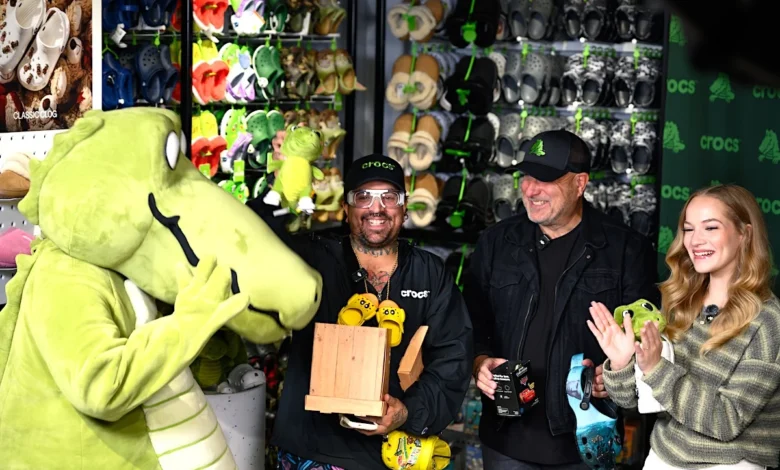
November 17: Niles made his official commercial debut on TikTok Shop alongside Crocs Chief Brand Officer Terence Reilly. During the live broadcasting session, Niles and Reilly presented a custom plush doll of the crocodile to Doogie Sandtiger, the official Guinness World Record holder for possessing the largest personal collection of Crocs shoes, which totals 3,569 pairs.
Data and Performance Metrics
The commercial impact of the Niles campaign was immediate and measurable across digital engagement channels. During the November 17 TikTok Shop livestream, which was structured around the launch of the $29.99 Niles plush doll, more than 80,000 concurrent viewers tuned in. The broadcast propelled the official Crocs TikTok Shop account to gain 8,000 new followers in a single session. Furthermore, technical adjustments implemented by the platform—such as transforming the standard "like" button into a custom Niles icon—resulted in a doubling of the overall user engagement and like rate.
Social media metrics for the character have mirrored this commercial success. The dedicated Instagram account for Niles quickly surpassed 40,000 followers, fueled by recurring content series like his curated music playlist titled "Swampy Beats." Beyond digital screens, the physical presence of the mascot has driven measurable traffic in the physical world. Niles has traveled to major events, including appearances in Colorado to collaborate with Miles, the mascot of the National Football League’s Denver Broncos, and a high-profile visit to the D23 fan convention in Anaheim, California, to celebrate official brand partnerships with Disney. The internal reception has been similarly enthusiastic, with corporate employees frequently updating their professional LinkedIn profiles to feature photographs taken alongside the mascot.
Strategic Analysis and Industry Implications
The scaling of Niles as an independent intellectual property asset offers several distinct strategic advantages for Crocs as the company scales toward its quarter-century milestone. Industry experts point out that proprietary characters provide long-term brand equity that is immune to the licensing fees and expiration dates associated with celebrity or designer partnerships.
Because Niles is a non-verbal character who communicates primarily through his choice of Jibbitz accessories—such as miniature pizza, taco, tape deck, and snail charms—he functions as a universal brand ambassador. This absence of spoken language eliminates cultural and linguistic barriers, enabling Crocs to deploy the same narrative content across international markets, including India and China, without requiring costly script localizations or market-specific narrative overhauls.
Furthermore, the character serves as a vital tool in combating consumer alienation in an increasingly automated digital marketplace. Creative strategy executives note that Niles succeeds precisely because his corporate media appearances retain a sense of unpolished authenticity. Filmed in real office environments alongside genuine corporate employees with a hint of physical awkwardness, the character breaks through the monotony of algorithmic feeds and encourages organic consumer pause.
Future Outlook and Collectibility
Looking ahead, Crocs executives plan to expand the Niles IP ecosystem significantly. Building on the successful launch of the initial 8-inch plush doll, the company intends to release seasonal and mood-based variations of the plush collectible in the coming years. This strategy directly capitalizes on the passionate collecting behaviors already demonstrated by the brand’s core demographic, who routinely collect limited-edition footwear collaborations and decorative Jibbitz charms.
As Crocs prepares for its 25th anniversary celebrations in 2027, the company intends to place Niles at the forefront of global consumer touchpoints. By allowing fans to dictate how the character is utilized and where he travels, Crocs has successfully transformed a traditional footwear manufacturer into a lifestyle platform driven by character-led storytelling, ensuring the brand remains culturally relevant to successive generations of consumers.
Related posts: