Netflix Faces Legal Threat From Kalshi Over Alleged Defamation in Prediction Market Documentary Trailer

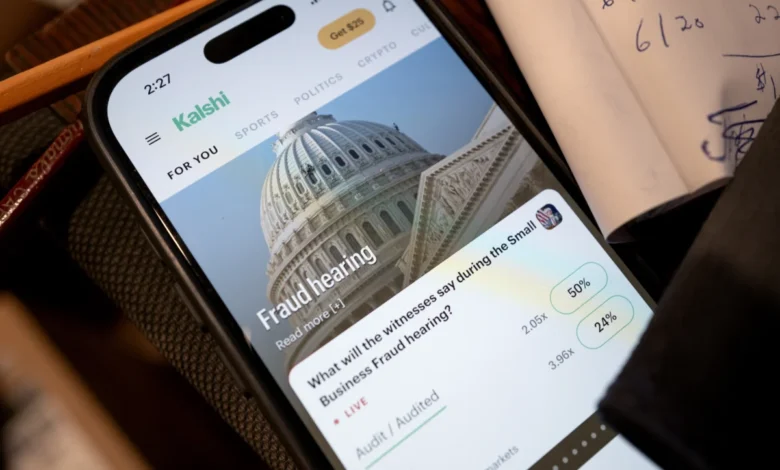
The burgeoning industry of prediction markets has found itself at the center of a high-stakes legal confrontation as Kalshi, a leading U.S.-regulated exchange, has formally threatened Netflix with a defamation lawsuit. The dispute stems from a trailer for an upcoming documentary titled Instadocs: The Prediction Market Games, which Kalshi alleges contains fabricated scenes that falsely portray the company as violating a court-ordered injunction in the state of Nevada. In a strongly worded cease-and-desist letter, Kalshi demanded the immediate removal of the promotional video and a public retraction, arguing that the streaming giant’s portrayal could jeopardize its hard-won legal standing and invite severe regulatory sanctions.
The controversy centers on a brief but pivotal segment of the trailer. In the scene, several individuals are gathered in a residence located in Nevada, discussing the nuances of prediction markets in the context of the 2026 FIFA World Cup. One of the participants is seen holding a smartphone displaying what is presented as a Kalshi transaction receipt. The individual explicitly states, “I like betting on Kalshi,” and claims to have placed a $5,000 wager on Spain to win the tournament. To the average viewer, the scene appears to be a fly-on-the-wall look at modern digital wagering; however, for Kalshi, the scene represents a potentially catastrophic misrepresentation of its business operations and legal compliance.
The Core of the Legal Dispute: The Nevada Injunction
To understand the gravity of Kalshi’s allegations, one must look at the specific regulatory environment in which the company operates. Kalshi is a Commodity Futures Trading Commission (CFTC)-regulated exchange that allows users to trade on the outcome of real-world events, such as interest rate hikes, movie box office totals, or political outcomes. However, the legality of these "event contracts" is a subject of intense litigation across various jurisdictions.
In Nevada, a state with some of the most stringent gaming and gambling regulations in the world, Kalshi is currently under a court order that prohibits it from offering sports-related event contracts to residents. This injunction is part of an ongoing legal battle with state regulators who oversee the traditional sports betting industry. By showing a user in Nevada purportedly placing a sports-related bet on Kalshi’s platform, the Netflix trailer implies that the company is in direct violation of a judicial mandate.
“These false statements jeopardize Kalshi’s legal standing in litigation that is highly material to Kalshi’s business,” the cease-and-desist letter stated. The company expressed deep concern that the trailer could be used as evidence by state regulators or opposing counsel to argue that Kalshi is ignoring court orders, which could lead to contempt of court charges, heavy fines, or the permanent revocation of its ability to operate in certain markets.
Forensic Evidence: The "Crop" and the Date Discrepancy
Kalshi’s legal team has pointed to several technical anomalies within the trailer that they claim prove the footage was staged or edited with a reckless disregard for the truth. The most glaring error identified is the date visible on the digital receipt shown in the trailer. While the participants in the video are discussing the 2026 FIFA World Cup—an event more than a year away—the receipt on the phone screen is clearly dated May 16, 2025.
Furthermore, Kalshi noted that the phone screen captured in the trailer displays the word “crop” at the top of the interface. This detail suggests that the actor or participant was not actually interacting with the live Kalshi application but was instead viewing a saved, cropped screenshot of a receipt. Kalshi argues that this demonstrates the scene was manufactured by the production team rather than being a spontaneous recording of a real user transaction.
The timeline of the trailer’s production also adds a layer of complexity. Kalshi claims that it alerted a Netflix editor to these inaccuracies before the trailer was finalized. According to the letter, the editor acknowledged that they had not noticed the 2025 date or the "crop" text. Despite this admission, the editor reportedly refused to pull the trailer or edit the scene, leading Kalshi to argue that Netflix acted with "actual malice"—the legal standard required for a defamation claim involving a public entity, where the defendant knows a statement is false or acts with reckless disregard for whether it was true or false.
The Broader Context: The War Over Prediction Markets
The legal friction between Kalshi and Netflix occurs at a transformative moment for the prediction market industry. For years, companies like Kalshi and its primary competitor, the crypto-based Polymarket, have fought for mainstream acceptance and regulatory clarity. While Polymarket has captured significant global volume, particularly surrounding U.S. elections, it remains largely restricted for U.S.-based users. Kalshi, by contrast, has pursued a path of rigorous federal regulation.
Recently, Kalshi won a landmark legal victory in a federal appeals court against the CFTC, which had attempted to block the exchange from offering contracts on the outcome of U.S. congressional elections. This victory was seen as a watershed moment, potentially opening the door for billions of dollars in new trading volume. However, because the industry remains under a microscope, any suggestion of illegal activity—especially in a high-profile Netflix documentary—is viewed by Kalshi as a direct threat to its corporate integrity and its relationship with federal and state regulators.
The prediction market model differs from traditional gambling in its structure. On Kalshi, users buy "Yes" or "No" contracts that pay out $1 if the event occurs. The price of the contract reflects the market’s collective probability of the outcome. Proponents argue these markets provide more accurate data than traditional polling or expert analysis. However, because they resemble sports betting in the eyes of many state regulators, they often fall into a legal gray area that requires delicate navigation.
Chronology of the Conflict
The timeline of the dispute illustrates a rapid escalation between the exchange and the streaming giant:
- Production Phase: Netflix begins filming Instadocs: The Prediction Market Games, a series designed to explore the high-stakes world of event-based trading.
- Initial Outreach: Kalshi is made aware of the trailer’s content and contacts a Netflix employee responsible for the edit.
- The Warning: Kalshi informs the editor that the receipt shown in the Nevada scene is non-authentic and that portraying sports betting in Nevada violates a court order.
- The Admission: The Netflix employee reportedly admits to the oversight regarding the date and the "crop" indicator but declines to change the trailer.
- Public Release: The trailer is released, prompting immediate inquiries from national media outlets, including CNN, regarding Kalshi’s compliance with Nevada law.
- The Cease-and-Desist: Kalshi issues its formal legal demand, accusing Netflix of defamation and fabrication.
Potential Implications for Netflix and the Documentary Industry
If Kalshi proceeds with a lawsuit, it could set a significant precedent for how "docuseries" and "instadocs" are produced. Netflix has increasingly relied on fast-turnaround documentary content to capitalize on current trends. However, the pressure to produce compelling, high-drama footage can sometimes lead to shortcuts in fact-checking.
In this case, the legal threshold for defamation will hinge on whether the court views the trailer as a factual representation or a dramatized promotional tool. If the court finds that Netflix knowingly used a fake receipt to imply illegal activity by a regulated financial exchange, the damages could be substantial. Beyond financial penalties, a loss in court could force Netflix to implement more rigorous journalistic standards for its documentary wing, which often operates with more creative license than traditional news organizations.
For Kalshi, the stakes are even higher. The company is currently in the process of scaling its operations and attracting institutional investors. A narrative that suggests the company is "playing fast and loose" with state injunctions could deter conservative capital and invite unwanted scrutiny from the CFTC, which has already shown a willingness to clamp down on the sector.
Conclusion and Current Standing
As of this report, Netflix has not issued a formal public response to the cease-and-desist letter, nor has it pulled the trailer from its various promotional platforms. Kalshi remains steadfast in its demand for a public statement declaring that the trailer was "fabricated."
The outcome of this clash will likely influence the public perception of prediction markets as they move closer to the mainstream. If the documentary Instadocs proceeds with the disputed footage, it may find its own release mired in litigation. For an industry built on the accuracy of information and the hedging of risk, the irony of a dispute over "fake news" and manufactured data is not lost on market participants. The legal battle ahead will determine whether Netflix’s portrayal of the "Prediction Market Games" was an insightful look into a new financial frontier or a defamatory fiction that crossed the line into regulatory interference.