Netflix Co-CEOs Ted Sarandos and Greg Peters Define Future Strategy Amid M&A Speculation and Mixed Second Quarter Earnings Results

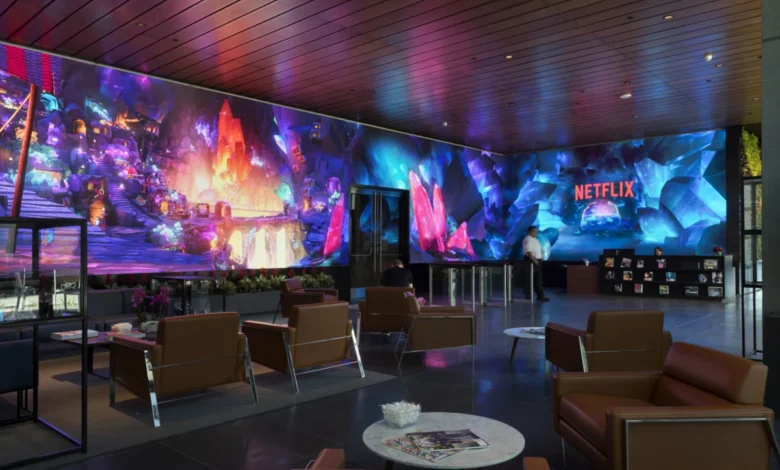
Netflix co-CEOs Ted Sarandos and Greg Peters utilized the company’s second-quarter earnings call to provide a definitive stance on the streaming giant’s long-term strategic direction, specifically addressing persistent rumors regarding mergers and acquisitions, the potential for free ad-supported television (FAST) channels, and the evolution of global partnerships. The executive commentary arrived at a critical juncture for the company, as Wall Street continues to grapple with the shifting economics of the streaming industry and the broader consolidation of legacy media assets. While competitors have aggressively pursued mega-mergers to achieve scale, Netflix leadership reaffirmed a "builders, not buyers" philosophy, signaling a preference for internal growth and selective licensing over the complexities of large-scale corporate integration.
The earnings interview followed a mixed financial report that saw Netflix shares slide nearly 9% in after-hours trading. Despite maintaining its position as the world’s leading streaming service, the company’s projections for a slight slowdown in third-quarter growth fueled existing investor skepticism. Over the past year, Netflix stock has faced significant volatility, declining more than 40% as the market recalibrates its valuation of streaming-first businesses. The volatility was exacerbated by the company’s previous, unsuccessful pursuit of Warner Bros. Discovery (WBD), a move that culminated in Netflix ceding the acquisition to Paramount and walking away with a $2.8 billion breakup fee. This historical context has left analysts questioning whether Netflix remains open to other major acquisitions, such as Lionsgate or NBCUniversal, to bolster its content library and competitive moat.
The M&A Landscape: Builders vs. Buyers
Addressing the speculation surrounding industry consolidation, Ted Sarandos emphasized that Netflix’s core philosophy remains unchanged despite the shifting landscape. Analysts have frequently identified Lionsgate and NBCUniversal as potential targets for Netflix, citing the value of their deep IP libraries and production capabilities. However, Sarandos pushed back against the notion that Netflix needs a major acquisition to achieve its objectives. He noted that the company possesses multiple avenues for growth, including original production, strategic licensing, and innovative partnerships.
"We’re primarily builders, not buyers," Sarandos stated, echoing sentiments previously shared by Greg Peters. "That remains the case today. Others will speculate about our intentions because they have their own reasons for that, but our track record is clear: we have a very high bar to do any big M&A."
This disciplined approach to capital allocation is a cornerstone of Netflix’s current strategy. By prioritizing internal development, the company avoids the cultural and financial friction often associated with merging massive media entities. The $2.8 billion breakup fee from the failed WBD deal provided a significant cash cushion, but it also served as a reminder of the risks inherent in high-stakes bidding wars. For now, Netflix appears content to let its competitors navigate the "merger fever" while it focuses on optimizing its existing platform and expanding its global reach.
Strategic Partnerships and the TF1 Model
While Netflix is hesitant to engage in traditional M&A, it is increasingly open to strategic partnerships that expand its content offering and accessibility. Greg Peters highlighted the company’s recent milestone agreement with French broadcaster TF1 as a blueprint for future collaborations. The partnership, which recently took effect in France, allows for a more integrated experience between the local broadcaster and the global streamer.
Peters suggested that such arrangements are driven by consumer demand for more variety and a seamless viewing experience. With a global footprint of 330 million households, Netflix views itself as a powerful vehicle for other content creators to maximize the value of their investments. "We believe that we can help other producers and other services maximize the value and relevance of the content they invest in by finding those bigger audiences," Peters explained.
The success of the TF1 integration is being closely monitored as a potential precursor to similar deals in other regions. There has been significant speculation regarding a potential partnership with NBCUniversal’s Peacock, or further integration into Comcast’s Xfinity StreamSaver package. While Netflix has traditionally avoided the "bundle" model common in cable television, the company’s evolving stance suggests a recognition that the "walled garden" approach may no longer be the most effective way to capture diverse market segments.
The FAST Channel Question: Balancing Free and Paid Tiers
One of the most discussed topics in the streaming sector is the rise of FAST (Free Ad-Supported Television) channels. Rivals like Pluto TV, Tubi, and even traditional players like Disney and Warner Bros. Discovery have embraced FAST as a way to monetize back-catalog content and attract price-sensitive viewers. To date, Netflix has remained a notable holdout in this multibillion-dollar category.
During the earnings call, Greg Peters acknowledged the potential of a free offering but stressed the need for a cautious approach. The primary concern for Netflix is "cannibalization"—the risk that a free tier might entice current paying subscribers to downgrade, thereby reducing average revenue per member (ARM). "A free offering could make sense in some markets, but we have to be thoughtful about cannibalization of pay tiers," Peters said. "We’ve got to ensure that we’ve got the right offering and the right differentiation."
The feasibility of a FAST service is also tied to the maturity of Netflix’s advertising business. The company recently expanded its ad-supported tier beyond its initial 12-territory footprint, but the infrastructure required to support a massive free-to-watch platform is still being scaled. Peters concluded that while Netflix will continue to evaluate the FAST space, there are no "near-term plans" to launch a free service. For the time being, the company’s focus remains on growing its paid ad tier, which serves as a middle ground between the premium ad-free experience and a completely free model.
Content Spend and the Integration of Generative AI
Parallel to its corporate strategy, Netflix is also navigating a transformation in how content is produced and funded. Ted Sarandos confirmed that the company’s content spend is accelerating as it looks to maintain its lead in original programming. Interestingly, a portion of this efficiency is being driven by the integration of generative AI. Sarandos revealed that Netflix has already utilized AI technologies in over 300 productions, ranging from post-production enhancements to creative assistance.
The use of AI is part of a broader effort to manage rising production costs while increasing the volume of high-quality content. By leveraging technology to streamline workflows, Netflix aims to redirect savings back into "on-screen" value. This technological edge is seen as a key differentiator as the company competes for talent and viewership in an increasingly crowded market.
Chronology of Recent Strategic Shifts
To understand Netflix’s current position, it is essential to look at the timeline of events that led to this Q2 earnings report:
- Late 2024 – Early 2025: Rumors of a Netflix bid for Warner Bros. Discovery intensify. Leadership remains coy but emphasizes internal building.
- October 2025: Greg Peters officially signals that a WBD bid is unlikely, focusing on the "high bar" for M&A.
- Early 2026: Netflix officially cedes the WBD pursuit to Paramount, collecting a $2.8 billion breakup fee.
- May 2026: Netflix expands its ad-supported tier to additional global markets, signaling a commitment to a diversified revenue model.
- June 2026: The partnership with French broadcaster TF1 goes live, marking a new era of "broadcaster-streamer" cooperation.
- July 2026: Q2 earnings report reveals mixed results and a 9% stock drop, leading to the co-CEOs’ "clear the air" interview.
Industry Implications and Market Analysis
The stance taken by Sarandos and Peters reflects a broader shift in the "streaming wars." The era of "growth at any cost" has been replaced by a focus on profitability, churn management, and revenue optimization. By avoiding large-scale M&A, Netflix is betting that its existing scale and brand equity are sufficient to weather the current cycle of industry consolidation.
However, the market’s reaction—a nearly 9% drop in share price—indicates that investors remain anxious. The skepticism stems from a belief that Netflix may eventually hit a ceiling in subscriber growth, necessitating a major acquisition to unlock new revenue streams or IPs. Furthermore, the company’s hesitation regarding FAST channels is seen by some analysts as a missed opportunity to capture the "bottom of the pyramid" in emerging markets where credit card penetration and discretionary income are lower.
Conversely, the "builders" strategy protects Netflix from the debt burdens and integration headaches that have plagued its peers. While Warner Bros. Discovery and Paramount navigate the complexities of their respective mergers, Netflix can remain agile, focusing on content hits like Squid Game or Stranger Things and refining its ad-tech stack.
In summary, Netflix’s leadership is doubling down on the company’s identity as a technology-driven media powerhouse that values organic growth over corporate expansion. While the short-term market reaction has been negative, Sarandos and Peters are playing a long game, betting that a combination of disciplined spending, strategic partnerships like the TF1 deal, and the eventual scaling of their advertising business will solidify Netflix’s dominance in the decade to come. The message to Wall Street is clear: Netflix will not be forced into a deal by industry trends, but will instead continue to pave its own path through the increasingly complex global entertainment landscape.